
Explore our factory-direct Grade-A LiFePO4 cells and customized energy storage modules designed for scalable cabinet integration.








The global energy storage landscape is experiencing an unprecedented structural transformation. Driven by international decarbonization mandates, grid destabilization caused by renewable energy intermittency, and escalating commercial electricity tariffs, global procurement teams are aggressively transitioning to Lithium Iron Phosphate (LiFePO4 / LFP) battery cabinets. As a leading specialized wholesale manufacturer and direct factory supplier, Shenzhen Foya Solar Technology Co., Ltd. sits at the intersection of electro-chemical innovation and industrial engineering, delivering megawatt-scale and commercial-grade storage cabinets engineered to survive demanding operational cycles.
Historically, nickel-manganese-cobalt (NMC) chemistries dominated early battery energy storage systems (BESS) due to higher volumetric energy density. However, real-world field data across utility and commercial and industrial (C&I) deployments highlighted structural vulnerabilities in NMC—most notably catastrophic thermal runaway risks, steep capacity degradation beyond 2,500 cycles, and extreme raw material price volatility. In contrast, LiFePO4 battery cabinet architectures have established themselves as the indisputable benchmark for stationary storage due to their intrinsic chemical stability, superior thermal runaway threshold (>270°C vs NMC's 210°C), zero cobalt dependence, and exceptional economic life exceeding 6,000 to 10,000 deep discharge cycles.
| Technical Dimension | Lithium Iron Phosphate (LiFePO4 Cabinet) | Nickel Manganese Cobalt (NMC Rack) | Traditional Lead-Acid Bank |
|---|---|---|---|
| Thermal Runaway Temp | 270°C – 300°C (Ultra Safe) | 210°C – 230°C (High Risk) | N/A (Gassing/Acid Risk) |
| Cycle Life (80% DoD) | 6,000 – 10,000 Cycles | 2,500 – 4,000 Cycles | 500 – 1,200 Cycles |
| Levelized Cost of Storage (LCOS) | $0.035 - $0.05 / kWh/cycle | $0.08 - $0.12 / kWh/cycle | $0.18 - $0.25 / kWh/cycle |
| Volumetric Thermal Safety | Non-gassing, stable Olivine structure | Oxygen releasing at high temp | Sulfuric emission hazard |
| Environmental Compliance | 100% Heavy-Metal Free (RoHS/REACH) | Contains Toxic Cobalt & Nickel | High Lead Contamination Risk |
For enterprise procurement officers, engineering contractors (EPCs), and system integrators, selecting a direct LiFePO4 battery cabinet manufacturer is no longer merely a purchasing decision—it is a risk mitigation strategy. Modern battery cabinets must function as highly integrated electro-thermal fortresses incorporating smart BMS telemetry, active liquid cooling, automated gas detection, and multi-tier fire suppression systems.
As an turnkey OEM/ODM factory, Foya Solar engineers tailor-made wholesale LiFePO4 battery cabinets engineered specifically for high-stress industrial applications. Understanding the unique operational profile of each sector allows our engineering team to customize C-rates, cell configurations, and thermal dissipation matrices.
Commercial & Industrial Peak Shaving
Manufacturing facilities face heavy demand charges during peak utility hours. Our 50kW/96kWh to 100kW/215kWh smart battery cabinets execute automated peak shaving and load shifting, reducing peak demand tariffs by up to 40% while serving as an instantaneous UPS during utility outages.
Solar-Storage-EV Charging Super-Hubs
Rapid EV chargers create localized grid congestion. Integrating our liquid-cooled outdoor LiFePO4 battery cabinets buffers high-power DC fast chargers (150kW-350kW), stabilizing local transformers and capturing excess onsite solar photovoltaic energy for night discharge.
Telecom Towers & Remote Microgrids
Off-grid telecom infrastructure and remote island microgrids demand continuous operational availability under extreme ambient temperatures (-20°C to +55°C). Our ruggedized IP54/IP65 modular LiFePO4 rack systems guarantee zero-maintenance, multi-day backup autonomy.
The operational longevity of a wholesale Lithium FePO4 battery cabinet is governed by two critical subsystems: its thermal management ecosystem and its internal Battery Management System (BMS). As a precision manufacturer, Foya Solar integrates advanced liquid-cooling thermal control alongside 3-tier master-slave BMS controllers.
Air Cooling vs. Liquid Cooling in High-Capacity Battery Cabinets
For high-density BESS installations (above 100kWh per cabinet), traditional forced air-cooling encounters severe thermodynamic limitations. Air-cooled systems often exhibit internal cell-to-cell temperature differentials exceeding 5°C to 8°C, which accelerates localized degradation and shortens pack lifespan. Foya Solar's liquid-cooled battery cabinets utilize micro-channel cold plates directly attached to cell faces, maintaining core temperature variations strictly within ≤2°C.
Active Liquid Cooling Architecture
Utilizes ethylene glycol coolant circulating through aluminum cooling plates. Reduces parasitic auxiliary power consumption by 30% compared to heavy HVAC air units while enabling 1C continuous charge/discharge capability without thermal throttling.
3-Tier Intelligent Cloud BMS
From individual cell-level monitoring (BMU) to rack control (BCU) and cabinet management (BMM), our proprietary BMS supports RS485, CANbus, Modbus TCP/IP, and Ethernet protocols for seamless integration with SMA, Victron, Deye, and Sungrow inverters.
Automated Fire Mitigation
Equipped with aerosol and clean-agent (FK-5-1-12) gas suppression tubes, thermal runaway sensor arrays (CO/CO2/H2 detection), and automated explosion-venting valves adhering strictly to NFPA 855 safety directives.
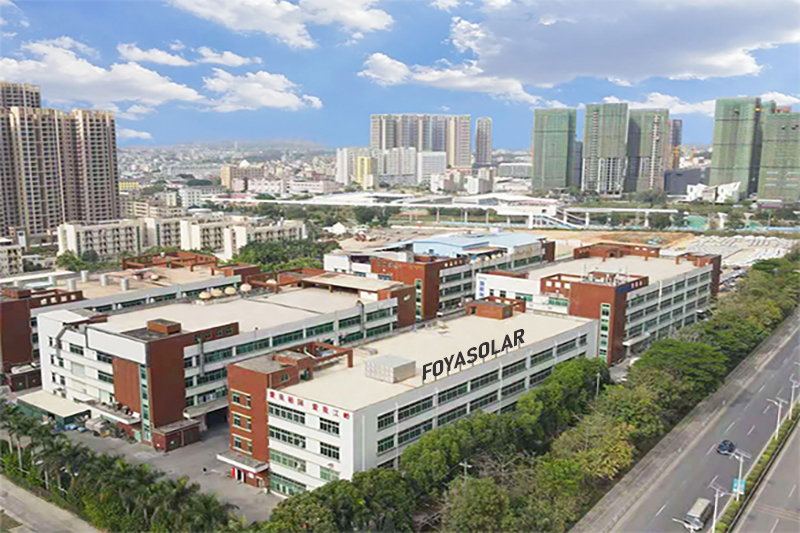
When sourcing custom lithium battery cabinets from China, procurement integrity relies on rigorous quality control protocols. Foya Solar operates a 20,000 square meter automated manufacturing base in Shenzhen, enforcing a zero-defect quality framework across every stage of assembly.
Automated Cell Grading & Precise Matching
Every LiFePO4 cell—whether 50Ah, 105Ah, 230Ah, 304Ah, or 680Ah—undergoes automated 100% capacity testing, internal resistance (AC-IR) measurement, and voltage sorting. We match cells within a strict tolerance of ±0.05V and ±0.3mΩ prior to laser-welding busbars into modules. This guarantees maximum capacity retention, eliminating premature cell imbalance during deep cycling.
- Automatic laser-welding with online visual ultrasonic testing
- Dual-insulation structural frame designed for seismic zone resistance
- 100% high-potential (Hi-Pot) insulation and dielectric strength verification
- 72-hour burn-in thermal aging test under full C-rate charge/discharge cycles
Navigating international customs barriers, grid interconnection standards, and local electrical codes requires an experienced wholesale partner. Foya Solar supports enterprise clients with full certification collateral and localized logistics assistance for over 80 countries worldwide.
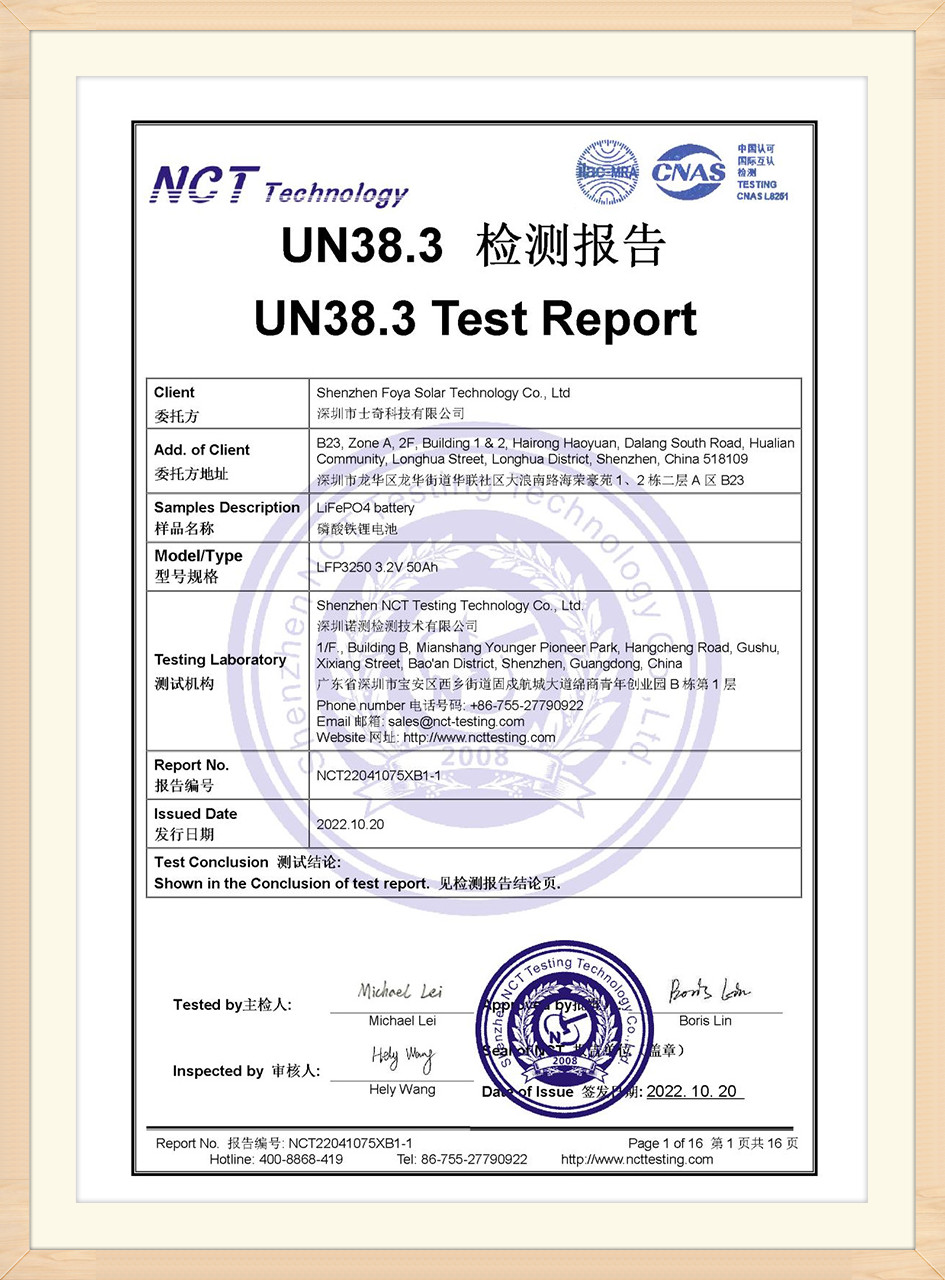
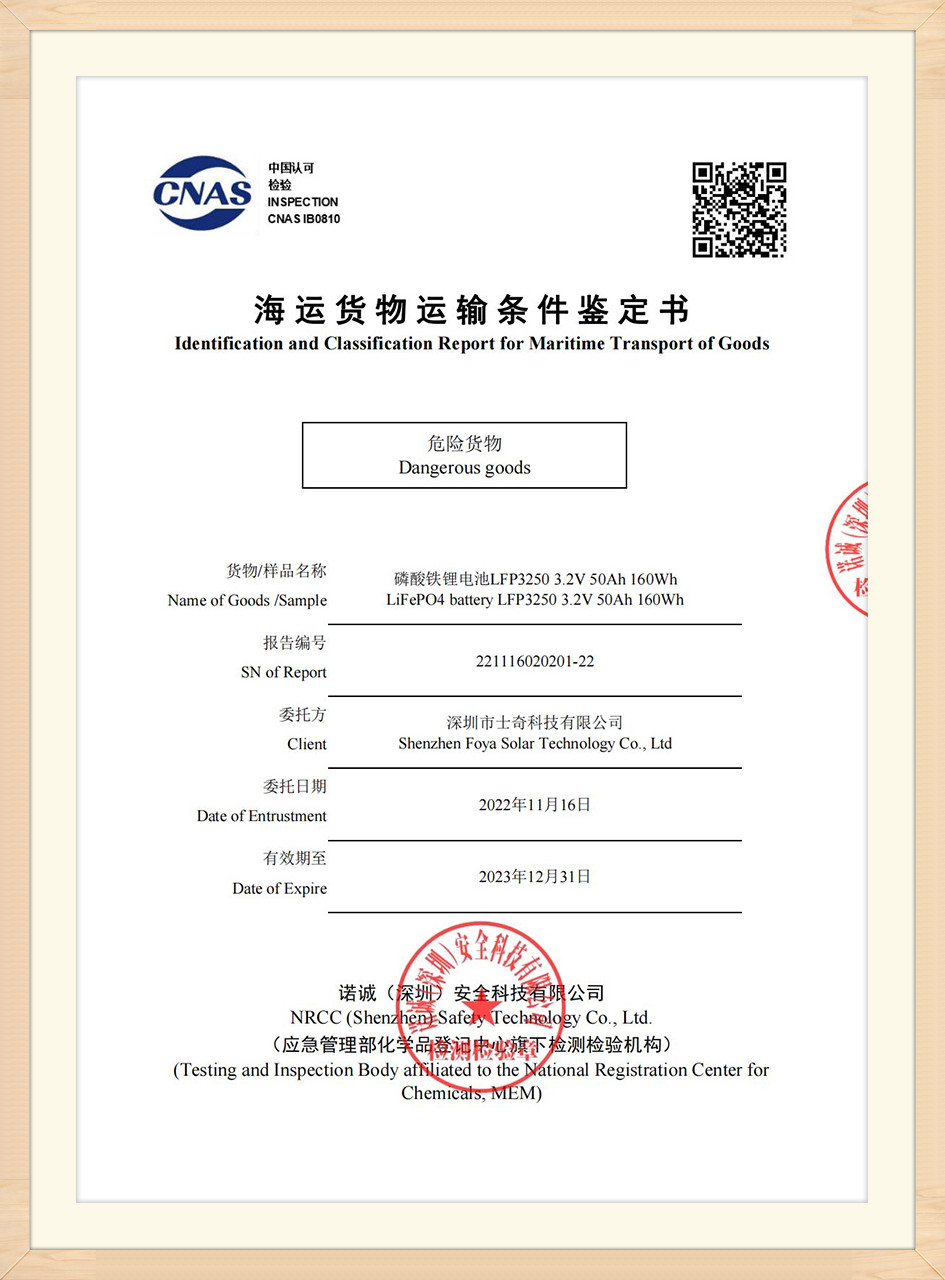
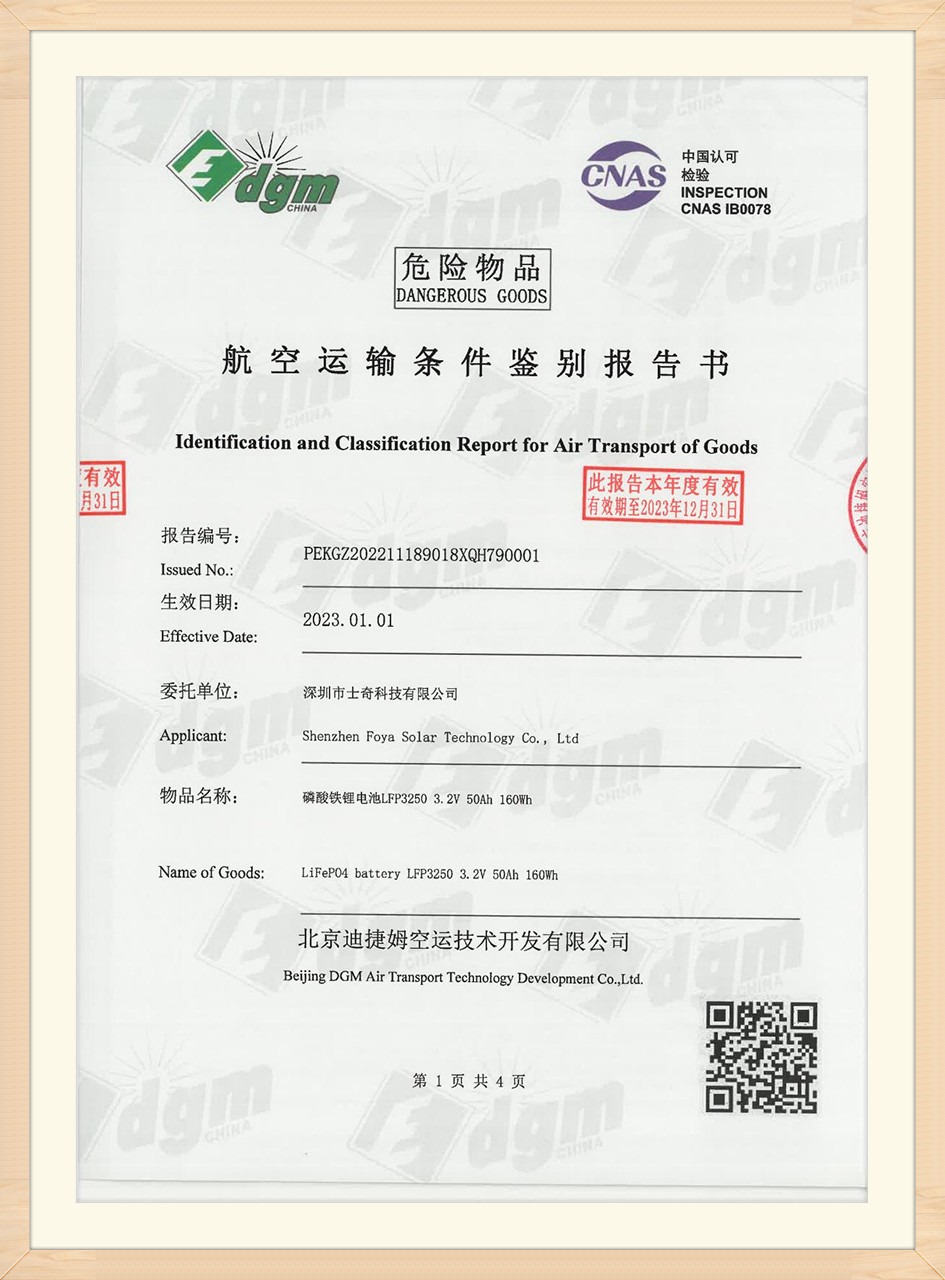
UN 38.3 & Hazardous Goods Shipping
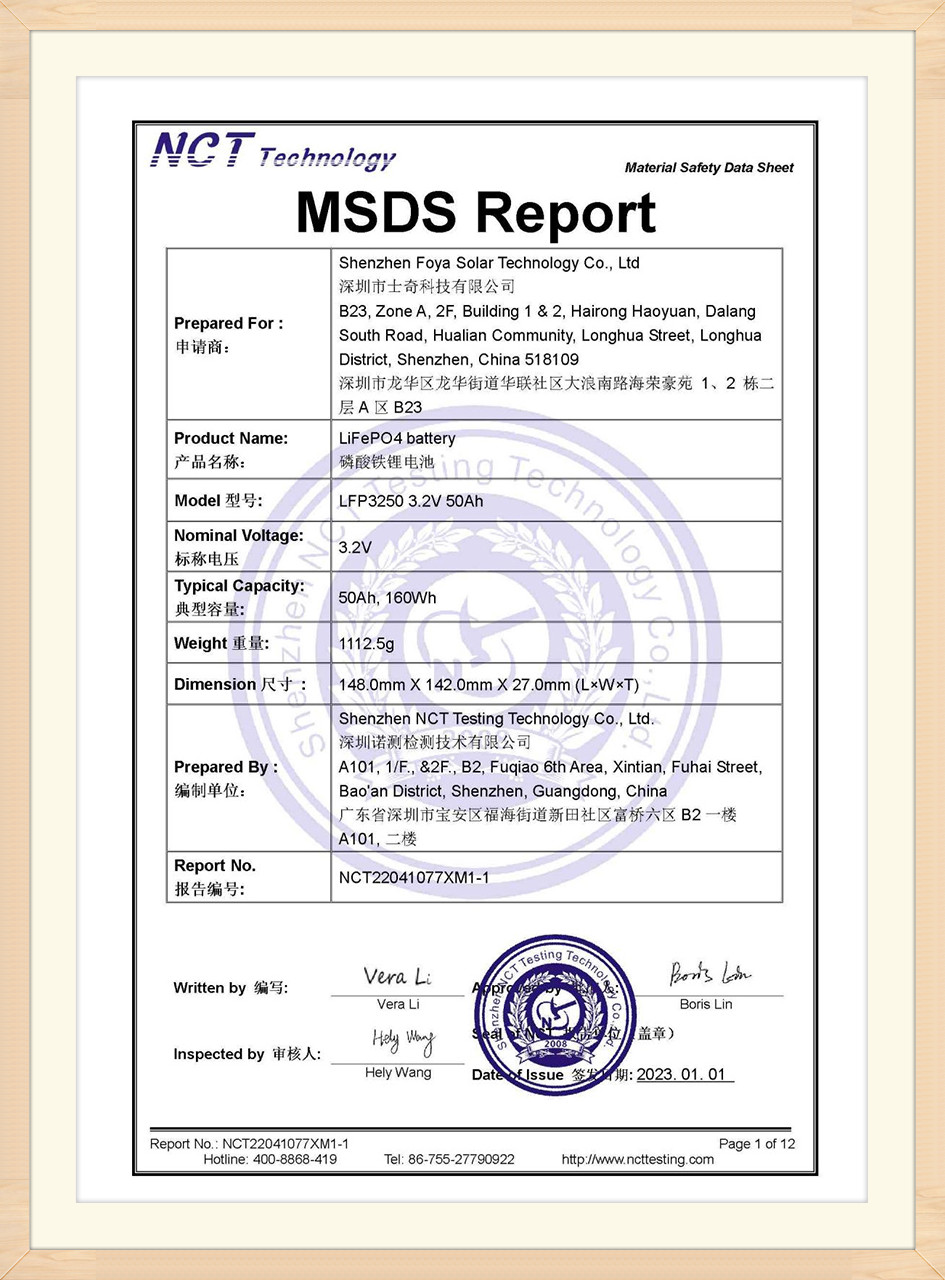
All cabinets and battery packs carry complete UN38.3 transport certification, MSDS reports, and drop-test validation, backed by UN-approved heavy-duty wood crate packaging for sea freight and door-to-door (DDP) logistics.
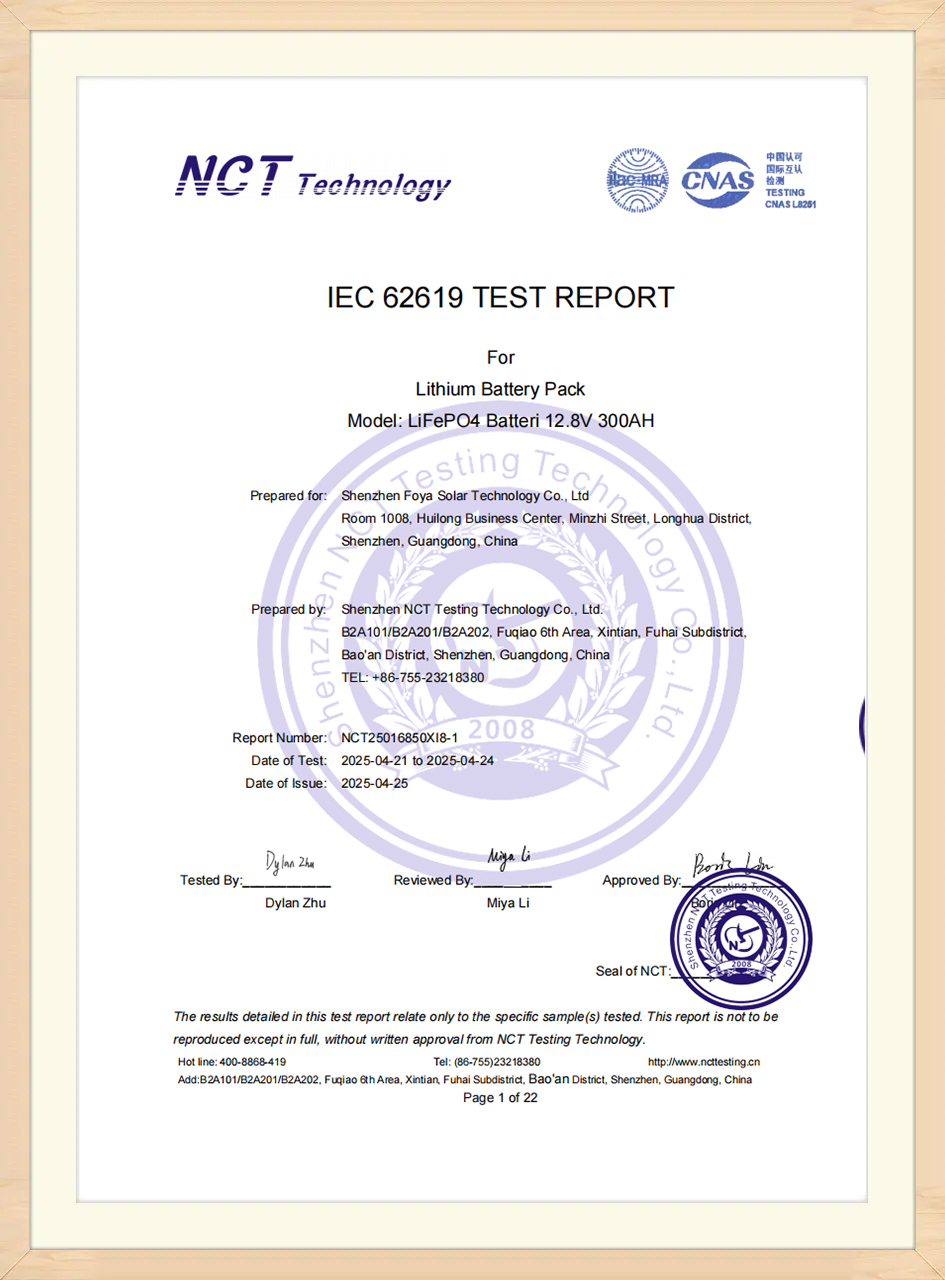
UL 1973, UL 9540A & IEC 62619
Our stationary energy storage products are built to comply with UL 1973 (battery packs), UL 9540A (thermal runaway fire propagation testing), and IEC 62619 for European and North American enterprise deployment.
EU Battery Regulation 2023/1542
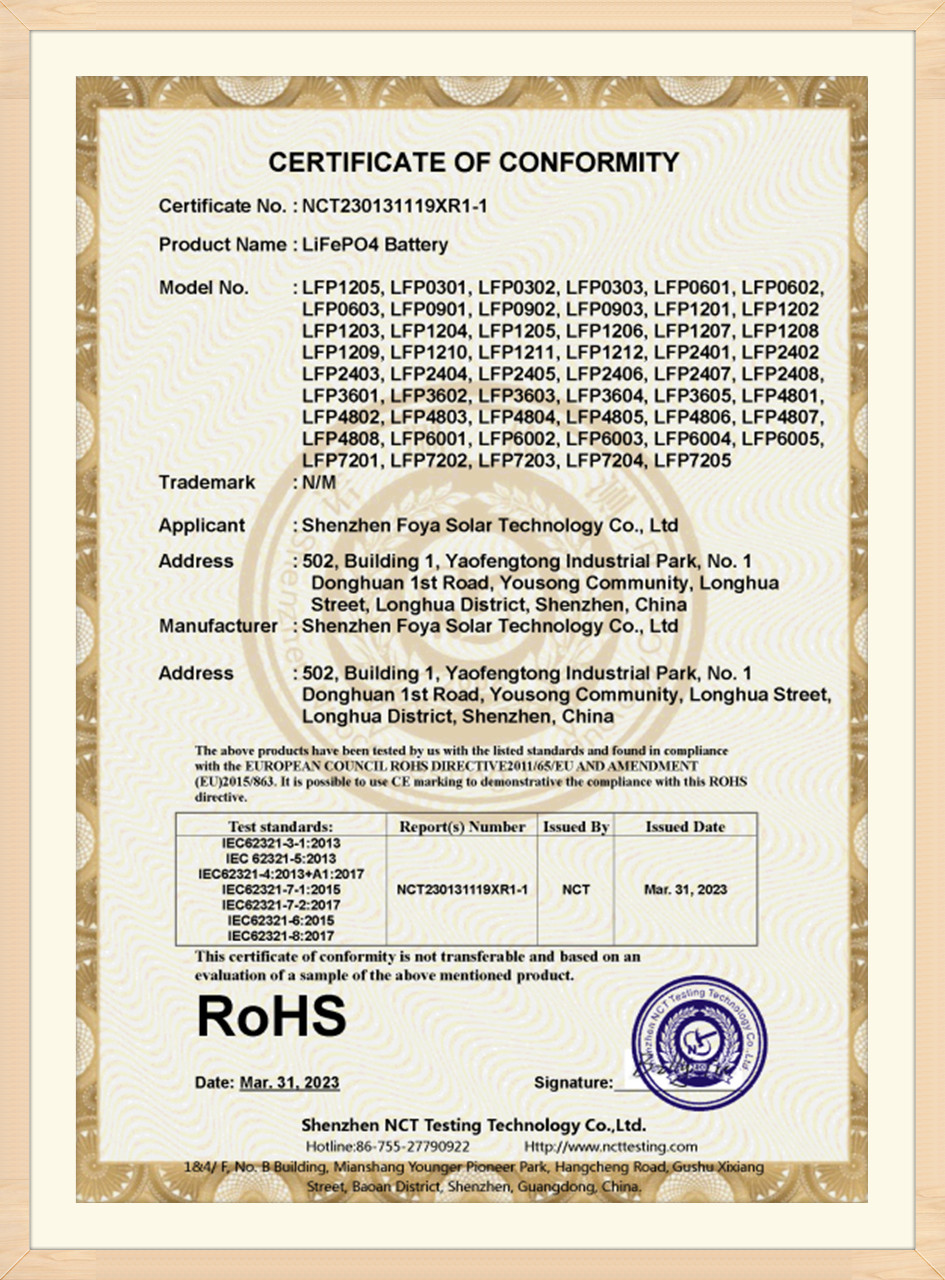
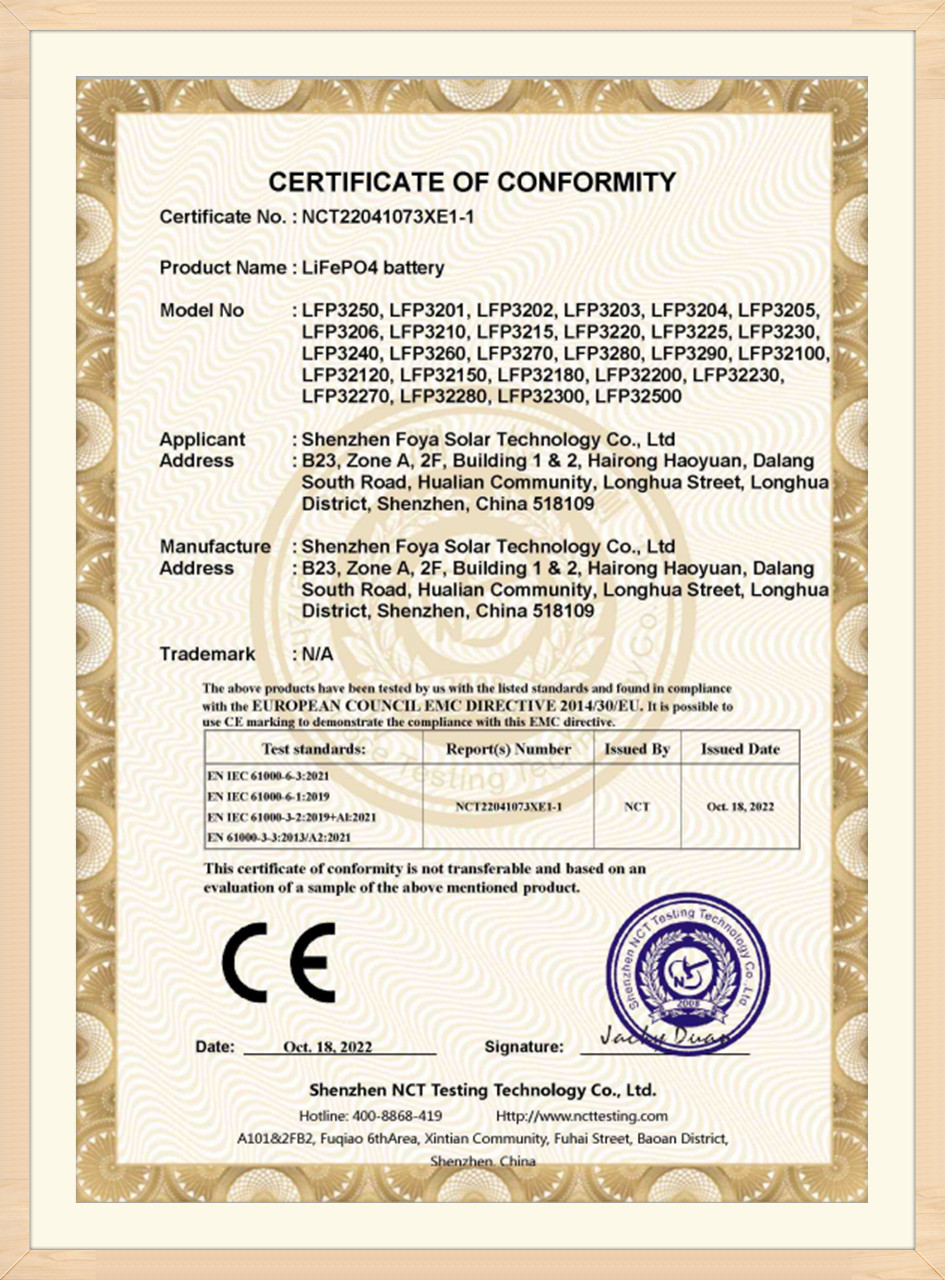
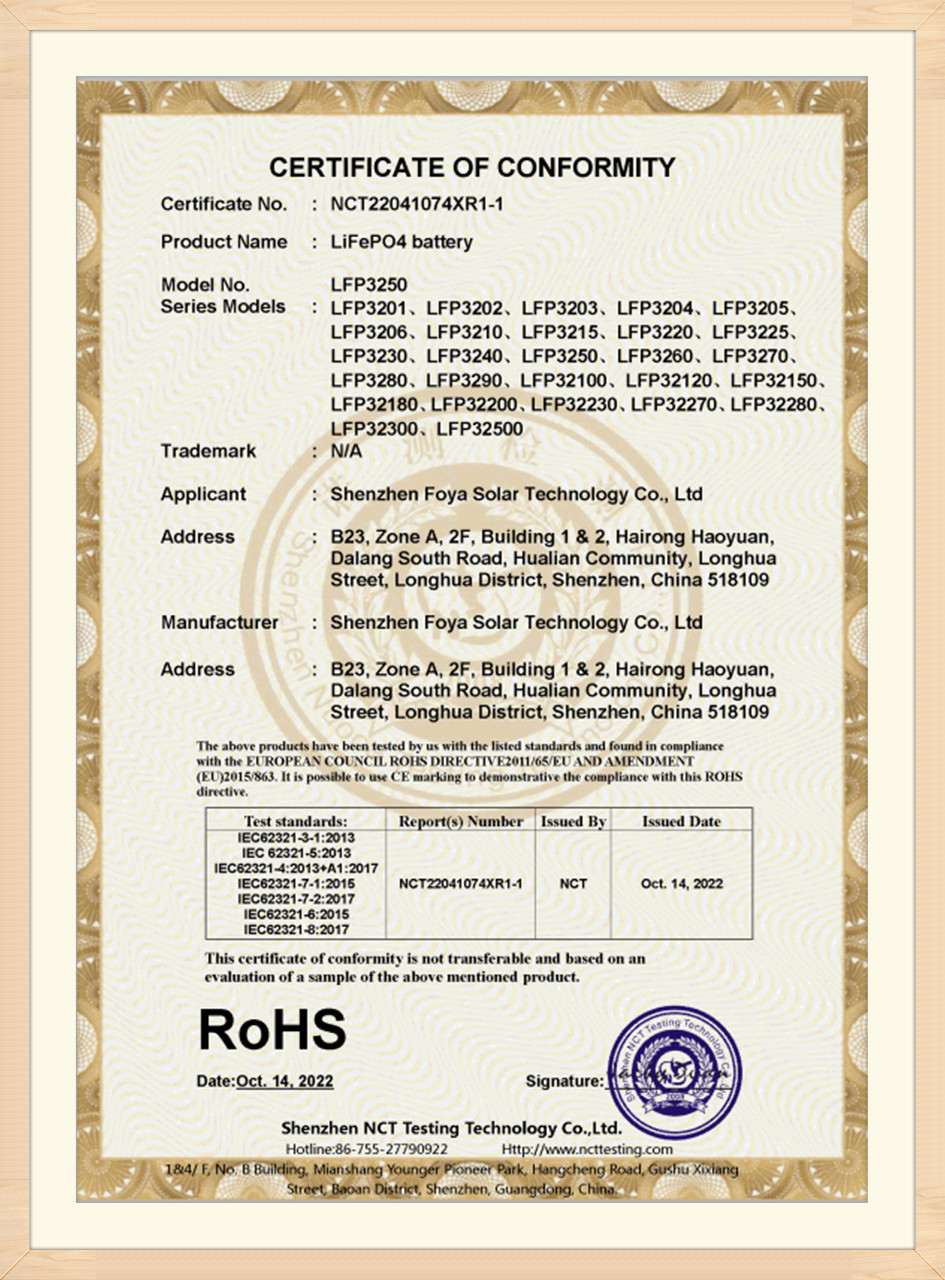
Fully compliant with EU carbon footprint reporting requirements, digital battery passport traceability readiness, recycled material content mandates, and CE / RoHS / REACH certifications.
Verified Factory Certifications & Test Reports
Click any document to review our audited quality compliance framework.
As battery technology accelerates, Foya Solar remains at the forefront of electrochemical innovation. Our R&D facility in Shenzhen is driving three major technological breakthroughs that will shape the next decade of commercial energy storage cabinets:
1. Sodium-Ion & LiFePO4 Hybrid Cabinets
Sodium-ion (Na-ion) batteries demonstrate outstanding sub-zero operational performance (-40°C discharge) and zero lithium raw material dependence. Foya Solar is pioneering dual-chemistry hybrid cabinets that pair high-density LiFePO4 modules with low-temperature Na-ion modules controlled by adaptive BMS software.
2. Ultra-High Capacity 680Ah+ Prismatic Form Factors
Moving beyond standard 280Ah/314Ah cells, our engineering team is integrating 680Ah cells into modular cabinet racks. This reduces physical electrical interconnect points by 50%, lowers internal resistance thermal losses, and boosts cabinet volumetric energy density by 22%.
3. AI Cloud BMS & Predictive Health Monitoring
Leveraging IoT edge devices, our next-generation battery cabinets stream real-time impedance, thermal gradient, and gas telemetry to the cloud. Machine learning algorithms predict potential cell degradation months in advance, allowing zero-downtime preventative maintenance.
Explore the second series of our customizable OEM battery solutions, including high-capacity cells, deep-cycle packs, chargers, and sodium-ion innovations.








Direct answers to technical, commercial, and manufacturing questions for enterprise procurement managers.