
High-Performance Wholesale Lithium Cells & Systems
Explore Grade A 3.2V prismatic cells, custom LiFePO4 packs, and industrial battery energy storage solutions engineered for international deployment.

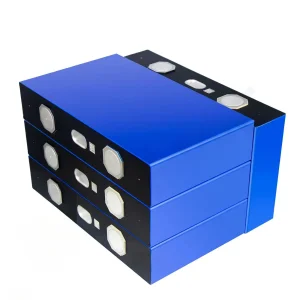






Macro-Industry Landscape & Global Sourcing Dynamics for Cellule Batterie Lithium
Analyzing global production capacities, raw material supply chains, and B2B procurement trends across North America, Europe, and Asia-Pacific markets.
The global energy storage transition and mobility electrification revolution have fundamentally changed how enterprise buyers approach the procurement of cellule batterie lithium (lithium battery cells). Across European industrial hubs, North American renewable developers, and Asian integration centers, procuring high-grade lithium iron phosphate (LiFePO4) and advanced lithium-ion cells directly from certified OEM/ODM factories has evolved from a simple purchasing decision into a critical strategic imperative.
Modern supply chains demand total transparency across chemical composition, raw material sourcing (such as high-purity lithium carbonate and iron phosphate precursors), automated cell synthesis, and standardized degradation testing. Sourcing directly from an established wholesale cellule batterie lithium factory guarantees that system integrators and battery pack manufacturers bypass intermediaries, securing raw material traceability, verified Grade A cell sorting, and direct technical alignment for custom battery management system (BMS) integration.
SEO & Procurement Insight: European and global procurement queries referencing "cellule batterie lithium factory" specifically target tier-1 cell manufacturing facilities capable of delivering prismatic cells (such as 3.2V 100Ah, 280Ah, 306Ah, 324Ah, and 680Ah formats) featuring ultra-low internal resistance, extended cycle life (exceeding 6,000 to 8,000 cycles), and rigorous safety certifications compliant with international transport and grid standards.
Global Lithium Cell Production Capacity & Raw Material Economics
Understanding factory economics requires a deep look into cathode chemistry and manufacturing automation. Industrial battery cells manufactured in high-capacity factories rely on closed-loop electrolyte injection systems and automated calendering processes that yield energy densities upwards of 160 Wh/kg to 185 Wh/kg for LiFePO4 chemistry. By negotiating volume-based procurement contracts directly with specialized OEM factories, global enterprises insulate their projects against spot-market volatility while locking in stringent quality control specifications.
Technical Architecture & Chemistry Deep-Dive: LiFePO4 vs. Alternative Chemistries
A rigorous comparative analysis of crystal structure stability, safety parameters, C-rate performance, and thermal management metrics.
| Electrochemical Parameter | LiFePO4 (Lithium Iron Phosphate) | NMC (Nickel Manganese Cobalt) | Na-Ion (Sodium-Ion) |
|---|---|---|---|
| Nominal Cell Voltage | 3.2 V | 3.6 V - 3.7 V | 3.0 V - 3.1 V |
| Gravimetric Energy Density | 150 - 185 Wh/kg | 230 - 300 Wh/kg | 110 - 160 Wh/kg |
| Cycle Life (80% DOD) | 6,000 - 10,000 Cycles | 1,500 - 3,000 Cycles | 4,000 - 6,000 Cycles |
| Thermal Runaway Threshold | ~270°C (Extremely Stable) | ~210°C (Requires Active Liquid Cooling) | ~260°C (High Thermal Stability) |
| Low-Temp Operation (-20°C) | 70% - 80% Capacity Retention | 80% - 85% Capacity Retention | 85% - 92% Capacity Retention |
| Primary B2B Application | Solar ESS, Golf Carts, Commercial Marine | High-Performance Passenger EVs | Low-Cost Storage, Extreme Cold ESS |
Electrochemical Stability & Thermal Runaway Mitigation
The primary advantage of sourcing cellule batterie lithium utilizing Lithium Iron Phosphate (LiFePO4) crystal geometry lies in the robust olivine crystal structure featuring strong P-O covalent bonds. Unlike layered oxide chemistries (such as NMC or NCA) which release free oxygen during thermal stress, LiFePO4 cathodes undergo minimal lattice volume change during extended cycling. This inherent physical stability virtually eliminates the risk of catastrophic thermal runaway, making prismatic LiFePO4 cells the gold standard for stationary energy storage systems (BESS) and heavy commercial equipment.
From an operational standpoint, prismatic cell design—encased in laser-welded aluminum shells with integrated explosion-proof safety valves—provides superior mechanical integrity compared to pouch cells. Factory-level sorting ensures matching voltage deltas ($\Delta V \le 2\text{mV}$) and internal resistance matching ($\Delta IR \le 0.3\text{m}\Omega$), preventing localized hot-spots and premature battery pack degradation during high C-rate charge and discharge cycles.
Laser Tab Welding Precision
Multi-point ultrasonic and fiber laser tab welding reduces contact impedance, supporting high continuous discharge currents without thermal degradation.
Electrolyte Nanocoating
Proprietary additive formulations stabilize the Solid Electrolyte Interphase (SEI) layer, significantly reducing capacity loss during initial formation cycles.
Automated Cell Grading
100% automated optical and electrical testing eliminates human error, guaranteeing strict adherence to capacity tolerances and IR metrics.
OEM/ODM Manufacturing Standards & Quality Assurance Protocols
A blueprint for auditing wholesale battery factories and verifying cell grade integrity before shipment.
When selecting a supplier among numerous global cellule batterie lithium factories, procurement executives must evaluate facility compliance across six critical operational benchmarks:
- Cleanroom Class Standards: Electrode coating and cell assembly must take place in ISO Class 7 (Class 10,000) or higher cleanroom environments with strictly controlled relative humidity ($\text{RH} < 1\%$) to prevent moisture-induced gas generation.
- Forming & Aging Duration: True Grade A cells undergo a minimum 14- to 28-day high-temperature and room-temperature aging cycle to monitor self-discharge rates ($K$-value) and identify micro-short circuits prior to shipping.
- Batch Traceability: Every individual cell must feature a high-resolution 2D QR code laser-etched onto the casing, detailing manufacturing date, batch number, initial voltage, capacity, and internal resistance readings.
- Automated X-Ray Inspection: Full-process inline X-ray scanning verifies anode/cathode overhang alignment, preventing internal dendrite growth and potential short-circuit vectors under mechanical stress.
Localized Applications & Heavy-Duty Use Cases
How wholesale lithium cell configurations power diverse commercial, industrial, and residential infrastructure worldwide.
Residential Solar ESS
Wall-mounted 51.2V 100Ah and 200Ah battery banks engineered for off-grid self-consumption, seamless inverter pairing, and reliable peak-shaving performance.
Commercial & Industrial Storage
High-voltage 215kWh air-cooled and 372kWh liquid-cooled containerized systems for microgrids, factory load leveling, and EV charging station augmentation.
Motive & Industrial Fleets
Deep-cycle, high-rate packs tailored for electric golf carts, AGVs, automated warehouse forklifts, and marine propulsion systems demanding rapid opportunity charging.
Regulatory Compliance, Logistics & Trade Certification Standards
Ensuring frictionless international trade, customs clearance, and long-term project bankability across global jurisdictions.
Exporting lithium battery cells requires strict compliance with dangerous goods transport standards and regional safety directives. Enterprise buyers sourcing cellule batterie lithium from OEM factories must verify the availability of complete certification dossiers, including:
- UN 38.3 & MSDS: Mandatory dangerous goods transportation documentation covering altitude simulation, thermal testing, vibration, shock, external short circuit, impact, overcharge, and forced discharge.
- UL 1973 & UL 9540A: Critical North American safety standards for stationary energy storage systems, certifying resistance to severe thermal runaway propagation.
- IEC 62619 & CE Marking: Essential European standards governing safety requirements for secondary lithium cells and batteries used in industrial and energy storage applications.
- EU Battery Regulation Compliance: Full alignment with upcoming European Union rules regarding carbon footprint declarations, recycled content thresholds, and Digital Battery Passport integration.
Technical Roadmap: Next-Generation Battery Horizons
Extending cell longevity, transitioning to solid-state electrolytes, and integrating sodium-ion co-existence architectures.
The roadmap for wholesale battery manufacturing focuses on pushing energy densities beyond current limitations while lowering total cost of ownership (TCO). Strategic factory developments focus on three primary innovations:
1. Semi-Solid & All-Solid-State Electrolytes: By replacing liquid organic electrolytes with solid oxide or sulfide ion conductors, solid-state cell architecture eliminates flammability risks while opening pathways for high-density lithium metal anodes.
2. Dry Electrode Coating Technology: Transitioning away from solvent-based slurry drying dramatically decreases factory energy consumption, eliminates N-Methyl-2-pyrrolidone (NMP) chemical recovery systems, and reduces manufacturing carbon footprints.
3. Sodium-Ion Co-Existence: Hybrid battery packs combining sodium-ion cells (for superior cold-temperature performance and cost efficiency) with LiFePO4 cells (for energy density) represent a major breakthrough for extreme-climate installations.
Advanced Wholesale Cellule Batterie Lithium Products
Select from high-capacity OEM modules, deep-cycle industrial cells, and containerized energy storage infrastructure.








Frequently Asked Questions (FAQ) for B2B Sourcing
Addressing core engineering, logistics, and quality assurance questions for wholesale procurement teams.
For standardized 3.2V Grade A LiFePO4 cells (such as 100Ah, 280Ah, 324Ah, or 680Ah), our baseline OEM minimum order quantity starts at 1 pallet (typically 32 to 64 cells). For custom-engineered battery packs featuring proprietary BMS firmware, specialized sheet metal housings, or private labeling, MOQ usually starts at 50 to 100 units depending on technical specifications.
Every batch of wholesale lithium cells undergoes strict 100% automated sorting. Cells are matched within tight tolerance limits: Internal Resistance deviation ($\Delta IR \le 0.3\text{m}\Omega$), Voltage deviation ($\Delta V \le 2\text{mV}$), and Capacity deviation ($\Delta C \le 0.5\%$). This prevents cell imbalance inside assembled packs, significantly extending overall system longevity.
Our smart BMS platforms support all industry-standard industrial protocols, including RS485, CANbus 2.0B, RS232, and UART. They are fully pre-programmed to seamlessly communicate with major off-grid and hybrid solar inverters (including Victron, Deye, Growatt, Voltronic, SMA, and GoodWe).
All cell shipments include comprehensive UN 38.3 test reports, Material Safety Data Sheets (MSDS), Dangerous Goods (DG) declarations, and UN-certified hazardous material packaging test certificates (UN 3480 / Class 9 Dangerous Goods compliance) for safe air, sea, and rail freight globally.