
Featured Industrial Battery Packs & Systems (Top Series)







The Commercial Expansion & Engineering Vitality of 3.2*52 Battery Architecture
An authoritative analysis of standard 3.2V 52Ah (3.2*52) cell chemistry, structural advantages, supply chain dynamics, and global deployment in renewable energy integration.
3.2*52 Cell Specification Breakdown
The designation 3.2*52 represents a benchmark industrial format in Lithium Iron Phosphate (LiFePO4) chemistry, operating at a nominal voltage of 3.2V with a standard capacity rating of 52Ah (166.4 Wh total energy per cell). Designed primarily in prismatic and specialized heavy-duty cylindrical geometry, this format balances thermal dissipation, gravimetric energy density, and mechanical robustness.
Unlike smaller consumer-grade cells (e.g., 18650 or 21700), the 3.2*52 structure provides an optimized form factor for building high-voltage modular battery banks (4S for 12.8V, 16S for 51.2V rack systems) with dramatically reduced busbar interconnections, lowering internal resistance and failure risks.
Global Sourcing Dynamics & Regional Demand
In North America, Western Europe, and Asia-Pacific, procurement managers are increasingly shifting away from lead-acid and ternary lithium (NMC) formats toward Grade-A 3.2V 52Ah LiFePO4 cells. Global demand is propelled by tight safety regulations, grid storage mandates, and commercial fleet electrification goals.
Engineering teams choose the 3.2*52 platform due to its chemical stability (thermal runaway threshold >270°C), zero cobalt content, and exceptional cycle performance exceeding 6,000 cycles at 80% Depth of Discharge (DoD), yielding an unbeatable Levelized Cost of Storage (LCOS).
Industrial Technical Specifications: 3.2V 52Ah Core Matrix
Comprehensive technical metrics provided by tier-1 original equipment manufacturers (OEM) for system integration and battery management system (BMS) design.
| Electrical & Mechanical Parameter | Standard Test Specification | Engineering Tolerance & Operating Limits |
|---|---|---|
| Nominal Voltage | 3.2 V | Operating Range: 2.5 V – 3.65 V |
| Nominal Capacity (0.5C Rate) | 52.0 Ah | Minimum Guaranteed: 51.5 Ah |
| Stored Energy per Cell | 166.4 Wh | Volumetric Energy Density: ~310 Wh/L |
| Internal Impedance (AC 1kHz) | ≤ 0.45 mΩ | Consistent grouping tolerance within ±0.05 mΩ |
| Standard Charge Current | 26.0 A (0.5C) | CC-CV protocol to 3.65V cut-off |
| Max Continuous Discharge Current | 104.0 A (2.0C) | Thermal monitoring required above 1.5C |
| Pulse Discharge Current (30s) | 156.0 A (3.0C) | SoC dependent (30%–90% SoC window) |
| Operating Temperature Window | Charge: 0°C to 55°C Discharge: -20°C to 60°C |
Heating pad recommended below 0°C charge |
| Chemical Composition | Lithium Iron Phosphate (LiFePO4) | Zero Cobalt / Zero Nickel / Non-Toxic |
| Weight & Shell Material | ~1.15 kg / Aluminum Alloy Enclosure | Explosion-proof safety vent built-in |
Why Sourcing 3.2*52 Cells from Chinese Advanced Factories Delivers Unmatched ROI
China accounts for over 80% of global lithium battery cell production capacity. Sourcing directly from certified Chinese manufacturing hubs yields distinct structural advantages in cost, scale, and technological consistency.
1. Fully Automated Cell Sorting & Laser Welding
Modern Shenzhen and Guangdong factories employ fully automated production lines equipped with AI optical inspection (AOI) and automatic capacity sorting equipment. Every 3.2*52 cell undergoes automated voltage and impedance matching to guarantee pack-level uniformity.
2. Raw Material Upstream Integration
Direct integration with domestic lithium carbonate refiners, synthetic graphite producers, and cathode suppliers yields significant per-kilowatt-hour cost reductions. This raw material security protects global B2B buyers from extreme price volatility.
3. Strict OEM Customization & BMS Tuning
Chinese manufacturers provide turnkey OEM/ODM flexibility. Engineering teams can customize cell terminal configurations (M6/M8 threaded studs or laser-welded busbar tabs), custom casing colors, smart BMS CANbus/RS485 protocol integration, and export packaging.
Localized Application Scenarios for 3.2*52 Cell Form Factors
The versatile 3.2V 52Ah core cell serves as the primary building block for high-reliability energy systems across multiple industrial verticals.
Residential & Light C&I Solar Storage
Configured in 16S1P or 16S2P arrays (51.2V 52Ah / 104Ah), 3.2*52 cells are widely integrated into wall-mounted and server-rack solar energy storage systems (ESS), interfacing smoothly with modern hybrid inverters.
Electric Golf Carts & Light Mobility
Replacing heavy lead-acid batteries, 48V (15S/16S) 52Ah LiFePO4 packs deliver twice the runtime, eliminate maintenance water filling, and reduce total vehicle weight by over 120 kg for electric golf carts and utility buggies.
Telecom Tower Uninterruptible Power Supply (UPS)
In remote off-grid telecom installations, 48V 52Ah backup systems ensure continuous operation during grid instability, operating reliably in extreme temperatures without thermal runaway risk.
Marine Auxiliary & RV Off-Grid Power
Deep-cycle 12.8V 52Ah (4S) battery units provide stable house power for marine electronics, trolling motors, and RV appliances, accepting rapid charging from solar controllers and smart alternators.
Future Trends: Evolution of 3.2V 52Ah and Advanced Chemistries
As global energy storage demands evolve, manufacturers are innovating across structural engineering, thermal management, and alternative chemistries.
Solid-State & Semi-Solid Integration
While standard liquid electrolyte 3.2*52 LiFePO4 cells dominate high-volume commercial markets, semi-solid-state variants are emerging. These developments aim to increase energy density to >220 Wh/kg while maintaining thermal safety even under severe mechanical puncture.
Sodium-Ion (Na-Ion) Alternative Parallel Tracks
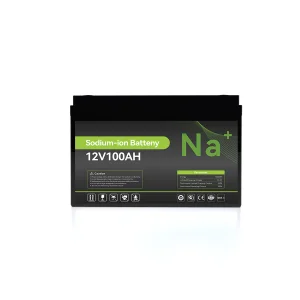
Sodium-ion battery packs (e.g., 12V 100Ah/200Ah Na-Ion units) are entering commercial production as complementary options. While sodium offers lower volumetric density, its exceptional sub-zero performance (-30°C operating capacity retention >85%) makes it an ideal counterpart to traditional 3.2V LiFePO4 cells in cold-climate installations.
Global Procurement Criteria & Quality Assurance Standards
When evaluating 3.2*52 battery cell suppliers, international sourcing teams must verify rigorous international certifications and quality metrics.
UN38.3 & MSDS Compliance
Essential for international air and ocean freight. Ensures cell design survives vibration, shock, thermal testing, external short circuits, altitude simulation, and forced discharge without leakage or combustion.
IEC 62619 & UL 1973 Certification
The gold standard for industrial and stationary energy storage safety. Covers electrical stress, mechanical drop safety, and thermal propagation resistance inside modular enclosures.
CE & RoHS Environmental Alignment
Mandatory for entry into the European Economic Area (EEA), ensuring complete absence of hazardous substances like heavy lead, mercury, or cadmium in cell manufacturing.
Featured Industrial Battery Packs & Systems (Complete Range)








Frequently Asked Questions for Wholesale 3.2*52 Cell Procurement
In-depth answers curated by experienced battery engineers to help B2B buyers, distributors, and system integrators make informed decisions.
What is the specific definition and technical scope of a "3.2*52" battery cell?
The term 3.2*52 typically denotes a industrial battery cell operating at a nominal voltage of 3.2 Volts with a nominal capacity of 52 Ampere-hours (Ah). Manufactured primarily using Lithium Iron Phosphate (LiFePO4) chemistry, these cells deliver high thermal stability, non-combustibility under puncture, and long life cycles (>6000 cycles). They serve as core modules for assembling 12.8V, 25.6V, and 51.2V battery packs for industrial applications.
How does 3.2V 52Ah LiFePO4 compare to standard ternary NMC or Lead-Acid batteries?
Compared to Lead-Acid, 3.2V 52Ah LiFePO4 cells provide 3 to 4 times higher energy density, 1/3 the weight, and 5 times the cycle life without maintenance. Compared to NMC (Nickel Manganese Cobalt), LiFePO4 has a higher thermal runaway limit (>270°C vs ~210°C), zero toxic cobalt content, and significantly lower cost per cycle, making it the preferred choice for stationary solar storage and heavy-duty industrial mobile applications.
What is the difference between Grade-A and Grade-B 3.2*52 cells when buying wholesale?
Grade-A cells meet 100% of the manufacturer's precise capacity, internal resistance (IR), and physical dimension tolerances, verified with complete factory QA tracking reports. Grade-B cells fail to meet full capacity expectations (e.g., yielding 48Ah instead of 52Ah), display uneven self-discharge rates, or show cosmetic flaws. Tier-1 B2B suppliers supply exclusively Grade-A cells with capacity and impedance matched within ±0.05mΩ for long-term reliability.
What customization (OEM/ODM) options are available for wholesale orders?
OEM customization covers multiple parameters: (1) Terminal structure (threaded M6/M8 studs, flat laser welding tabs, or flexible busbars); (2) Integrated Smart BMS supporting CANbus, RS485, UART, or Bluetooth communication protocols; (3) External protective packaging (metal cabinets, IP65/IP67 waterproof plastic cases, rolling wheels); (4) Custom branding, silk-screened logos, and customized export cartons.
How do Chinese manufacturers guarantee quality control across volume production?
Leading Chinese cell factories utilize automated assembly lines with strict quality gates: double-sided coating thickness monitoring, laser seam inspection, 100% automated high-voltage insulation tests, 14-day high-temperature aging rooms for self-discharge sorting, and final automated C-rate capacity verification prior to sea freight packaging.
What is the typical lead time and shipping protocol for international B2B orders?
Standard sample orders ship within 7–10 days. Volume container orders (e.g., 50,000 cells) typically require 20–30 days for production and grading. Products are packed in UN-certified dangerous goods (DG) cartons with wooden pallets, accompanied by complete UN38.3, MSDS, and sea freight inspection certificates for smooth customs clearance.