
Industrial Cell & Battery Pack Solutions
High-performance energy storage cells and custom module configurations directly from our automated manufacturing lines.


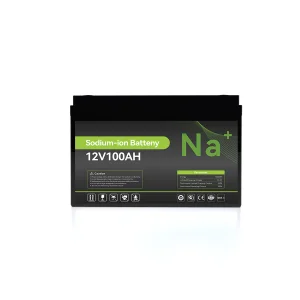





Global Commercial & Industrial Status of 30Ah Battery Cells
Why the 30Ah form factor represents the strategic equilibrium between volumetric efficiency, charge rates, and modular design scalability.
The Architectural Sweet Spot
In the rapidly expanding electrochemical energy storage sector, selecting a primary cell capacity dictates module architecture, thermal dynamics, and BMS complexity. While ultra-large prismatic cells (such as 280Ah–314Ah) dominate utility-scale containerized systems, the 30Ah cell capacity (LiFePO4 and Na-ion) has emerged as the definitive benchmark for light-mobility, commercial backup, high-drain industrial automation, and modular residential storage.
From an engineering standpoint, a 30Ah cell provides superior heat dissipation surfaces relative to its volume when compared to 100Ah+ units. This thermal footprint enables higher continuous C-rate performance (up to 3C-5C continuous discharge) without requiring parasitic active liquid cooling systems, making it highly cost-effective for OEM pack builders globally.
Supply Chain & Tier-1 Manufacturing Clusters
Global production of 30Ah cells is primarily concentrated in automated gigafactories across Asia, particularly within the Pearl River Delta (Shenzhen, Dongguan) and Yangtze River Delta tech hubs. These tier-1 factories leverage fully automated electrode coating, laser welding, and high-precision electrolyte injection lines.
B2B procurement teams must distinguish between commercial-grade cell production lines and specialized industrial-grade factories. Tier-1 30Ah factories enforce internal resistance matching within $\le 0.5\text{ m}\Omega$ and capacity tolerance within $\pm 0.3\text{Ah}$, ensuring high yields during multi-parallel pack assembly.
Electrochemistry & Mechanical Form Factors in 30Ah Manufacturing
Understanding the engineering trade-offs between Prismatic, Cylindrical (32140/4680), and Pouch 30Ah configurations.
Prismatic 30Ah Cells
Housed in rigid aluminum alloys with safety pressure relief valves, prismatic 30Ah cells feature winding or stacking electrode structures. They deliver excellent space utilization in rectangular battery enclosures, high mechanical robustness against shock/vibration, and simple busbar bolting or laser welding connection points.
Large Cylindrical (32140 / 4680)
The rapid scaling of large cylindrical formats allows 30Ah capacities to be achieved inside individual cells (e.g., 32140 or 4680 formats). These cells benefit from standardized automated assembly lines, high structural consistency, and seamless heat dissipation channels between cell gaps in active air-cooled setups.
LFP vs. Na-Ion (Sodium-Ion) 30Ah
While Lithium Iron Phosphate (LiFePO4) remains the dominant chemistry for longevity and energy density ($150\text{--}170\text{ Wh/kg}$), 30Ah Sodium-Ion (Na-Ion) cells are rapidly capturing market share for low-temperature applications (functioning smoothly down to $-40^\circ\text{C}$) and cost-critical off-grid installations.
| Performance Metric | 30Ah LiFePO4 (Prismatic) | 30Ah Sodium-Ion (Na-Ion) | 30Ah NMC (Lithium Ternary) |
|---|---|---|---|
| Nominal Voltage | 3.2 V | 3.0 V - 3.1 V | 3.6 V - 3.7 V |
| Gravimetric Energy Density | 150 - 165 Wh/kg | 115 - 135 Wh/kg | 210 - 240 Wh/kg |
| Cycle Life (80% DOD) | 4,000 - 6,000 Cycles | 3,000 - 5,000 Cycles | 1,500 - 2,500 Cycles |
| Operating Temperature Range | -20°C to 60°C | -40°C to 65°C | -20°C to 55°C |
| Thermal Runaway Threshold | ~270°C (Extremely Safe) | ~290°C (Inherently Safe) | ~210°C (Requires Active Mitigation) |
| Primary B2B Target Markets | Solar ESS, RV/Marine, Telecom UPS | Cold-Climate ESS, Telecom, AGVs | High-Performance EVs, Drones |
Macro-Industry Application Engineering for 30Ah Systems
Translating bare 30Ah cells into turn-key B2B commercial infrastructure and industrial mobility systems.
1. Telecom & Data Center Backup (48V / 51.2V 30Ah Racks)
Telecom base stations and edge-computing nodes require compact 19-inch 3U rack-mounted batteries. Arranging 16 units of 30Ah LiFePO4 cells in series (16S1P configuration) yields a perfect 51.2V 30Ah module (1.536 kWh). This configuration allows modular parallel stacking up to 15 units (23 kWh total backup capacity), replacing legacy lead-acid batteries while reducing physical space consumption by 70%.
2. AGVs, AMRs & Industrial Automation (24V / 36V 30Ah)
Automated Guided Vehicles (AGVs) operating in 24/7 logistics centers demand opportunity fast-charging (1C to 2C charge rate during 15-minute shift breaks). 30Ah cell architectures with low internal resistance permit thermal stability during high current surges without degrading cell anodes, offering 5+ years of continuous multi-shift operations.
3. Commercial Marine & Deep-Cycle Off-Grid Systems
For marine house power and solar trolling systems, 12.8V 30Ah packs (4S1P LFP) engineered in IP67 sealed ABS or aluminum enclosures deliver zero-maintenance operation. Unlike lead-acid equivalents, 30Ah LFP packs maintain flat voltage discharge curves under heavy inverter loads (e.g., microwave, navigation radar, lighting systems).
Localized Application Scenarios & Regulatory Compliance
Navigating North American, European, and Asia-Pacific market requirements for OEM battery imports.
Regional Deployment Frameworks
North America: Sourcing 30Ah wholesale battery packs for US/Canada distribution mandates stringent compliance with UL 1973 (for stationary energy storage) and UL 2580 (for light electric vehicles). Factories supplying these markets must incorporate UL-certified internal thermal barriers, flame-retardant enclosures (UL 94-V0 rated), and active BMS firmware with redundant over-voltage protection.
European Union: Under the new EU Battery Regulation (EU 2023/1542), B2B importers are required to provide a verifiable "Battery Passport" detailing carbon footprint transparency, recycled cobalt/lithium percentages, and compliance with CE, RoHS, and IEC 62619 safety standards. B2B factories must maintain full material traceability from raw precursor powder to completed cell assembly.
Environmental Adaptation Challenges
Extreme Cold Climates (Nordics / Canada): Standard LiFePO4 cells suffer severe capacity loss and lithium plating risks when charged below 0°C. Factory-level solutions involve integrating internal PTC heating films powered by the BMS or deploying 30Ah Sodium-Ion chemistry which retains over 85% usable discharge capacity at -30°C.
High Humid / Tropical Environments (Southeast Asia / LatAm): Tropical solar street lighting and off-grid telecom nodes demand anti-corrosive conformal coatings on cell protection circuit boards (PCBs) and hermetically sealed prismatic cell terminals to prevent moisture-induced thermal runaway or short circuits.
Technology Roadmap: 30Ah Manufacturing (2025–2035)
Emerging manufacturing breakthroughs that will redefine energy density, cost structures, and smart battery integration.
Dry Electrode Coating
Transitioning from wet slurry coating to solvent-free dry electrode technology reduces factory energy consumption by 45%, lowers cell manufacturing costs, and increases cathode tap density by up to 12% in 30Ah formats.
Semi-Solid State Cells
Replacing liquid organic electrolytes with polymer-ceramic hybrid electrolytes boosts 30Ah safety levels, completely eliminating leakage risks while elevating cycle longevity beyond 8,000 cycles at room temperature.
Edge-AI Integrated BMS
Next-generation 30Ah smart battery packs embed micro-controllers capable of executing real-time electrochemical impedance spectroscopy (EIS) to predict thermal anomalies and cell degradation days before failure occurs.
Sodium-Lithium Hybridization
Pack architectures combining 30Ah LiFePO4 cells and 30Ah Na-Ion cells managed by a dynamic dual-chemistry BMS leverage the low-temp charging of sodium and the energy density of lithium in a single housing.
B2B Buyer Checklist: Evaluating Wholesale 30Ah Battery Factories
Essential technical parameters and quality assurance protocols to audit prior to issuing purchase orders (POs).
1. Quality Assurance & Testing Standards
When vetting a 30Ah battery manufacturing facility, request verification for the following mandatory testing procedures:
- Automated Grading & Capacity Matching: Ensure 100% of cells undergo high-temperature aging (minimum 14 days) and automatic impedance sorting ($\le 0.5\text{ m}\Omega$ variation).
- Mechanical Abuse Testing: Verify test reports for UN 38.3 heavy impact, nail penetration (no fire, no explosion), crush testing, and high-frequency vibration sweeps.
- Weld Integrity Testing: Ultrasonic or fiber laser welding lines must feature automated optical inspection (AOI) to prevent cold welds or busbar detachment under high current draw.
2. OEM/ODM Customization Capabilities
Tier-1 30Ah factories should provide end-to-end engineering customization for private-label clients:
- BMS Protocol Customization: Support for CANbus (CANopen, J1939), RS485, RS232, and Bluetooth LE communication with custom protocol mapping for Victron, SMA, and Growatt inverters.
- Enclosure Engineering: Custom tooling for sheet metal, extruded aluminum, or IP67 injection-molded plastic housings designed for space-constrained footprints.
- Logistics Compliance: UN 38.3 certification, MSDS, and Dangerous Goods (DG) sea/air freight packaging documentation ready for global customs clearance.
Frequently Asked Questions for Sourcing 30Ah Batteries
Direct engineering answers to common procurement, design, and manufacturing inquiries.
Explore Additional Industrial Battery Solutions
Complete your project requirements with our extensive range of specialized cells, battery packs, and matching intelligent chargers.







