
Tier-1 Battery Cells & Energy Storage Enclosures







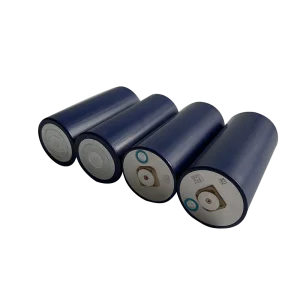
Architectural Foundations of "Shave Off Peaks and Fill In Valleys" in Modern Grids
In commercial, industrial, and utility energy management, the mandate to shave off peaks and fill in valleys represents the single most impactful lever for operational expenditure optimization and grid stabilization. Global electrical grids operate under intense dynamic strain caused by the accelerating adoption of high-power industrial machinery, megawatt-scale EV fast-charging infrastructures, and variable renewable generation (photovoltaics and wind).
When an enterprise facility experiences sudden surges in power consumption, transmission regional authorities levy exorbitant Demand Charges (often accounting for 30% to 70% of a commercial electricity bill). Peak shaving refers to the automated, millisecond-level discharge of localized Battery Energy Storage Systems (BESS) during these high-demand intervals to flatten the building’s load profile. Conversely, valley filling involves charging these energy storage assets during off-peak night hours or periods of surplus solar generation when electricity tariffs are at their lowest baseline.
While Time-of-Use (TOU) Arbitrage focuses purely on buying low-cost kilowatt-hours ($/kWh) and selling or consuming them during expensive peak tariff windows, Peak Demand Shaving mitigates maximum power throughput charges ($/kW). An engineered BESS must integrate high C-rate capability, long duty cycle resilience, and sophisticated Battery Management System (BMS) software to address both monetary vectors simultaneously.
Global Macroeconomic Dynamics & Procurement Imperatives
Across North America, Europe, Australia, and key emerging markets, power utilities are restructuring grid tariffs. Static pricing is rapidly disappearing in favor of dynamic dynamic pricing, demand-based ratchets, and carbon-intensity billing. System Integrators, EPC (Engineering, Procurement, and Construction) firms, and OEM brand operators face stringent requirements when sourcing energy storage hardware:
Safety & Thermal Runaway Containment
Industrial battery deployments require non-propagating cell chemistry. Prismatic Lithium Iron Phosphate (LiFePO4) has become the global benchmark due to its robust olivine crystal structure, resisting thermal decomposition up to 500°C compared to nickel-based chemistries.
Flexible OEM/ODM White-Label Customization
Global buyers demand bespoke form factors, customizable rack dimensions, proprietary BMS firmware protocols (RS485, CAN, Modbus-TCP), and private labeling to integrate cleanly into existing microgrid software ecosystems.
Bankability & Certifications
International regulatory compliance is non-negotiable. B2B buyers require verified UN38.3, UL1973, UL9540A, CE, and IEC62619 test packages to ensure smooth customs clearance and insurance eligibility for commercial projects.
The Competitive Edge of Chinese Factory Engineering Efficiency
As a premier Shenzhen-based OEM/ODM energy storage system manufacturer, Shenzhen Foya Solar Technology Co., Ltd. leverages China's unmatched industrial ecosystem to provide global clients with significant cost, speed, and quality advantages.
| Vector | Western Procurement / Integrators | Foya Solar OEM Manufacturing Platform |
|---|---|---|
| Supply Chain Integration | Fragmented procurement of cells, BMS, and enclosures across vendors. | Fully integrated vertical ecosystem from raw cell matching to final containerized integration. |
| Prototyping & Customization | 6–12 months engineering lead time for custom battery enclosures. | Rapid OEM/ODM engineering cycles: Prototype delivery in 15–30 days. |
| Quality Verification | Sample-based automated testing. | 100% High-potential (Hi-Pot), internal resistance, capacity, and thermal imaging checks before shipment. |
| Cost Structure | High overhead per kWh of integrated capacity ($180–$250/kWh). | Highly optimized economies of scale delivering Grade-A prismatic LFP systems at superior factory-direct margins. |
Localized High-Impact Application Scenarios
Tailoring "shave off peaks and fill in valleys" battery hardware to localized duty cycles is essential for maximizing ROI. Below are primary field-tested deployment profiles:
1. Commercial & Industrial Manufacturing Facilities
Heavy machinery, stampers, and industrial furnaces cause sharp intermittent electrical load spikes. Installing a cabinet-scale (e.g., 50kW/96kWh to 100kW/215kWh) energy storage cabinet caps utility peak demand thresholds, providing rapid payback within 2 to 4 years through avoided peak penalty tariffs.
2. Solar + Diesel Hybrid Microgrids (Mining & Off-Grid)
Remote mining sites or agricultural communities running on diesel generators suffer high fuel delivery expenses. Integrating containerized liquid-cooled BESS (372kWh+) allows generators to operate consistently at optimal load curves. The battery fills energy valleys during high solar output and discharges during peak equipment loads.
3. High-Power EV Charging Hubs
Simultaneous DC fast-charging of multiple electric vehicles creates extreme grid demand transients. Localized 51.2V and high-voltage rack systems buffer the local transformer, delivering megawatt bursts to vehicles without tripping utility distribution limits.
Industry Trends: Liquid Cooling, 314Ah+ Cells, and Sodium-Ion Integration
The commercial and industrial battery storage landscape is undergoing a massive technical shift driven by three core innovations:
Liquid Cooling Thermal Management
Traditional air-cooled battery cabinets exhibit thermal gradients of 5°C to 8°C between cell centers and edges. Advanced liquid-cooled cabinets (utilizing glycol-water circuits) maintain inter-cell temperature variance under 2.5°C, increasing total system energy efficiency by 3% and extending physical service life by up to 20%.
Ultra-Large Capacity Prismatic Cells (314Ah, 680Ah)
Moving beyond conventional 280Ah cells to 314Ah and 680Ah formats reduces required physical cable interconnects, cuts busbar welding points by 30%, and drastically reduces failure modes across megawatt-hour energy storage containers.
Sodium-Ion Battery Commercialization
For extreme cold-weather operations (-30°C to -10°C) and cost-sensitive baseline storage, Sodium-Ion (Na-ion) battery chemistry provides an exceptional alternative to lithium, offering superior low-temperature discharge retention and zero reliance on lithium raw material price swings.







