
High-Performance Cellule LFP Cells & Custom Modules
Engineered for extreme cycle stability, thermal safety, and optimized total cost of ownership across industrial, solar, and electric mobility deployments.





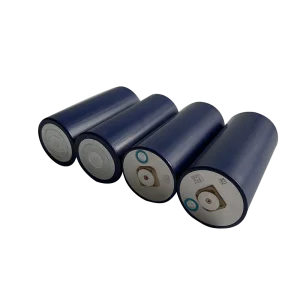


Technical Architecture of Cellule LFP Technology
Understanding why Lithium Iron Phosphate (LiFePO4) has emerged as the definitive benchmark for enterprise energy storage and industrial electrification.
The global transition away from legacy lead-acid and cobalt-heavy nickel-manganese-cobalt (NCM) chemistries has placed the cellule LFP (Lithium Iron Phosphate cell) at the center of energy transition strategies. Engineered with an olivine crystal structure ($LiFePO_4$), the cell's covalent P-O chemical bonds provide intrinsic thermal stability, preventing oxygen release even at elevated junction temperatures exceeding 500°C.
As a leading OEM cellule LFP manufacturer and supplier, our engineering team optimizes cathode particle synthesis via nanometer-scale carbon coating. This solves the historical limitation of low intrinsic electrical conductivity in pure iron phosphate, ensuring exceptional rate capability, minimal impedance build-up, and sustained capacity retention over thousands of deep discharge cycles.
| Battery Chemistry | Nominal Cell Voltage | Thermal Runaway Temp | Cycle Life (80% DoD) | Safety Profile | Levelized Cost of Storage (LCOS) |
|---|---|---|---|---|---|
| Cellule LFP (LiFePO4) | 3.2 V | > 270°C to 500°C | 4,000 - 8,000+ Cycles | Highest (Non-Combustible) | Lowest ($/kWh/cycle) |
| NCM / NCA Lithium-Ion | 3.6 V - 3.7 V | ~ 210°C | 1,200 - 2,500 Cycles | Moderate (Thermal Runaway Risk) | Moderate to High |
| Sodium-Ion (Na-Ion) | 3.0 V - 3.1 V | > 260°C | 3,000 - 5,000 Cycles | High | Emerging Low Cost |
| Lead-Acid (AGM/GEL) | 2.0 V | N/A (Thermal Melting) | 400 - 800 Cycles | Low (Acid Leakage/Gassing) | High (Frequent Replacement) |
Prismatic Aluminum Casing
Prismatic cells (such as 50Ah, 80Ah, 230Ah, 280Ah, 314Ah, and 680Ah) offer maximum volumetric efficiency, integrated explosion-proof safety valves, and laser-welded terminal busbars.
Cylindrical Cell Engineering
From 18650 formats to high-capacity 60150 cells, our cylindrical lines provide uniform heat distribution, mechanical rigidity, and automated cell grouping for specialized mobility devices.
Zero Cobalt, Sustainable Supply
Eliminating expensive, ethically volatile cobalt and nickel allows enterprise buyers to achieve stringent ESG mandates while benefiting from stable material cost dynamics.
Global Industry Status & Commercial Outlook
How evolving regulatory frameworks and grid modernization are driving global volume adoption of cellule LFP solutions.
Supply Chain Stabilization & TCO Optimization
The global battery market is undergoing a structural shift. Renewable energy penetration across North America, Europe, and Asia-Pacific requires long-duration energy storage systems (BESS) capable of daily cycling for 15 to 20 years. In this environment, initial capital expenditure (CAPEX) is secondary to operational durability (OPEX).
Cellule LFP chemistry delivers an unmatchable Total Cost of Ownership. With cycle lifetimes exceeding 6,000 cycles at 80% Depth of Discharge (DoD), utility operators and commercial site managers achieve a levelized cost of energy storage well below $0.05 per kWh cycled.
Regulatory Driver Alignment
- EU Battery Regulation 2023/1542: Mandatory carbon footprint disclosures, digital battery passports, and strict recycled material recovery targets.
- US IRA (Inflation Reduction Act): Incentivizing domestic supply transparency, clean energy storage tax credits, and rigorous battery safety standards.
- Global Grid Mandates: Replacing legacy diesel backup generators with zero-emission lithium-iron-phosphate battery cabinets.
Custom OEM/ODM Engineering Workflows
From single-cell pairing to full battery pack assembly, our Shenzhen manufacturing infrastructure ensures zero-defect quality control.
Cell Capacity Grading
Every cellule LFP undergoes strict sorting: $\Delta V < 5\text{mV}$, $\Delta R < 0.2\text{m}\Omega$. Only perfectly matched Grade A cells move to module packaging.
BMS Logic & Protocol
Customization of intelligent Battery Management Systems supporting CANbus, RS485, RS232, and UART protocols compatible with major inverters.
Structural & Thermal Enclosure
Mechanical engineering for heavy-duty metal casings, IP54 to IP67 ingress protection, anti-vibration framing, and liquid cooling channels.
End-of-Line Validation
100% automated aging, insulation resistance testing, thermal imaging, and high-current surge protection verification before shipment.
Targeted Industrial & Commercial Scenarios
Deploying cellule LFP technologies where safety, thermal endurance, and mechanical durability cannot be compromised.
Commercial & Industrial ESS
Integrated 50kW/96kWh and liquid-cooled 100kW/215kWh cabinets utilizing 280Ah/314Ah cellule LFP configurations for factory peak shaving, microgrid backup, and PV self-consumption.
Residential Energy Storage
Wall-mounted and rolling 51.2V 100Ah/200Ah household systems engineered for seamless off-grid inverter coupling and uninterruptible home emergency power supply.
Motive Power (Forklifts & Golf Carts)
Deep-cycle 48V/51.2V drop-in replacement lithium battery packs engineered to withstand continuous heavy shock, vibration, and rapid opportunity charging in logistics fleets.
Global Certification & Regulatory Safety
Ensuring fast customs clearance and regulatory approval across key international markets.
Importing industrial lithium cells and completed battery assemblies into heavily regulated jurisdictions requires rigorous documentary backing. All cellule LFP products manufactured at our facility carry full international testing certification suites:
UN 38.3 & MSDS
Certified for safe international air, sea, and land logistics transport, including hazardous material handling protocols (Class 9 Lithium Batteries).
IEC 62619 & CE Marking
Strict compliance with European safety specifications for stationary industrial lithium battery storage and thermal runaway containment.
UL 1973 & UL 9540A
North American compliance testing options for stationary ESS installations, assuring zero cell-to-cell thermal propagation.
Technology Roadmap: Next-Gen Cellule LFP Developments
Pioneering innovations in manganese doping, dry electrode processing, and cloud-assisted AI battery diagnostics.
1. LMFP (Lithium Manganese Iron Phosphate) Cathode Upgrade
By incorporating manganese into the cell cathode structure ($LiMn_xFe_{1-x}PO_4$), the nominal operating cell voltage rises from 3.2V to 3.7V. This delivers a ~20% increase in volumetric energy density without sacrificing the inherent thermal safety profile of traditional cellule LFP architecture.
2. Dry Electrode Manufacturing & Zero-Solvent Coaters
Transitioning from wet slurry solvent casting to solvent-free dry electrode coating cuts factory energy consumption by up to 30%, eliminates toxic NMP emissions, and improves electrolyte absorption speeds within high-density prismatic cells.
3. AI Cloud Telemetry & Digital Twin BMS
Integrating embedded edge computing into battery management electronics allows real-time data streaming to cloud-based neural networks. This predictive monitoring detects micro short circuits weeks before physical failure, maximizing field reliability.
Frequently Asked Questions (Q&A)
Answers to common technical, procurement, and engineering inquiries from OEM buyers and B2B integrators.
What makes Grade A cellule LFP cells superior for industrial OEM projects?
What is the difference between prismatic and cylindrical LFP cells?
Can Foya Solar customize BMS communication protocols for our existing inverters?
What is the expected operating temperature range for cellule LFP packs?
How does Foya Solar handle warranty claims and quality assurance?
What are the minimum order quantities (MOQ) for custom OEM orders?
Explore Additional Cellule LFP Solutions
High-capacity prismatic cells, household batteries, and heavy industrial power units ready for worldwide dispatch.







