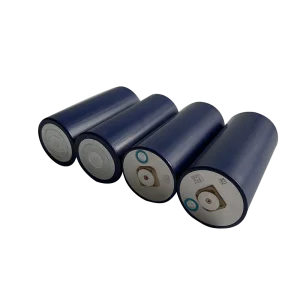
Featured 48V ODM Battery Cells, Packs & System Cabinets








The Global Paradigm Shift Toward 48V (51.2V Nominal) LiFePO4 Battery Solutions
Analyzing market drivers, grid modernization trends, and electrochemical supremacy in commercial & industrial energy storage systems (ESS).
Electrochemical & Safety Supremacy
Lithium Iron Phosphate (LiFePO4) has emerged as the definitive chemistry for stationary storage and heavy-duty motive power. Offering an intrinsic thermal runaway limit exceeding 270°C (compared to 210°C for NMC), 48V LiFePO4 systems eliminate oxygen release during structural failure, ensuring non-combustible resilience in mission-critical environments.
Why 48V / 51.2V Standard Control?
The 48V DC bus architectural standard—specifically 16 cells in series (16S / 51.2V nominal)—provides the optimal trade-off between electrical safety standards (Safety Extra Low Voltage <60V DC) and transmission efficiency. It minimizes dynamic I²R resistive thermal losses across high-current industrial draw lines without requiring specialized high-voltage licensing.
Macro Market Growth Drivers
With global solar PV penetration surging alongside grid instability and rising peak tariff charges, tier-1 OEMs require customizable ODM 48V LiFePO4 battery platforms. Demands span modular server-rack enclosures, roller-mounted mobile units, and turnkey liquid-cooled energy cabinets for peak shaving and microgrid resilience.
Deep-Dive Engineering Architecture of 48V LiFePO4 ODM Modules
Explore how Grade A electrochemical cells, adaptive multi-protocol BMS logic, and robust structural mechanics integrate into turnkey B2B solutions.
1. Electrochemical Cell Topologies & Grading
Our OEM/ODM manufacturing facility integrates high-precision prismatic cells (such as 3.2V 100Ah, 184Ah, 324Ah, up to 680Ah) alongside heavy-duty cylindrical designs (18650 3500mAh and 60150 50Ah formats). Prior to module assembly, cells undergo multi-stage automatic grading:
- Internal Resistance (AC-IR) Matching: Deviation controlled within ≤0.3 mΩ.
- Capacity Delta Sorting: Tight grading variance under ±0.5% Ah rating.
- Self-Discharge Profiling: 14-day ambient aging test to isolate high-K factor anomalies.
2. Proprietary Smart BMS & Protocol Firmware
At the engine core of every ODM 48V/51.2V pack is an industrial-grade Battery Management System (BMS). Features include active balancing up to 5A, multi-point dual NTC temperature sensing, and native closed-loop inverter communication:
- Native Communications: Dual RS485, CAN 2.0B, Modbus-RTU, and Ethernet/SNMP monitoring interfaces.
- Inverter Handshake Compatibility: Pre-programmed with communication stacks for Victron Energy, SMA, Deye, Growatt, Schneider Electric, GoodWe, and Solis.
- Safety Threshold Protection: Over-charge (3.65V/cell), over-discharge (2.5V/cell), thermal lockout (-20°C charge, +65°C discharge), and short-circuit recovery under 100μs.
3. Mechanical Enclosure & Modular Ergonomics
Customization extends beyond electronics to industrial mechanical housing tailored to client branding and installation constraints:
- Server Rack Units: 19-inch standard 3U/4U/5U rackmount form factors with front-panel LED indicators and breaker disconnects.
- Roller & Wall-Mount IP54 Enclosures: Heavy-duty SPCC steel chassis equipped with multidirectional industrial casters or wall brackets for residential energy storage.
- Vibration Isolation: Internal silicone dampening and laser-welded busbar interconnects designed to sustain ISO 16750 automotive-grade vibration profiles.
4. Advanced Liquid-Cooling & Thermal Physics
For high-density Commercial & Industrial (C&I) storage systems (e.g., 100kW/215kWh cabinets), passive air-cooling reaches physical limits. Our thermal engineers implement closed-loop glycol liquid cooling:
- Thermal Gradient Control: Maintains temperature variance across 100+ cells under ≤2.5°C, expanding lifecycle by 25%.
- Anti-Condensation Systems: Integrated humidity control and auto-regulating heaters for low-temperature operating environments (-30°C to +55°C).
5-Step Precision ODM Manufacturing Process
From technical requirements gathering to mass production, our Shenzhen engineering facility delivers white-label battery solutions with predictable timelines.
Engineering Scoping
Consultation covering voltage window, continuous/peak discharge C-rates, IP protection ratings, enclosure dimensions, and target certification requirements (UL, CE, UN38.3).
DFM & BMS Logic Design
Design for Manufacturability (DFM) assessment, custom PCB layout, structural CAD modelling, and protocol flashing to guarantee seamlessly integrated inverter communication.
Rapid Prototyping & HIL
Building engineering samples within 15–20 days. Hardware-in-the-loop (HIL) simulation verifies BMS threshold responses, thermal performance, and short-circuit protection speed.
Automated Mass Production
Laser welding of copper/aluminum busbars, automated optical inspection (AOI), cell aging, and end-of-line (EOL) full capacity cycle validation across 20,000m² factory space.
Target Application Scenarios for 48V LiFePO4 Systems
Tailored battery pack designs engineered to excel under specialized electrical, thermal, and mechanical stress environments.
1. Residential Solar & Off-Grid Storage (51.2V 100Ah–314Ah)
For home energy independence and self-consumption of rooftop solar, our 48V/51.2V roller-type and wall-mounted server rack batteries offer plug-and-play expansion. Parallel capacity scalings reach up to 15 modules (76.8kWh total), supported by automated dynamic master-slave address assignment in the BMS software layer.
2. Telecom Base Stations & Micro-Data Centers
Mission-critical telecom towers demand uninterrupted back-up power under wide operating temperature windows. Our 19-inch 48V 100Ah/150Ah LiFePO4 server rack modules deliver high power density, zero maintenance, and remote SNMP telemetry, replacing heavy lead-acid VRLA banks in tight telecom shelters.
3. Commercial & Industrial Peak Shaving (50kW/96kWh & 100kW/215kWh)
Factories, EV charging hubs, and commercial centers utilize our containerized and cabinet storage solutions to perform demand charge management, PV smoothing, and diesel-generator hybrid pairing. Liquid-cooling options maintain long cycle life under continuous 1C charge/discharge regimes.
4. Industrial Motive Power (AGVs, Golf Carts & Marine)
Custom 24V, 36V, and 48V battery packs replace traditional lead-acid traction batteries in automated guided vehicles (AGVs), electric forklifts, floor sweepers, and marine vessels. Rapid opportunity charging capabilities (0.5C to 1C rates) allow multi-shift operation with minimal equipment downtime.
Regulatory Compliance & International Logistics Security
Navigating regional import compliance standards and dangerous goods shipping protocols with certified documentation.
Safety & Electrochemical Certifications
Our product lines hold comprehensive certification profiles including UL 1973 (stationary batteries), UL 9540A (unit-level thermal runaway fire test), IEC 62619 (industrial lithium safety), and CE-EMC for European markets. This guarantees smooth clearance through local electrical inspection authorities.
Transportation Compliance (Class 9 DG)
Lithium batteries are classified as Class 9 Dangerous Goods. We provide certified UN 38.3 test reports, Material Safety Data Sheets (MSDS), UN-approved heavy outer packaging, and Dangerous Goods Declaration certificates to ensure compliant sea freight and air express shipments worldwide.
Local Grid Code & Inverter Alignment
Exporting to over 80 countries requires precise electrical grid alignment. Our engineering team assists B2B importers with regional grid compliance documentation (e.g., VDE-AR-N 4105, G99, RCM, BIS) and custom BMS firmware mapping tailored to regional market standards.
Technology Roadmap: Solid-State & Sodium-Ion Integration
Pioneering energy density advancements, extreme temperature resilience, and AI cloud telematics for next-generation B2B energy storage.
1. Sodium-Ion (Na-Ion) Commercialization
Addressing lithium price volatility and cold-climate operating limits, our R&D facility manufactures 12V and 48V Sodium-Ion battery packs. Na-ion batteries deliver exceptional performance down to -40°C, zero-volt transport safety, and cost efficiency for low-temperature solar projects.
2. Semi-Solid-State Energy Densities
By replacing liquid organic electrolytes with hybrid polymer gel membranes, semi-solid-state cells increase volumetric energy density above 280 Wh/kg while eliminating thermal runaway leakage risks. Prototyping is underway for high-mileage motive and microgrid applications.
3. Digital Twin & AI Cloud BMS
Future ODM platforms feature embedded IoT gateways that upload state-of-charge (SOC), state-of-health (SOH), and cell impedance telemetry to AI cloud platforms. Predictive analytics anticipate cell degradation 30 days prior to potential fault events, optimizing warranty management.
Battery Chemistry & System Selection Matrix
Compare technical parameters across industrial energy storage chemistry standards to evaluate long-term Total Cost of Ownership (TCO).
| Performance Parameter | 48V LiFePO4 (LFP) | NMC / Ternary Lithium | Sodium-Ion (Na-Ion) | Lead-Acid (VRLA/AGM) |
|---|---|---|---|---|
| Nominal Cell Voltage | 3.2 V (51.2V Pack) | 3.6 V / 3.7 V (48.1V Pack) | 3.0 V (48.0V Pack) | 2.0 V (48.0V Pack) |
| Cycle Life (80% DOD @ 25°C) | 6,000 – 10,000 Cycles | 1,500 – 3,000 Cycles | 3,000 – 5,000 Cycles | 500 – 800 Cycles |
| Thermal Runaway Limit | > 270°C (Extremely Safe) | ~ 210°C (Moderate Risk) | > 260°C (High Safety) | N/A (Gassing Risk) |
| Low-Temp Efficiency (-20°C) | 70% - 80% Capacity | 75% - 85% Capacity | > 90% Capacity | < 50% Capacity |
| Round-Trip Efficiency (RTE) | 95% – 98% | 93% – 96% | 90% – 92% | 75% – 82% |
| Levelized Cost of Storage (LCOS) | Lowest ($/kWh/cycle) | Moderate | Low (Emerging) | High (Frequent replacement) |
Frequently Asked Technical Questions
Addressing primary technical, OEM customization, and warranty inquiries from procurement officers and engineering teams.