
Explore our Tier-1 lithium iron phosphate (LiFePO4) cell line-up, high-voltage rack modules, and custom energy storage battery systems engineered for global original equipment manufacturers (OEMs) and integrators.








In the rapidly evolving renewable energy storage matrix, the term "230v batteri" (commonly searched across European and global B2B procurement channels for 230V AC output systems or nominal ~200V–240V high-voltage DC stack energy storage) represents a critical technology pivot. Commercial and industrial (C&I) enterprise buyers, grid-tied facility managers, and residential installers are systematically shifting away from legacy low-voltage (48V/51.2V) configurations toward high-voltage (HV) battery architectures operating in the 200V–400V range or directly integrated with single-phase 230V AC grid interfaces.
The engineering rationale for specifying an ODM 230V high-voltage battery architecture lies primarily in Ohm’s Law ($P = I \times V$) and thermal efficiency. In traditional 48V energy storage systems (ESS), delivering 20 kW of continuous continuous power requires an excessive current draw of over 400 Amperes. This massive current requires thick copper busbars, heavy cabling, generates high thermal dissipation ($I^2R$ losses), and severely bottlenecks round-trip efficiency (RTE). Conversely, an engineered 230V nominal LiFePO4 battery pack system delivering the same 20 kW operates at approximately 87 Amperes. This dramatic reduction in operational current cuts resistive thermal losses by up to 80%, simplifies cabling architecture, slashes balance-of-system (BOS) costs, and delivers a benchmark round-trip efficiency exceeding 98%.
Architectural Benchmarking: Low-Voltage (48V) vs. High-Voltage (230V Nominal) Storage
| Engineering Parameter | Legacy Low-Voltage System (48V / 51.2V) | High-Voltage System (230V Nominal / AC-Coupled) | ODM Advantage for B2B Importers |
|---|---|---|---|
| Operating Current (@ 20kW Load) | ~416 Amperes | ~86.9 Amperes | Reduces copper wire gauge, simplifies connector specs. |
| Thermal Dissipation ($I^2R$ Losses) | High (Requires heavy cooling fans & wide spacing) | Ultra-Low (Easily managed via optimized airflow or liquid plates) | Extends battery cell longevity & lowers HVAC parasitic load. |
| System Round-Trip Efficiency (RTE) | 90% - 93% | 96.5% - 98.2% | Provides higher usable kWh to end-users per solar charge cycle. |
| Grid Connection Flexibility | Requires step-up isolated transformer/inverter | Direct coupling with single-phase 230V or 3-phase 400V inverters | Lower installer footprint and reduced system manufacturing cost. |
| Scalability & Expansion | Parallel capacity expansion limited by cable length mismatch | Modular high-voltage string stacking in series/parallel racks | Enables flexible 15kWh to 500kWh C&I project deployment. |
As a top-tier ODM supplier, Shenzhen Foya Solar Technology Co., Ltd. integrates advanced cathode chemistry, master-slave BMS control architecture, and rigorous mechanical assembly to guarantee industrial reliability.
Grade A LiFePO4 & Na-Ion Selection
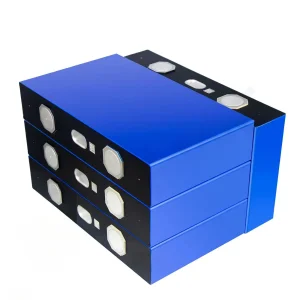
We exclusively utilize prismatic Grade A Lithium Iron Phosphate (LiFePO4) cells featuring high thermal runaway thresholds (>270°C) and robust olivine crystal structure. For extreme cold-climate deployments (-40°C to -20°C), our advanced Sodium-Ion (Na-Ion) cell options eliminate thermal degradation risks while offering zero raw material supply chain bottlenecks.
Master-Slave HV Control Unit
Building a 230V nominal system requires connecting 72 to 76 LiFePO4 series cells ($72 \times 3.2V = 230.4V$). Our proprietary Master-Slave BMS monitors cell-level voltages, active balancing, State of Charge (SoC), State of Health (SoH), and internal resistance in real-time, executing high-speed isolation protection in under 10 milliseconds.
Direct Liquid Cooling & Airflow Channels
To prevent localized heat spots within high-voltage battery cabinets, our ODM engineering team implements CFD-designed liquid cooling cold plates or forced-air directional ducting. Temperature variance between cells inside the 230V rack is maintained strictly under 2.5°C, extending overall operational lifespan beyond 15 years.
Multi-Protocol Inverter Interoperability
A successful global deployment of a 230V energy storage solution hinges on seamless communication with third-party hybrid and off-grid inverters. Foya Solar’s 230V battery BMS units come pre-programmed with customizable CANbus 2.0B, Modbus RTU, Modbus TCP, and RS485 communication protocols. Our software stack natively supports seamless plug-and-play integration with major inverter brands globally, including Victron Energy, SMA, Growatt, Deye, GoodWe, Solis, and Schneider Electric.
From initial mechanical CAD design to automated laser welding and high-potential electrical insulation tests, our 20,000 m² Shenzhen facility strictly adheres to ISO 9001:2015 quality control systems.
Load Profile & Mechanical Sizing
We review your target market's grid standard (e.g., European 230V/50Hz vs. Americas dual-phase), discharge C-rates, peak surge requirements, IP rating (IP54/IP65), and rack mounting dimensions.
Precision Cell Grading & Matching
100% of incoming cells undergo automated capacity sorting and AC internal resistance ($AC-IR$) matching ($\Delta IR \le 0.05\,\text{m}\Omega$, $\Delta V \le 2\,\text{mV}$) to eliminate module imbalance before assembly.
Automated Laser Busbar Welding
High-power fiber laser welding ensures zero contact resistance on nickel-copper composite busbars, eliminating mechanical vibration detachment risks during transit and long-term operation.
HV Insulation & Burn-In Testing
Every completed 230V battery rack undergoes 2500V DC dielectric withstand testing, leakage current detection, and full-cycle charge/discharge burn-in before final export packaging.
Detailed deployment profiles demonstrating how our 230V nominal high-voltage LiFePO4 battery modules perform under actual operational conditions across global industries.
European Single-Phase Residential AC Storage
In markets like Germany, Denmark, Sweden, and the UK, residential solar installations predominantly interface with standard single-phase 230V AC grid mains. Installing a 230V nominal high-voltage stack battery directly feeds energy into high-voltage hybrid inverters, drastically cutting conversion losses compared to 48V systems and reducing installer labor time by 40%.
Commercial Peak Shaving & Industrial Demand Charge Management
Factories and logistics centers face steep power surge tariffs. Connecting multiple 230V nominal battery strings in parallel (forming a 200kWh to 1MWh system) enables rapid sub-15ms peak discharge during heavy machinery startup. This reduces peak demand billing and delivers payback in as few as 3.5 years.
Agricultural Microgrids & Cold Storage Backup
Agricultural operations require steady, high-capacity power to drive irrigation pumps and cold storage refrigeration units during grid brownouts. Foya Solar’s 230V system provides strong inductive motor startup surge capacity with zero voltage sag under continuous heavy load.
Select from our specialized lithium iron phosphate cell formats, high-discharge traction battery packs, and complete energy storage system modules below.







Navigating international customs and regulatory mandates requires verified test documentation. Foya Solar holds full international certification for high-voltage and low-voltage battery transport and grid integration.
UL 1973 & UL 9540
Certified for stationary electrical energy storage safety in North America, covering rigorous thermal runaway containment and mechanical crush testing.
IEC 62619 & CE-EMC
Mandatory industrial lithium battery safety verification for the European Union market, ensuring electromagnetic compatibility and cell integrity.
UN38.3 & MSDS
Full UN dangerous goods transport certification (Class 9 Lithium Ion Batteries), guaranteeing compliance for ocean container and air freight logistics.
Technical answers provided by Foya Solar senior energy storage engineers to assist procurement managers, EPC system designers, and B2B distributors.
Whether you are expanding your renewable product lineup with high-voltage 230V nominal LiFePO4 rack systems, developing custom industrial power cabinets, or sourcing Tier-1 prismatic cells, Foya Solar delivers engineering depth, production scale (2GWh+ annual capacity), and transparent OEM/ODM service.