
Industrial Cell & Pack Portfolio (Part I)
Direct factory supply featuring Grade A LiFePO4 cells, customized battery packs, and integrated management systems optimized for rugged marine environments.








The Marine Electrification Revolution & Global Supply Chain Dynamics
Understanding the global transition from legacy lead-acid and AGM marine batteries to custom engineered Lithium Iron Phosphate (LiFePO4) systems.
Regulatory Drivers & IMO 2030 Decarbonization
The global maritime domain is undergoing a fundamental structural transition. Accelerated by International Maritime Organization (IMO) carbon-intensity reduction mandates and stringent regional zero-emission zones (such as the Norwegian Fjords and European inland waterways), commercial fleet operators and boat OEMs are rapidly retiring fossil-fuel auxiliary generators and heavy lead-acid banks.
Custom lithium battery packs serve as the critical technological enabler for full-electric propulsion, hybrid-electric powertrains, and high-efficiency marine house energy storage systems (ESS). Modern commercial vessels require energy solutions that drastically lower total cost of ownership (TCO) while operating reliably under high-humidity, salt-mist, and heavy-vibration environments.
Supply Chain Consolidation & Factory Direct Sourcing
Sourcing marine-grade batteries presents unique engineering and logistical challenges. Off-the-shelf lithium drop-in replacements often fail to meet the rigorous safety, space-efficiency, and communications standards demanded by modern naval architects and marine engineers.
By partnering directly with tier-1 battery cell manufacturers and custom pack suppliers, equipment integrators gain direct control over cell matching, thermal design, BMS firmware customization, and international compliance certifications (UN38.3, IEC 62619, UL 1973). Direct factory engagement ensures seamless OEM/ODM integration, guaranteed cell traceability, and robust post-sales technical support.
Why LiFePO4 (LFP) Dominates Marine Applications
A comprehensive evaluation of electrochemical stability, safety envelopes, and cycle-life performance for marine energy storage.
Inherent Thermal & Chemical Safety
Unlike Nickel Manganese Cobalt (NMC) or Cobalt-based chemistry, Lithium Iron Phosphate (LiFePO4) features a robust P-O covalent bond structure. This prevents oxygen release at elevated temperatures, raising the thermal runaway threshold beyond 270°C (518°F), rendering it virtually immune to catastrophic combustion on watercraft.
Extended Cycle Life & Deep Discharge
Our Grade A prismatic cells deliver over 6,000 continuous cycles at 80% Depth of Discharge (DoD) under 1C rates. In comparison, premium marine AGM batteries deteriorate after 300 to 500 cycles at 50% DoD, making LiFePO4 10x more cost-effective over its operational lifespan.
Weight Optimization & Voltage Stability
LiFePO4 delivers 3x the energy density per kilogram compared to marine lead-acid. Additionally, LFP maintains a flat discharge curve above 12.8V / 51.2V across 90% of its capacity, preventing motor sluggishness and electronics brownouts common with voltage-sagging AGM systems.
Technical Comparison: Marine Battery Chemistries
| Performance Metric | Standard Lead-Acid / AGM | Lithium NMC (Nickel Cobalt) | Shenzhen Foya Grade A LiFePO4 |
|---|---|---|---|
| Usable Depth of Discharge (DoD) | 50% Maximum | 80% - 90% | 100% Usable (80-90% Recommended for Max Life) |
| Cycle Life (80% DoD @ 25°C) | 300 – 600 Cycles | 1,500 – 2,500 Cycles | 6,000+ Cycles (Grade A Prismatic Cells) |
| Thermal Runaway Breakdown Temp | N/A (Gassing risk) | ~ 210°C (High fire hazard) | > 270°C (Ultra-Stable, Non-Combustible) |
| Weight Comparison (Per 100Ah @ 12V) | ~ 30 kg – 35 kg | ~ 8 kg – 10 kg | ~ 11 kg – 13 kg (70% Weight Reduction vs AGM) |
| Fast Charging Capability | Slow (0.1C to 0.2C max) | Moderate (0.5C to 1C) | Rapid Charge Supported (0.5C – 1C Continuous) |
| Self-Discharge Rate (Monthly) | 5% – 15% | 2% – 3% | < 1.5% per Month (Long Storage Retention) |
Turnkey OEM/ODM Battery Engineering Architecture
How Foya Solar converts raw technical specs into tailored marine battery systems for global shipbuilders.
1. Precision Cell Sorting & Matching
Every custom marine pack originates from precise cell binning. Using automated testing rigs, prismatic cells (ranging from 15Ah to 680Ah) are strictly sorted within precise tolerances: Voltage (ΔV ≤ 2mV), Capacity (ΔC ≤ 1Ah), and Internal Resistance (ΔIR ≤ 0.05mΩ). This ensures optimal pack balance and prevents premature capacity decay.
2. Marine-Grade BMS & Protocol Sync
Our proprietary Smart Battery Management System (BMS) incorporates multi-tiered hardware and software safeguards against over-charge, over-discharge, short-circuits, and thermal spikes. Integrated CANbus, RS485, and UART interfaces allow seamless synchronization with NMEA 2000 marine networks and leading marine inverters (Victron, Simrad, Garmin).
3. Structural Anti-Vibration & IP67 Enclosures
Boats operate in non-stationary environments subject to heavy impact, wave slamming, and saltwater exposure. We engineer custom stainless steel, heavy-gauge aluminum, or IP67/IP68 sealed molded ABS enclosures with shock-absorbing structural frames and internal thermal padding to withstand harsh oceanic stress.
OEM/ODM Customization Workflow
Localization Support, Hazmat Logistics & Compliance
Ensuring fast international delivery, full hazardous material shipping compliance, and dedicated technical after-sales service.
International Logistics & Dangerous Goods (DG) Clearance
Shipping high-capacity lithium batteries globally requires deep expertise in hazardous goods regulations. Foya Solar maintains complete certified UN38.3 test reports, Material Safety Data Sheets (MSDS), and drop-test documentations compliant with IATA (air freight) and IMDG Code (ocean freight Class 9 Dangerous Goods).
We handle export customs declaration, UN-certified packaging with heavy-duty thermal insulation, and offer door-to-door (DDP/DAP) maritime logistics to major ports in North America, Europe, Southeast Asia, and Australia.
Localization, Technical Support & Warranty Framework
To support global boat builders and distributors, Foya Solar offers comprehensive technical documentation including schematic drawings, STEP files for naval architects, wire harness layouts, and protocol integration guides.
Our international sales and field engineering teams guarantee 24-hour response times for technical support enquiries. Every marine battery pack is backed by our direct factory warranty (5 to 10 years optional), supported by clear RMA procedures and component replacements.
Tailored Marine Solutions Across Marine Sectors
From electric trolling motors to large-scale commercial passenger ferries and luxury catamarans.
Electric Propulsion & Inboard Motors
High-voltage (96V – 400V+) custom battery banks engineered for electric propulsion craft, electric water taxis, and hybrid workboats requiring high peak C-rates.
Electric Trolling Motors & Angling
Deep-cycle 12V, 24V, and 36V light-weight IP67 lithium packs designed for bass boats and offshore fishing vessels. Continuous high current without voltage drop.
Yacht & Catamaran House Energy Banks
Large 12.8V / 25.6V / 51.2V house battery banks capable of powering air conditioning, watermakers, and galley equipment off-grid without noisy diesel generators.
Commercial Vessels & Survey Equipment
Rugged, shock-proof energy modules designed for autonomous underwater vehicles (AUVs), marine survey equipment, oceanographic sensors, and workboats.
Technology Roadmap & Marine Innovation (2025–2030)
Advancing next-generation energy storage: Solid-State marine modules, Sodium-Ion low-temperature cells, and Cloud-connected AI-BMS diagnostics.
Sodium-Ion (Na-Ion) Marine Breakthroughs
For cold-water marine environments (sub-zero Arctic operations), Foya Solar is deploying high-capacity Sodium-Ion battery packs. Sodium-ion maintains over 85% capacity retention at -20°C (-4°F) while eliminating reliance on lithium and cobalt raw material supply chains.
Solid-State Battery Integration
As solid-state battery technology matures toward mass production, our R&D center in Shenzhen is actively testing solid electrolyte cells for next-generation marine packs—targeting an energy density of 400+ Wh/kg and absolute immunity to liquid electrolyte leakage.
AI-Enabled Cloud BMS & IoT Fleet Monitoring
Modern commercial marine fleets require predictive maintenance. Our future-ready BMS architecture incorporates IoT 4G/5G telematics modules that continuously stream cell-level temperature, state-of-health (SoH), and voltage drift data to cloud dashboards, preventing downtime before it occurs.
Industrial Cell & Pack Portfolio (Part II)
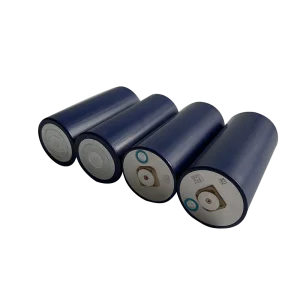
Explore our cylindrical and prismatic LiFePO4 cells, high-capacity home & C&I energy storage systems, and specialized OEM packs.







Frequently Asked Questions for Marine Procurement
Direct technical answers to help naval architects, boat builders, and B2B buyers select the optimal custom lithium marine battery solution.