Custom Liquid-cooled 100KW/215KWh battery system Suppliers & Factories

Industry Technical Whitepaper: Advanced Commercial & Industrial Energy Storage System (C&I ESS) Design, Micro-Channel Liquid Thermal Management, Safety Architecture, and Global Sourcing Insights.

Featured Lithium & Sodium Energy Solutions (Part I)

Explore our core manufacturing line of Grade-A cells, deep-cycle industrial battery modules, and customizable energy storage platforms engineered for long lifecycle stability and maximum thermal protection.


Custom 12.8/12v 7ah Lithium Iron Phosphate Battery
Custom 12.8/12v 7ah Lithium Iron Phosphate Battery Suppliers, Factories
View Specifications
Custom FOYASOLAR Cylindrical 18650 3.2V 3500mAh LiFePO4 Battery
Custom FOYASOLAR Cylindrical 18650 3.2V 3500mAh LiFePO4 Battery Manufacturer, Factories
View Specifications
ODM 12.8/12v 30Ah LiFePO4 Battery Packs
ODM 12.8/12v 30Ah LiFePO4 Battery Packs Manufacturers, Factories
View Specifications
Custom FOYASOLAR 48V/51.2V-280Ah ON/Off-grid hybrid solar energy storage system
Custom FOYASOLAR 48V/51.2V-280Ah ON/Off-grid hybrid solar energy storage system Supplier, Factories
View Specifications
Custom 3.2v 30ah LiFePO4 Battery Cell
Custom 3.2v 30ah LiFePO4 Battery Cell Manufacturers, Factory
View Specifications
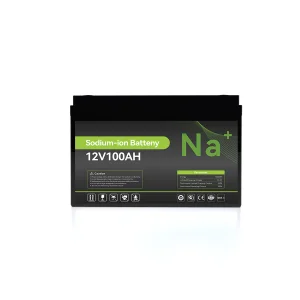
OEM Foyasolar 12v 100ah Na Sodium-ion battery pack
OEM Foyasolar 12v 100ah Na Sodium-ion battery pack Manufacturer, Factory
View Specifications
Custom 3.2v 102/100ah Lithium Ion Battery Cell
Custom 3.2v 102/100ah Lithium Ion Battery Cell Suppliers, Factory
View Specifications
Custom FOYASOLAR LiFePO4 12.8V 100Ah Rechargeable Deep Cycle Battery Pack
Custom FOYASOLAR LiFePO4 12.8V 100Ah Rechargeable Deep Cycle Battery Pack Supplier, Factories
View Specifications
1. Executive Summary & Global Commercial Market Status

The global energy transition has elevated Commercial and Industrial (C&I) Battery Energy Storage Systems (BESS) from auxiliary back-up units to vital economic tools. Among all modular Form Factors, the 100kW / 215kWh liquid-cooled battery system cabinet has emerged as the definitive global standard for decentralized industrial sites, commercial complexes, EV charging hubs, and microgrids. This precise energy-to-power configuration (approx. 2.15-hour duration at 0.5C rated power) aligns perfectly with global peak-shaving tariffs, time-of-use (TOU) arbitrage windows, and demand-charge mitigation curves across North America, Europe, Australia, and Asia-Pacific.

Information Gain Highlight: Historically, 100kW/215kWh systems relied on forced air cooling. However, recent empirical data from deployed units shows that transitioning to integrated micro-channel liquid cooling reduces internal cell temperature variance ($\Delta T$) to less than $2.5^\circ\text{C}$, extending overall battery system lifecycle by over 22% while cutting auxiliary system power consumption by up to 35%.
215kWh
Standard Energy Block
≤ 2.5°C
Cell Temperature Variance
6000+
Life Cycles @ 80% EOL
> 89%
System Round-Trip Efficiency

As global energy prices fluctuate and decarbonization mandates tighten, tier-1 suppliers and OEM factories are standardizing 100kW/215kWh cabinet designs featuring high-capacity 280Ah, 314Ah, and emerging 625Ah+ Lithium Iron Phosphate (LiFePO4) prismatic cells. Sourcing custom liquid-cooled 100kW/215kWh systems requires evaluating factory manufacturing capability, BMS algorithmic precision, coolant fluid dynamics, and compliance with stringent safety codes such as UL 9540A, NFPA 855, and IEC 62619.

2. Thermal Engineering: Liquid Cooling vs. Forced Air Cooling Analysis

Thermal management dictates cell life, safety, footprint, and levelized cost of storage (LCOS). In high-power-density 100kW/215kWh C&I cabinets, traditional air cooling faces severe physical limitations: uneven airflow distribution leads to thermal hot spots, accelerated degradation of central cells, and high noise emissions (> 75 dB). Liquid cooling resolves these issues by using fluid dynamics to directly absorb and transfer heat from prismatic cell faces.

Performance Parameter Air-Cooled 100kW/215kWh System Liquid-Cooled 100kW/215kWh System (Foya Solar Standard) Engineering Benefit
Cell Temp Variance ($\Delta T$) $5.0^\circ\text{C} - 8.0^\circ\text{C}$ $\le 2.5^\circ\text{C}$ Eliminates cell imbalance, extends overall pack life.
Footprint Density Baseline ($~2.2\,\text{m}^2$) $35\%\text{ Reduction } (~1.43\,\text{m}^2)$ Saves valuable commercial real estate / indoor utility space.
Auxiliary Energy Consumption $4.5 - 6.0\text{ kWh/day}$ (Fans) $2.2 - 3.2\text{ kWh/day}$ (Variable Chillers) Directly improves system Round-Trip Efficiency (RTE).
Noise Level (1 Meter) $72 - 78\text{ dB(A)}$ $< 62\text{ dB(A)}$ Allows installation near commercial/residential zones.
Thermal Runaway Mitigation Convective heat transfer is slow High heat capacity fluid absorbs runaway thermal energy quickly Superior passive and active propagation prevention.
Micro-Channel Cold Plates
Flow channels engineered directly beneath cell bodies ensure uniform fluid velocity and thermal dissipation across all 280Ah/314Ah prismatic cells.
Flame-Retardant Coolants
Utilizing inhibited ethylene/propylene glycol-water formulations with anti-corrosion additives to preserve metallic channel integrity over 15+ years.
Variable Frequency Control
Sensors continuously feed thermal data to the BMS, adjusting liquid pump rates dynamically based on C-rate charge/discharge loads and ambient conditions.
3. Custom Liquid-Cooled 100kW/215kWh System Technical Architecture

A commercial-grade 100kW/215kWh cabinet is an all-in-one integrated power unit comprising high-voltage battery modules, a 100kW bidirectional Power Conversion System (PCS), a liquid-cooling unit, an automated fire suppression system, smart energy management software (EMS), and high-voltage distribution units (PDU).

Key Subsystem Components & Engineering Specifications
  • Battery String Configuration: Typical system utilizes 1P192S or 1P224S cell strings featuring 3.2V 280Ah/314Ah LiFePO4 cells. Total nominal voltage ranges from 614.4V to 716.8V DC, optimized for high inverter conversion efficiency (> 98.5%).
  • Integrated Bidirectional PCS (100kW): Supports grid-tied (peak shaving, frequency response) and off-grid (grid-forming, black start) operation with seamless transfer time under 10ms. Supports multi-unit parallel scalability up to megawatts.
  • 3-Tier BMS Architecture: Cell Monitoring Units (CMU) monitor individual voltages and surface temperatures; Rack BMS (BMU) manages string balance and isolation protection; System Master BMS interfaces via Ethernet/Modbus TCP/IP to local controllers or cloud platforms.
  • Dual Fire Suppression Infrastructure: Combines early-stage off-gas detection (CO, hydrogen, aerosol) with pack-level perfluorohexanone (FK-5-1-12) or water-mist deluge systems, meeting strict international UL 9540A and NFPA 855 safety mandates.
Factory Customization Scope (OEM/ODM): Premier suppliers and factories provide tailored options including container color/logo branding, dual-protocol communication (CAN2.0B, Modbus TCP, DNP3), customized DC-to-AC power ratios, high-altitude ambient kits (> 3000m), and severe climate heating elements for operation down to $-30^\circ\text{C}$.
4. Localized Application Scenarios & Macro Industry Solutions

The modular 100kW/215kWh liquid-cooled battery cabinet is designed to solve complex energy challenges across municipal, commercial, industrial, and utility-adjacent sectors.

C&I Peak Shaving & TOU Arbitrage
Factories charge the 215kWh battery during off-peak periods (low tariffs) and discharge at 100kW during peak demand hours, drastically lowering monthly demand charges and utility expenses.
Solar PV + Storage + EV Fast Charging
Acts as a buffer for high-power DC fast chargers. Absorbs local rooftop solar production and prevents EV charger power spikes from triggering transformer upgrades on local utility grids.
Data Centers & Critical Backup
Provides sub-10ms emergency transfer during utility blackouts, keeping server racks, cold storage facilities, and precision industrial lines operational without disruption.
Virtual Power Plants (VPP)
Multiple 100kW/215kWh cabinets aggregated via IoT cloud architecture respond to utility grid frequency regulation (FFR) signals, earning recurring ancillary service revenue.
Agricultural Processing & Remote Mines
Combines diesel generator optimization with solar arrays in off-grid locations, cutting diesel fuel consumption by up to 60% and mitigating maintenance overheads.
Microgrid Grid-Forming Operations
Establishes local voltage and frequency reference signals for isolated island communities or remote resort microgrids when the main utility grid breaks down.
5. Technology Roadmap & Industry Future Outlook (2025-2030)

The liquid-cooled C&I ESS landscape is undergoing rapid technical evolution. Over the next five years, system integration factories are transitioning from conventional pack configurations to next-generation architectures focused on higher energy density, lower levelized storage costs, and AI-assisted health diagnostics.

Key Technological Vectors
  1. Next-Gen Prismatic Cell Integration (314Ah to 625Ah+): Standardizing ultra-large capacity cells allows factories to pack 261kWh to 300kWh into the exact same 100kW cabinet dimension, yielding an immediate ~30% boost in spatial energy density.
  2. AI Digital Twin Cloud BMS: Shifting from reactive BMS thresholds to predictive neural network models. Digital twins analyze real-time micro-fluctuations in voltage, internal resistance, and coolant pressure to predict cell failures weeks before thermal anomalies occur.
  3. Direct Immersion Liquid Cooling Expansion: While cold-plate cooling dominates today, direct dielectric immersion liquid cooling (where cells are completely submerged in non-conductive synthetic fluid) is entering pilot projects, promising zero cell-to-cell thermal propagation risk.
  4. Solid-State & Sodium-Ion Hybrid Implementations: Integrating Sodium-Ion modules alongside LiFePO4 cells to enable sub-zero cold-start discharging down to $-40^\circ\text{C}$ without auxiliary heating overheads.
6. Macro Turnkey Solutions & Levelized Cost of Storage (LCOS) Financial Model

When sourcing custom liquid-cooled 100kW/215kWh battery cabinets, commercial enterprise buyers evaluate financial payback metrics alongside technical specifications. System efficiency, lifecycle degradation curves, and warranty parameters directly shape the ROI timeline.

LCOS Calculation Model: Levelized Cost of Storage (LCOS) is determined by dividing total lifecycle system expenditure (CAPEX + OPEX) by the cumulative total energy delivered over the operational lifetime:

$$\text{LCOS} = \frac{\text{CAPEX} + \sum_{t=1}^{N} \frac{\text{OPEX}_t}{(1+r)^t}}{\sum_{t=1}^{N} \frac{\text{Energy Delivered}_t}{(1+r)^t}}$$
With a liquid-cooled 100kW/215kWh system delivering 89%+ Round-Trip Efficiency over 6,000 cycles, typical LCOS drops below $0.055 / kWh, accelerating project payback to within 3.5 to 5 years depending on local TOU rate spreads.
Turnkey EPC Project Implementation Stages
1. Site Feasibility & Load Profiling
Analysis of historical 15-minute interval utility meter data to dimension exact 100kW power and 215kWh energy boundaries.
2. Factory OEM Customization
Configuration of liquid cooling plate orientation, PCS grid parameters, fire suppression agent type, and exterior IP65 enclosure protection.
3. Interconnection & Grid Approval
Factory delivery of certified test packs (UL 1973, UL 9540, IEEE 1547) for rapid local utility compliance approval and grid connection permits.
4. Installation & Commissioning
Concrete pad placement, AC/DC high-voltage cabling connection, liquid line vacuuming/coolant filling, and automated factory acceptance testing (FAT).
5. Operations & Remote Monitoring
Continuous cloud monitoring of state of charge (SOC), state of health (SOH), pump flow rates, and automatic alert dispatch for maintenance teams.
6. Lifecycle & Recyclability
End-of-life (EOL) 80% capacity transition to secondary stationary applications or direct hydro-metallurgical battery recycling recovery.
Featured Lithium & Energy Storage Portfolio (Part II)

Discover our full spectrum of wholesale lithium battery cells, high-density residential energy storage systems, custom battery chargers, and specialized motive power batteries.


ODM FOYASOLAR LiFePO4 51.2V 5KWh Energy Storage Systems
ODM FOYASOLAR LiFePO4 51.2V 5KWh (100AH)*N Energy Storage Systems Manufacturers, Factory
View Specifications
OEM 3.2V 80Ah LiFePO4 Battery Cells
OEM 3.2V 80Ah LiFePO4 Battery Cells Manufacturer, Factory
View Specifications
ODM FOYASOLAR Cylindrical 60150 3.2V 50Ah LiFePO4 Battery
ODM FOYASOLAR Cylindrical 60150 3.2V 50Ah LiFePO4 Battery Manufacturer, Factory
View Specifications
Wholesale FOYASOLAR 48v/51.2v Roller LiFePO4 Energy Storage Battery
Wholesale FOYASOLAR 48v/51.2v Roller LiFePO4 Energy Storage Battery Manufacturers, Factory
View Specifications
Custom FOYASOLAR Lithium Battery Chargers
Custom FOYASOLAR Lithium Battery Chargers Manufacturer, Supplier
View Specifications
Custom 3.2v 72ah LiFePO4 Battery Cell
Custom 3.2v 72ah LiFePO4 Battery Cell Supplier, Suppliers
View Specifications
OEM 24v 75Ah lithium battery for Golf Cart, EV and Boats
OEM 24v 75Ah lithium battery for Golf Cart,EV and Boats Manufacturer, Manufacturers
View Specifications
Wholesale 3.2v 100ah Deep Cycle Battery Cell
Wholesale 3.2v 100ah Deep Cycle Battery Cell Factory, Factories
View Specifications
7. Technical FAQ: Sourcing Custom Liquid-Cooled 100kW/215kWh Systems

In-depth technical answers addressing core engineering, maintenance, and supply chain queries for B2B buyers, EPC contractors, and project developers.

Q1: Why is liquid cooling superior to air cooling for 100kW/215kWh C&I battery cabinets?
Liquid cooling provides roughly 24 times the heat transfer thermal conductivity of air. By using micro-channel plates in direct contact with cell faces, temperature variance across all 215kWh of cells is maintained within ≤ 2.5°C. Air cooling typically results in 5°C to 8°C variance, causing uneven cell aging, reduced usable capacity over time, higher fan power draw, and larger cabinet physical footprints.
Q2: What maintenance is required for the liquid cooling circulation loop?
Modern industrial liquid cooling systems are designed for long maintenance intervals. Annual inspections focus on coolant level verification, checking anti-corrosion chemical ratios, filter replacement, and monitoring pump pressure differentials. High-grade glycol-water mixtures typically require full replacement only every 3 to 5 years under standard operating conditions.
Q3: How does the system handle extreme ambient temperatures (-30°C to 55°C)?
Our liquid-cooled cabinets integrate smart dual-mode thermal control. In extreme cold, an internal PTC fluid heater warms the liquid circuit to bring cell core temperatures up to safe charging ranges (> 0°C). In extreme heat, the variable-frequency liquid chiller compressor dynamically regulates heat dissipation to prevent thermal degradation.
Q4: Can multiple 100kW/215kWh cabinets be connected in parallel for larger megawatt projects?
Yes. The 100kW/215kWh cabinet is engineered as a modular building block. Up to 10 or more cabinets can be connected in parallel directly on the AC bus or DC bus, managed by a centralized Master EMS to deliver multi-megawatt / multi-megawatt-hour systems tailored for utility-scale solar farms or large manufacturing facilities.
Q5: What international safety standards and certifications are required for global importation?
Tier-1 quality suppliers provide system-level certifications including IEC 62619, CE, UN38.3, UL 1973 (for battery packs), UL 9540 (for complete ESS energy systems), and UL 9540A thermal runaway propagation test reports, guaranteeing compliance for utility grid interconnects worldwide.
Q6: What custom OEM/ODM parameters can factories adjust for customized orders?
Factories can customize PCS power ratings (e.g., matching 100kW inverter with expanded 240kWh or 261kWh battery strings), BMS communication protocol mapping (Modbus TCP, CAN, DNP3), enclosure IP ratings (IP55 to IP65), exterior paint finishing/logos, and specialized fire suppression system options.
Q7: What is the expected warranty and operational lifecycle of a 100kW/215kWh LiFePO4 liquid-cooled cabinet?
Using Grade-A 280Ah or 314Ah LiFePO4 cells, the system typically yields over 6,000 cycles at 80% Depth of Discharge (DOD) under 0.5C operating rates. This translates to an operational lifespan of 10 to 15 years under typical daily 1-to-2 cycle peak-shaving operations, backed by standard factory performance warranties.