
Primary Custom Battery Cells & Storage Modules
Explore our certified 3.2V LiFePO4 cells, Na+ sodium-ion packs, and modular residential energy storage systems engineered for maximum DOD cycle stability.








Deep Cycle Lithium Cell Technology Roadmap & Market Dynamics (2025–2030)
An authoritative analysis of chemical composition, electrochemical stability, and macro-sourcing shifts driving global transition to custom LiFePO4 and Sodium-Ion cell formats.
The global energy storage ecosystem is experiencing a structural migration from legacy Lead-Acid (AGM/Gel) architectures to high-performance Lithium Iron Phosphate (LiFePO4 / LFP) and Sodium-Ion (Na+) chemistries. Driven by stringent decarbonization mandates, rising grid instability, and the electrification of industrial fleets, modern B2B procurers require highly customized deep cycle lithium battery cells capable of delivering zero thermal runaway risk, extended cycle endurance, and low total cost of ownership (TCO).
1. Paradigm Shift Towards High-Capacity Prismatic Formats (280Ah – 680Ah)
Historically dominated by 18650 and 26650 cylindrical cells for small portable tools, industrial deep cycle applications have pivoted dramatically toward large-format prismatic cells (100Ah, 200Ah, 280Ah, 314Ah, and up to 680Ah). Prismatic cells reduce the total number of parallel cell connections within a battery pack by over 70%, drastically decreasing potential points of failure, simplify internal Battery Management System (BMS) wiring, and maximize volumetric energy density (Wh/L). Foya Solar’s proprietary laser-welded prismatic cell design guarantees structural integrity against heavy mechanical vibrations in marine and mobile commercial environments.
2. Solid-State & Sodium-Ion (Na+) Hybridization
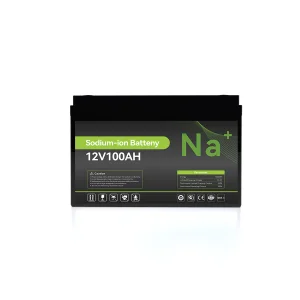
While LiFePO4 remains the absolute gold standard for stationary energy storage systems (BESS) due to its olivine crystal structure and extreme safety margins, Sodium-Ion chemistry (Na12V / 3.2V equivalent modules) has emerged as a disruptive alternative for cold-climate and price-volatile markets. Sodium-ion cells maintain up to 85% capacity retention at freezing temperatures (-20°C) without chemical degradation, making them an indispensable component of next-generation cold-chain logisitics and extreme-climate telecommunications backup.
Technical Insight: Foya Solar’s Grade-A LiFePO4 prismatic cells feature synthetic graphite anodes with nano-silicon coatings and multi-element electrolyte additives, suppressing Solid Electrolyte Interphase (SEI) degradation during fast-charging cycles (1C/1C rate).
Global Procurement Requirements & Engineering Demands
How Tier-1 system integrators, EPC contractors, and OEM brand managers evaluate deep cycle lithium cell manufacturers for long-term supply chain partnerships.
Rigorous Cell Sorting & Delta-V Matching
To prevent localized heat buildup and premature capacity fade in high-voltage strings (e.g., 51.2V to 768V pack topologies), international buyers enforce strict cell matching tolerances: Voltage variance (ΔV) ≤ 2mV, Internal Resistance (ΔR) ≤ 0.05mΩ, and capacity deviation ≤ 0.5% directly out of the factory automated testing line.
Multi-Protocol Smart BMS Integration
OEM products must seamlessly communicate with global hybrid inverter platforms (Victron Energy, SMA, Deye, Growatt, Sol-Ark). Proprietary BMS hardware with native RS485, CANbus 2.0B, and UART protocols allows real-time telemetry streaming for SOH, SOC, individual cell voltages, and thermal probe data.
International Compliance & Hazard Proofing
Global sea and air freight logistics necessitate UN38.3 (Transport Safety Testing), MSDS, CE, IEC 62619 (Industrial Storage Safety), and UL 1973 certifications. Every cell batch leaving our facility includes digital QR code tracking for complete material traceability from raw lithium salts to final casing weld.
China Industry 4.0: Supply Chain Resilience & Manufacturing Efficiency
How Shenzhen Foya Solar leverages automated manufacturing execution systems (MES), high-precision laser welding, and upstream material integration to deliver unmatched value.
Automated Giga-Factory Execution
At Shenzhen Foya Solar Technology Co., Ltd., our 20,000 m² smart manufacturing plant utilizes fully automated coating, slitting, winding, and electrolyte injection lines. By eliminating human intervention during critical cell assembly stages, we maintain a moisture-controlled environment (<1% relative humidity in dry rooms), preventing micro-contamination and guaranteeing ultra-low self-discharge rates (<1.5% per month).
Our automated high-power fiber laser welding systems create hermetically sealed aluminum enclosures capable of withstanding severe internal pressure buildup without swelling or cracking under high C-rate surge loads.
Vertical Supply Chain Ecosystem
Located in the heart of China’s battery technology hub in Shenzhen, Foya Solar maintains direct strategic alliances with top-tier precursor material suppliers (LiFePO4 cathode, synthetic graphite, copper foil, and non-aqueous electrolytes). This localized cluster advantage insulates our international buyers from geopolitical supply bottlenecks, shortens prototype lead times from months to days, and delivers a benchmark cost-to-performance ratio.
| Performance Metrics | Foya Solar Grade-A Custom LFP Cells | Tier-2 Domestic Assemblers | Legacy Lead-Acid (AGM/GEL) |
|---|---|---|---|
| Cycle Life (80% DOD) | 6,000 – 8,000 Cycles | 2,000 – 3,500 Cycles | 300 – 500 Cycles |
| Usable Depth of Discharge (DOD) | up to 100% | 80% Max | 50% Max (Severe sulfation) |
| Gravimetric Energy Density | 160 – 180 Wh/kg | 120 – 140 Wh/kg | 30 – 40 Wh/kg |
| Charge Efficiency | 98% Round-Trip | 90 – 92% | 75 – 80% (Energy lost as heat) |
| Thermal Stability | Up to +65°C Operating | Up to +45°C | Thermal runaway risk over +40°C |
| Weight Ratio vs Capacity | 1/3 Weight of Lead-Acid | 1/2 Weight of Lead-Acid | Heavy / High Transport Cost |
Global Market Status & Industrial Adoption Scenarios
A regional overview of commercial, industrial, and utility battery deployment across North America, Europe, Asia-Pacific, and emerging markets.
North America: Commercial Peak Shaving & Microgrids
High demand charges and grid instability in North America have accelerated the adoption of 100kW/215kWh and 215kWh/372kWh liquid-cooled energy storage cabinets. Integrators rely on our high-C-rate prismatic LFP cells to provide instant power delivery, peak shaving, and seamless transition during grid outages in industrial manufacturing plants.
Europe: Residential Storage & Fleet Electrification
Driven by strict ESG mandates and soaring energy costs, European distributors require modular, wall-mounted, and roller-type 51.2V household energy storage packs (280Ah / 314Ah). Foya Solar’s IP54-rated enclosures with integrated RS485/UART communication comply fully with European grid connection requirements.
Emerging Markets (LATAM, MEA, SEA): Solar Off-Grid
In regions facing frequent load shedding, custom deep cycle 3.2V 100Ah – 205Ah cells are widely specified for solar diesel hybrid systems, off-grid telecom towers, and agricultural water pumping networks where extreme thermal resilience is paramount.
Localized Application Scenarios & Custom OEM Engineering
How Foya Solar configures cell mechanical dimensions, terminal connectors, internal busbars, and BMS firmware for specific industry deployment.
Marine & Electric Propulsion
Custom 12V – 24V – 48V waterproof battery modules built with high-discharge prismatic cells. Reinforced stainless-steel or heavy aluminum casings withstand salt-fog corrosion, constant pitch/roll mechanical stresses, and high continuous discharge currents for electric trawlers, yachts, and houseboats.
Industrial Utility Vehicles & Golf Carts
Drop-in replacement 24V, 36V, and 48V lithium battery kits designed for golf carts, AGVs (Automated Guided Vehicles), scrubbers, and electric forklifts. Features high peak-discharge currents (3C surge for acceleration) and opportunity fast-charging without memory effects.
Residential Solar Energy Storage (ESS)
Roller-type and wall-mounted 51.2V household energy storage systems (5kWh to 16kWh modular blocks). Seamlessly integrates rooftop PV solar panels and backup grid tie with smart mobile APP monitoring and CAN/RS485 auto-inverter identification.
Containerized Liquid-Cooled Storage Solutions
High-capacity 215kWh to 372kWh containerized ESS using liquid-cooled heating/cooling management plates. Maintains precise cell temperature delta (<2.5°C across all modules), extending thermal life by over 20% in mega-watt commercial setups.
Telecom Base Station & UPS Power
Rack-mounted 48V/51.2V 100Ah LFP modules engineered for 19-inch standard telecom cabinets. Delivers reliable zero-second switchover backup power for remote 5G cell sites exposed to wide temperature fluctuations.
Sodium-Ion Extreme Cold Energy Storage
Proprietary Na12V 100Ah/200Ah sodium-ion battery packs specifically targeted at sub-zero outdoor installations (-30°C to +50°C), eliminating the requirement for energy-draining active internal heating pads.
Custom Deep Cycle & System Integration Products
Explore our complete commercial ESS cabinets, custom cell capacities (15Ah to 680Ah), and sodium-ion innovations.







Deep Cycle Lithium Cell Sourcing FAQ (Q&A)
Comprehensive engineering answers to help buyers evaluate performance parameters, customized factory tooling, and shipping safety protocols.