
Featured Custom 230Ah & Energy Storage Systems
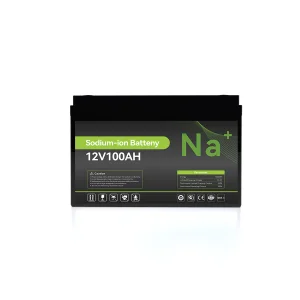
Explore our core engineering catalog including Grade A LiFePO4 prismatic cells, sodium-ion battery packs, and commercial energy storage cabinets.







Macro Transformation of 230Ah Prismatic LiFePO4 Technology
Analyzing the pivotal shift from standard legacy cells to custom 230Ah high-density lithium iron phosphate prismatic architecture in global industrial energy storage systems (BESS).
Information Gain Insight: Why Custom 230Ah is the Golden Form Factor
While the utility storage market pivots toward 280Ah and 314Ah formats for massive multi-megawatt containers, the 230Ah prismatic LiFePO4 cell remains the optimum golden ratio for Commercial & Industrial (C&I) ESS, telecom backup, off-grid microgrids, and heavy-duty electric mobility. Its physical footprint (typically 173.7 x 53.8 x 207.2 mm) delivers ideal thermal surface area-to-volume ratios, significantly lowering thermal runaway propagation risks without requiring overly complex active cooling systems.
230Ah Cell Chemistry, Physics & Manufacturing Evolution
A comprehensive examination of chemical composition, electrode engineering, and mechanical structure in Tier-1 230Ah manufacturing facilities.
Nanoscale LFP Cathode Coating
Modern custom 230Ah prismatic cells utilize advanced lithium iron phosphate (LiFePO4) nano-crystallite structures featuring uniform carbon nano-coating. This dramatically increases electronic conductivity, mitigating the intrinsic low conductivity of standard phosphate materials and supporting sustained high C-rate operation without excessive polarization.
Synthetic Graphite & Silicon Anodes
By blending ultra-pure synthetic graphite with trace silicon-carbon (Si/C) composite anode materials, factory engineers achieve enhanced lithium intercalation kinetics. This engineering refinement stabilizes the Solid Electrolyte Interphase (SEI) layer across thousands of charge-discharge cycles, reducing capacity fade to <20% over 15 years.
Explosion-Proof Safety Valves
Custom 230Ah factory production lines incorporate double-laser welded aluminum casings featuring dual explosion-proof pressure relief valves. Designed to burst precisely at preset internal pressure thresholds (0.6 - 0.8 MPa), these mechanical safety features prevent cataclysmic casing ruptures during severe electrical or thermal abuse.
| Performance Characteristic | Standard 100Ah/150Ah Prismatic | Custom 230Ah High-Density Cell | Next-Gen 280Ah/314Ah Cell |
|---|---|---|---|
| Nominal Voltage / Capacity | 3.2V / 100Ah - 150Ah | 3.2V / 230Ah (736 Wh) | 3.2V / 280Ah - 314Ah |
| Gravimetric Energy Density | 135 - 145 Wh/kg | 160 - 170 Wh/kg | 175 - 185 Wh/kg |
| Thermal Surface Area Ratio | High (Easier Passive Cooling) | Optimal (Balanced Air & Liquid) | Lower (Requires Active Liquid Cooling) |
| Cycle Life (80% DOD, 25°C) | 3,500 - 4,500 Cycles | 6,000 - 8,000 Cycles | 6,000 - 10,000 Cycles |
| Target Application Spectrum | Light RV, Solar Streetlights, Small Marine | C&I Storage, Telecom, Heavy Duty EV, Microgrids | Utility Grid-Scale BESS Containers |
Global Enterprise Procurement Audit Matrix for 230Ah Suppliers
What B2B procurement teams, system integrators, and EPC contractors must evaluate when selecting a custom 230Ah battery manufacturer in China.
1. Grade-A Cell Capacity & Resistance Matching
Direct-from-factory procurement requires strict testing protocols. Tier-1 suppliers deliver 230Ah cells pre-sorted within strict variance bands: capacity delta ≤ ±1Ah, voltage delta ≤ ±2mV, and internal resistance (AC IR) delta ≤ ±0.05mΩ. This minimizes active cell balancing strain on the BMS during high-voltage series pack assembly.
2. Full Supply Chain Traceability & MES Tracking
Every single 230Ah cell must feature a high-resolution, laser-etched matrix QR code on the top terminal cover. This allows enterprise buyers to verify raw material batches, slurry mixing parameters, automated winding/stacking records, electrolyte injection weight, and aging formation data across the Manufacturing Execution System (MES).
3. Total Cost of Ownership (TCO) & LCOE Impact
Procuring custom 230Ah battery modules allows system designers to optimize Levelized Cost of Storage (LCOS). Compared to 100Ah systems, 230Ah cells reduce total busbar interconnects, wiring harness complexities, and BMS sampling node requirements by over 50%, significantly cutting assembly labor and potential point-of-failure risks.
4. Customized Mechanical Enclosures & Busbar Engineering
Custom suppliers must offer comprehensive OEM/ODM structural solutions. From flexible nickel-plated copper busbars that accommodate thermal expansion to IP65/IP67 rated anti-vibration steel enclosures designed for harsh marine or heavy machinery environments, customization is vital for enterprise operational security.
Turnkey Macro Solutions Powered by Custom 230Ah Infrastructure
Deploying 230Ah LiFePO4 cells across commercial energy storage, solar microgrids, telecom power, and industrial electrification.
Commercial & Industrial ESS
Integrating 230Ah prismatic cells into 50kW/96kWh or 100kW/215kWh liquid-cooled cabinets allows industrial facilities to implement peak shaving, demand charge management, and photovoltaic (PV) self-consumption optimization.
Solar Hybrid Microgrids
Combining diesel generator auto-start controls with high-capacity 230Ah battery banks creates resilient off-grid microgrids for remote mining sites, islands, and agricultural power stations, reducing fuel consumption by up to 70%.
5G Telecom Base Stations
High-density 48V/51.2V telecom rack systems built with 230Ah cells provide extended backup durations during utility grid downtime while taking up minimal cabinet rack space compared to outdated lead-acid VRLA installations.
Heavy Electric Propulsion
Custom 230Ah high-discharge packs serve as robust energy storage for electric tugboats, commercial cleaning machinery, mining haulers, and airport ground support vehicles requiring high continuous discharge currents.
International Certification Compliance & Hazardous Freight Assurance
Ensuring smooth customs clearance, regulatory adherence, and safety guarantees for international shipments to over 80 countries.
UN38.3 & MSDS Transport Approval
All custom 230Ah battery cells and packs pass rigorous UN38.3 testing standards (altitude simulation, thermal testing, vibration, shock, external short circuit, impact, overcharge, and forced discharge) accompanied by full Material Safety Data Sheets (MSDS) for ocean and air cargo.
UL 1973 & UL 9540A Readiness
Designed for North American and European energy markets, custom 230Ah cell architectures meet UL 1973 structural standards and undergo UL 9540A thermal runaway fire propagation testing, enabling seamless system-level BESS grid interconnection.
IEC 62619 & CE Marking Compliance
Factory manufacturing processes strictly adhere to ISO 9001, ISO 14001, and ISO 45001 standards. Products carry full CE, IEC 62619 (industrial lithium safety), and RoHS certifications to guarantee smooth import clearance across EU member states.
Technical Roadmap: The Next Decade of 230Ah & High-Capacity Energy Storage
How battery chemical engineering, solid-state electrolytes, and sodium-ion technologies will reshape high-capacity energy storage solutions.
Phase 1: Transitioning to Semi-Solid State 230Ah Cells
The industry is transitioning from liquid gel electrolytes to semi-solid matrix electrolytes. By replacing traditional liquid separators with solid polymer/ceramic hybrid layers, future 230Ah cells will eliminate free electrolyte leakage risks, operate safely up to 80°C ambient temperatures, and elevate volumetric energy density beyond 350 Wh/L.
Phase 2: Sodium-Ion & LiFePO4 Co-Existence Strategy
While 230Ah LiFePO4 cells lead in energy density and cycle longevity, OEM suppliers are expanding production lines for sodium-ion (Na-ion) prismatic cells. Sodium-ion packs provide exceptional ultra-low temperature discharge performance down to -40°C, zero risk of thermal runaway, and lower raw material reliance, making them ideal for sub-zero energy storage deployments.
Custom 230Ah Sourcing & Manufacturing FAQ
Direct answers from our Senior SEO Growth Director and Battery Systems Engineering Team.
What makes Custom 230Ah prismatic LiFePO4 cells preferable over standard 280Ah cells for mid-sized ESS?
While 280Ah and 314Ah cells maximize density for massive grid containers, the 230Ah prismatic form factor delivers superior passive thermal dissipation, making it ideal for indoor commercial installations, telecom cabinets, and mobile off-grid power where heavy HVAC liquid-cooling infra adds unnecessary complexity and cost.
How does the factory ensure strict cell matching across high-volume OEM orders?
Our factory operates fully automated sorting and grading machines. Every 230Ah cell undergoes 100% OCV (Open Circuit Voltage), AC IR (Internal Resistance), and automated capacity grading. Cells are batched with ultra-tight tolerances: Capacity ±1Ah, Voltage ±2mV, and Resistance ±0.05mΩ to ensure maximum pack life.
Can the factory customize BMS protocols for non-standard inverter brands?
Yes. Our in-house firmware development team can program custom Smart BMS boards to support RS485, CANBus, UART, or Modbus protocols compatible with leading inverter brands (such as Victron, SMA, Growatt, Deye, GoodWe, and Luxpower).
What is the typical lifespan and cycle degradation expectation for 230Ah cells?
Under standard 0.5C charge / 0.5C discharge conditions at 25°C with 80% Depth of Discharge (DOD), our Grade-A custom 230Ah cells routinely achieve >6,000 to 8,000 cycles before retaining 80% of original nominal capacity, translating to a service life of 12 to 15 years.
What hazardous material packing and shipping documentation is provided for sea freight?
Every export shipment is packaged according to Dangerous Goods (DG) Class 9 standards using UN-certified heavy-duty cartons and wooden crates. Shipments are accompanied by UN38.3 test reports, MSDS, Safe Transport Certificates (Air/Sea), and CE compliance documentation.
Complete Battery Cells, Chargers & Systems Catalog
Browse the second section of our direct-from-factory catalog, featuring cylindrical options, hybrid solar solutions, and matched chargers.








Partner with a Premier Custom 230Ah Manufacturer
Whether you require custom capacity matching, specialized smart BMS integration, or complete turnkey C&I energy storage cabinets, our engineering team delivers Grade-A certified quality directly from our factory floor.
Request Engineering Datasheets & OEM Quote