
Custom Canadian Charging Systems & Core Energy Cells




The Canadian Industrial Electrification Imperative
Canada’s energy landscape is undergoing a massive structural shift. Driven by federal net-zero mandates, expanding mining operations in Northern Ontario and Quebec, and rapid adoption of electric logistics fleets, the requirement for robust, weather-resistant, and high-efficiency battery charging infrastructure has never been higher.
Operating industrial equipment under sub-zero ambient conditions presents severe chemical and electronic challenges. Traditional off-the-shelf battery chargers fail when subjected to cold-temperature lithium dendrite formation risks, extreme thermal cycling, voltage sags, and remote microgrid harmonic fluctuations.
As a leading Custom Chargers Manufacturer supplying Canadian industries, we engineer tailored power electronics featuring intelligent pre-heating interlocks, wide-input voltage tolerance (120V/240V/480V/600V AC nominals), CAN-bus 2.0B integration, and rugged IP67 enclosures built to thrive in harsh environments.
Global vs. Canadian Battery Charger Dynamics
While the global battery charger market expands toward standardized consumer fast-charging, Canada's commercial sector demands specialized engineering: high-voltage industrial DC fast chargers, heavy machinery charging systems, and ruggedized off-grid solar storage interfaces capable of surviving -40°C winters.
Next-Generation Power Electronics & Charging Logic
Providing real information gain through sophisticated hardware design, adaptive multi-stage charging algorithms, and seamless BMS synchronization.
Intelligent Multi-Stage Charging
Utilizes proprietary CC/CV (Constant Current / Constant Voltage) algorithms paired with dynamic trickle-charge ramps and pulse balancing to optimize LiFePO4, NMC, and Sodium-ion battery chemistry lifespans by up to 35%.
Sub-Zero Thermal Interlock
Prevents destructive lithium plating by integrating thermal sensors and internal battery heating matrix commands. Charging current is automatically throttled or routed to thermal pads until safe battery core temperatures are reached.
CAN-Bus & IoT Telematics
Native support for CAN 2.0B, RS485, and Modbus RTU protocols. Enables live telemetry transmission of charger temperature, voltage ripple, SoC/SoH parameters to centralized Canadian industrial monitoring stations.
SiC & GaN Power Topology
Incorporates advanced Silicon Carbide (SiC) MOSFETs and Gallium Nitride (GaN) switching circuits. Achieves ultra-compact form factors, minimized thermal dissipation, and near-unity power factor correction (PFC > 0.99).
Wide Input Voltage Resilience
Custom-built transformer topologies withstand wide AC variations (90V–305V AC single-phase, or 347V/600V Canadian three-phase grid systems), shielding internal electronics against industrial grid transients.
Severe Environment Sealing
Encapsulated in die-cast aluminum enclosures rated at IP65/IP67. Resistant to salt spray, humidity condensation, dust, high shock, and vibration experienced in Canadian forestry and mining haulage.
Tailored Charging Solutions for Canadian Application Scenarios
How custom OEM chargers address regional geographical, climate, and industrial operational demands across Canada.
1. Underground Heavy Mining Electrification (Ontario & Quebec)
Subterranean mining equipment requires zero-emission operation to save ventilation costs. OEM heavy-duty chargers supply fast multi-kilowatt power to 48V–800V LiFePO4 mining haulers and scoop trams, featuring explosive-gas safety interlocks and ultra-rugged shock mounts.
2. Remote Arctic Microgrids & Telecommunications (Nunavut & NWT)
Remote telecommunication towers and community microgrids rely on hybrid solar-diesel systems. Custom chargers manage high charge rates during short daylight windows, seamlessly shifting power back to deep-cycle storage without overstressing auxiliary generators.
3. Commercial Cold-Storage Warehousing & AGVs (GTA & Montreal Hubs)
Cold storage logistics hubs operating at sub-zero temperatures demand continuous 24/7 opportunity charging for automated forklifts and AGVs. High-rate chargers deliver rapid top-ups during shift breaks without heat degradation.
4. Coastal Marine & Offshore Electric Vessels (British Columbia)
Electric ferries, commercial fishing fleets, and harbor tugboats require marinized charger architectures with IP67 waterproofing, anti-corrosive heat exchangers, and compliance with marine safety standards.
Technology Roadmap & Future Outlook (2025–2035)
Pioneering tomorrow's power infrastructure for Canadian OEMs and industrial energy management.
2025–2027: High-Frequency GaN & Bi-Directional Charging (V2X)
Implementation of 3rd generation Gallium Nitride power stages reaching >97.5% efficiency. Expansion of bi-directional chargers enabling electric fleets to supply peak power back to Canadian industrial facilities during grid load shedding.
2027–2030: AI Predictive Maintenance & Cloud Telemetry Standard
Integration of edge-AI diagnostic modules within custom chargers to predict power component fatigue, detect micro-short circuits in connected battery packs, and push remote firmware updates across geographically dispersed assets.
2030–2035: Megawatt Charging Systems (MCS) & Solid-State Integration
Development of modular ultra-fast megawatt charging hubs designed for heavy mining haul trucks and regional electric freight trains. Universal adaptive charging algorithms optimized for next-generation solid-state batteries.
End-to-End Charger Design & Manufacturing Workflow
From initial schematic design to CSA, UL, and FCC compliance, we deliver fully customized charging systems tailored to your brand.
1. Specification & Topology
Define AC input bounds, DC charge profiles, communication protocols (CAN/Modbus/UART), mechanical dimensions, thermal cooling (forced air, convection, or liquid-cooled), and regulatory targets.
2. Prototyping & Simulation
Rapid PCB layout, thermal finite element analysis (FEA), transformer magnetics design, and embedded firmware development with custom battery protection interlocks.
3. Compliance & Production
Rigorous burn-in testing, full load thermal soak, EMI/EMC testing, CSA/UL compliance assistance, and high-volume automated SMT assembly under ISO 9001 quality controls.
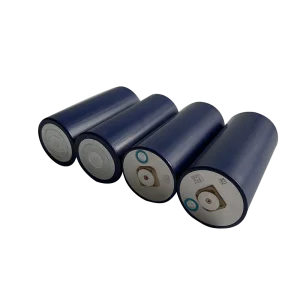
Compatible Canadian Energy Storage Systems & Cell Modules
Explore our full line of LiFePO4 cells, deep-cycle battery packs, and commercial energy storage systems designed for seamless integration with custom chargers.







Frequently Asked Questions by Canadian Procurement Teams
Addressing technical, regulatory, and environmental considerations for custom battery charging systems.
How do custom chargers protect LiFePO4 batteries during Canadian sub-zero winters?
Are your custom chargers certified for use in Canada (CSA/UL standards)?
Can you customize CAN-bus communication protocols to match our BMS?
What AC input voltages do your industrial custom chargers support in Canada?
What lead time is required for OEM/ODM charger prototype development?
Accelerate Your Electrification Project in Canada
Need a specialized battery charger manufacturer for your industrial equipment, commercial energy storage, or fleet management system? Contact our senior engineering team today for technical specs, CAD drawings, and factory-direct OEM pricing.