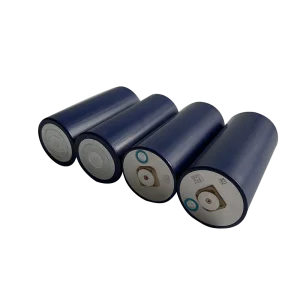
High-Performance Rolling Battery Units & Core Energy Cells
Direct factory manufacturing featuring Grade-A cells, intelligent BMS protection, and extreme operational durability.








1. Macro-Industry Landscape & The Paradigm Shift in Mobile Energy Storage
The global energy storage matrix is experiencing an unprecedented evolution. Transitioning from stationary energy storage systems (ESS) to high-mobility, dynamic power units, the demand for high-capacity rolling batteries has expanded dramatically across commercial, industrial, and residential sectors. Industrial enterprise buyers, engineering procurement construction (EPC) firms, and OEM brand owners are increasingly seeking reliable wholesale rolling battery suppliers and factories capable of delivering modular, transportable energy platforms.
Traditional diesel generator sets are rapidly being phased out due to tightening urban noise regulations, stringent ESG (Environmental, Social, and Governance) targets, and high lifetime operational expenditures (OPEX). Rolling battery storage cabinets—engineered with integrated omnidirectional heavy-duty wheels, ruggedized anti-vibration structural chassis, and plug-and-play inverter connections—provide instant zero-emission power dispatch. Whether deployed for construction site electrification, disaster relief emergency microgrids, mobile EV fleet charging support, or residential peak shaving, rolling LiFePO4 (Lithium Iron Phosphate) and Sodium-Ion energy storage architectures represent the apex of mobile energy independence.
SEO Technical Insight & Sourcing Trend: Modern commercial buyers no longer source batteries as isolated components. Sourcing intent has pivoted toward total modular solutions that integrate Grade-A prismatic cells, active thermal management, dual-bus digital BMS communications (CAN 2.0B, RS485, Modbus-RTU), and structural mobility certifications under unified OEM contracts.
Zero Emission Mobility
Replaces noisy, fuel-guzzling diesel generators with clean, silent electrical power capable of instant load pickup in indoor or restricted urban environments.
Modular Stackability
Standardized rolling wheel footprints allow multiple 48V/51.2V units or 50kW/96kWh cabinets to operate in parallel, scaling system capacity dynamically.
Rapid Deployment
Integrated casters and ergonomic handles permit single-operator mobility, eliminating expensive crane rigging and stationary concrete pad installation costs.
2. Electrochemical Chemistry & Structural Engineering Matrix
Selecting the appropriate electrochemical cell chemistry is paramount when evaluating custom rolling battery factories. Depending on operating temperature spectrums, weight limitations, and capital cost constraints, commercial buyers generally evaluate two dominant technologies: Lithium Iron Phosphate (LiFePO4) and Next-Generation Sodium-Ion (Na-ion).
| Performance Parameter | Prismatic LiFePO4 Cell (3.2V 230Ah/324Ah) | Cylindrical LiFePO4 (60150 / 18650) | Sodium-Ion Battery Pack (12V 100Ah/200Ah) |
|---|---|---|---|
| Gravimetric Energy Density | 160 – 180 Wh/kg | 140 – 160 Wh/kg | 110 – 130 Wh/kg |
| Cycle Life (@ 80% DoD) | 6,000 – 8,000 Cycles | 3,500 – 5,000 Cycles | 4,000 – 5,000 Cycles |
| Low-Temp Capacity Retention (-20°C) | 65% – 70% | 60% – 68% | 88% – 92% (Exceptional Cold Performance) |
| Thermal Runaway Threshold | +270°C (Extremely Safe) | +270°C | +300°C (Maximum Abuse Tolerance) |
| Primary B2B Target Application | C&I Rolling Energy Storage, Wall/Wheel ESS | Light Mobility, Portable Power Banks | Cold-Climate ESS, Telecom Power, Low-Temp Rolling Units |
Structural Chassis & Mechanical Durability Engineering
Unlike stationary battery racks, a rolling wheel home energy storage system or industrial mobile cabinet undergoes continuous mechanical vibration, transport impacts, and environmental exposure. Leading manufacturers employ structural engineering features to guarantee product longevity:
- Vibration Damping Chassis: Internal cell matrices are housed within high-tensile strength steel frameworks lined with silicone rubber dampers meeting MIL-STD-810H shock specs.
- Omnidirectional Lockable Casters: Industrial-grade polyurethane casters rated for multi-ton loads, equipped with step-lock braking mechanisms to prevent movement on uneven grades.
- IP54 / IP65 Weather-Sealed Housings: Powder-coated galvanized steel cabinets with rubber gasket seals, preventing moisture and dust ingress in harsh outdoor job sites.
- Integrated Laser-Welded Busbars: Pure copper busbars connected via high-precision fiber laser welding, eliminating micro-cracks and thermal hot spots caused by road vibration.
3. Intelligent Battery Management System (BMS) & IoT Telematics
The BMS serves as the brain of any high-voltage or low-voltage rolling energy storage cabinet. Modern OEM factory specifications require multi-layered hardware and firmware protections designed for automated monitoring and predictive diagnostics:
Multi-Tier Safety & Active Balancing
Real-time cell monitoring prevents over-voltage, under-voltage, over-current, and thermal anomalies. Built-in 2A–5A active balancing circuits ensure continuous cell voltage equilibrium across thousands of charge cycles.
Universal Inverter Protocol Match
Pre-programmed software communication matching major global inverter brands including Victron Energy, Growatt, Deye, SMA, Sol-Ark, Schneider Electric, and GoodWe via RS485, CAN bus, and UART ports.
4. Global Sourcing & Manufacturing OEM/ODM Procurement Guide
Sourcing directly from an established wholesale rolling battery supplier and factory in Shenzhen, China provides international distributors and B2B buyers with substantial cost advantages and engineering customization capabilities. However, navigating quality assurance and compliance verification requires rigorous due diligence.
Key Manufacturing Audit Checkpoints:
- Grade-A Cell Verification: Ensure the manufacturer utilizes 100% newly produced Grade-A cells with full factory QR code traceability, avoiding repurposed or downgraded second-life cells.
- Automated Production Lines: Verify automated sorting of cell capacity and internal resistance (IR), high-precision robotic busbar laser welding, and automated end-of-line (EOL) testing setups.
- Thermal Safety Testing: Inspect thermal dissipation design, including air-cooled thermal ducting or liquid-cooling cold plates capable of maintaining cell temperature deltas within 3°C across high C-rate discharge operations.
- Customization Capabilities: OEM factories should support tailor-made branding, custom color powder coatings, variable voltage ranges (12V, 24V, 36V, 48V, 51.2V, up to High Voltage 600V+), and custom sheet metal dimensions.
5. Localized Application Scenarios & Engineering Deployment
Scenario A: Residential Off-Grid & Rolling Backup
In regions with unreliable utility grids or high time-of-use (TOU) electricity tariffs, a 51.2V 280Ah / 314Ah rolling wheel home energy storage system provides seamless power transition. Homeowners can wheel the unit into garages or utility rooms, plug into residential PV systems, and store excess solar power for night use or emergency grid outages.
Scenario B: Commercial & Industrial Microgrids
For factory complexes, commercial facilities, and rural agricultural operations, modular cabinets such as 50kW / 96kWh PV-Diesel Hybrid cabinets or containerized 215kWh–372kWh liquid-cooled energy storage solutions deliver peak shaving, transformer capacity expansion, and diesel fuel reduction of up to 45%.
Scenario C: Heavy Mobility & Industrial Machinery
Heavy duty 51.2V 105Ah golf cart, forklift, and AGV (Automated Guided Vehicle) lithium battery packs replace traditional lead-acid batteries. They deliver 3x cycle life, opportunity fast-charging capabilities during worker shift breaks, and zero maintenance watering requirements.
Scenario D: Cold Climate & Harsh Environments
In sub-zero mining, cold-chain logistics, or northern winter climates, specialized Sodium-Ion 12V 100Ah/200Ah battery packs ensure reliable discharge performance down to -30°C without requiring heavy auxiliary energy to heat battery enclosures prior to operation.
6. Global Regulatory Compliance & Safety Certifications
Exporting battery storage systems to North America, Europe, Australia, and Asian markets requires adherence to international safety standards. Reputable OEM factories provide comprehensive test documentation to ensure frictionless customs clearing and regional grid connection approval:
- UN38.3 & MSDS: Mandatory certification for safe international transport of dangerous goods via air or ocean freight, including altitude simulation, thermal tests, vibration, shock, external short circuit, impact, overcharge, and forced discharge.
- UL 1973 & UL 9540 / 9540A: Critical North American standards for stationary and motive energy storage systems, certifying electrical safety and thermal runaway fire containment performance.
- IEC 62619 & CE-LVD / CE-EMC: European benchmarks governing industrial secondary lithium cells and battery packs, ensuring structural integrity and electromagnetic compatibility.
- RoHS & REACH: Environmental compliance guaranteeing products are free of hazardous heavy metals and hazardous restricted chemical substances.
7. Technology Roadmap & Future Outlook (2025–2030)
The landscape of industrial rolling batteries is accelerating toward higher energy density, smarter edge computing, and solid-state safety advancements:
Ultra-High Capacity Cells (314Ah – 680Ah) Integration
Mass adoption of large-format prismatic LiFePO4 cells reduces system footprint and internal connection points, lowering manufacturing assembly costs while boosting system reliability.
Semi-Solid & Solid-State Battery Commercialization
Solid-state electrolytes enter commercial rolling power cabinets, boosting gravimetric energy density beyond 300 Wh/kg and virtually eliminating thermal runaway risk.
AI-Driven Predictive BMS & Microgrid Swarm Networking
Cloud IoT platforms powered by machine learning algorithms predict cell degradation, optimize real-time charge/discharge schedules based on spot electricity prices, and allow autonomous microgrid swarm coordination.
8. Frequently Asked Questions (FAQ) for Procurement Teams
What is the advantage of a rolling battery unit compared to standard stationary ESS?
Can your factory customize the BMS communication protocol to match our specific inverter brand?
Why should buyers choose LiFePO4 over NCM/NCA chemistries for rolling energy storage?
When should a buyer select Sodium-Ion battery packs instead of LiFePO4?
What safety testing certifications are provided for wholesale export?
What is the expected factory order lead time for custom OEM rolling battery systems?
Heavy-Duty Mobility, Cylindrical Cells & Container Solutions
Explore specialized industrial battery configurations, rolling home storage units, and large-scale commercial power enclosures.