
High-Performance Lithium Battery Packs & Cells
Explore our standard and ODM/OEM enterprise-grade rack-mount, deep-cycle cell, and storage system solutions.

ODM Boat Rechargeable Lithium Ion battery 51.2/48v 100ah Lifepo4 Supplier, Suppliers
View Product Details →

ODM FOYASOLAR LiFePO4 51.2V 5KWh (100AH)*N Energy Storage Systems Manufacturers, Factory
View Product Details →


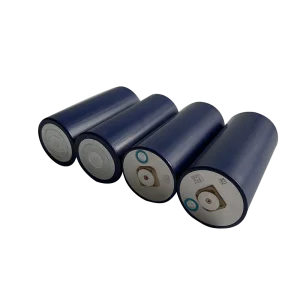
ODM FOYASOLAR Cylindrical 60150 3.2V 50Ah LiFePO4 Battery Manufacturer, Factory
View Product Details →
The Paradigm Shift in Rack-Mounted Energy Storage
A comprehensive analysis of how standardized rack architectures, LiFePO4 chemistry, and smart BMS integration are disrupting industrial and commercial battery infrastructure globally.
Standardized 19-Inch Modular Form Factor
Modern commercial energy storage has decisively migrated toward standardized rack-mount dimensions (typically 3U, 4U, or 5U enclosure heights). This modularity allows system integrators to scale storage capacity seamlessly from a single 5kWh module to multi-megawatt containerized configurations inside standard IT and telecommunication cabinets.
Lithium Iron Phosphate (LiFePO4) Dominance
Safety parameters have made LiFePO4 (LFP) the absolute gold standard for stationary enterprise storage. Unlike Nickel Cobalt Manganese (NCM) chemistries, LiFePO4 exhibits superior thermal stability, zero risk of thermal runaway oxygen release under mechanical stress, and extremely long cycle endurance ideal for daily peak-shaving applications.
Multi-Protocol Smart BMS Interoperability
Leading rack-mount battery OEMs integrate multi-protocol Battery Management Systems capable of native CANbus, RS485, and Modbus RTU communications. This native firmware flexibility enables direct handshake with world-leading hybrid inverters including Victron, Deye, Growatt, SMA, and Luxpower without third-party protocol converters.
What Global Enterprise Buyers Demand from Lithium Factories
Unpacking the critical criteria evaluated by procurement directors, EPC contractors, and OEM brands when auditing factory partners.
Tier-1 Cell Grading & Capacity Consistency
Industrial procurement teams demand strict cell matching. B2B buyers mandate that cells built into rack batteries undergo rigorous impedance binning (ΔIR < 0.3mΩ) and precise voltage matching (ΔV < 5mV) to eliminate weak-link degradation in high-voltage series strings.
Global Compliance & Safety Certifications
Cross-border import compliance requires robust documentation. Manufacturers must provide verified UL 1973, UL 9540A thermal runaway propagation testing reports, CE, IEC 62619, and UN38.3 transport certification package for smooth customs clearance and insurance authorization.
Total Cost of Ownership (TCO) Optimization
Beyond initial capital expenditure (CAPEX), enterprise customers calculate Levelized Cost of Storage (LCOS). Factory-direct pricing coupled with long-life prismatic cell design dramatically lowers operating expenditure (OPEX) over 10-to-15-year commercial lifecycles.
| Evaluation Parameter | Tier-1 China Factory Benchmark | Generic / Low-Cost Tier 3 Supplier | Commercial Buyer Impact |
|---|---|---|---|
| Cell Chemistry & Grade | Brand New Grade-A Prismatic LiFePO4 | Grade-B or Repackaged Used Cells | Guarantees full rated capacity and 6000+ cycle lifespan vs early failure. |
| BMS Architecture | Dual MCU Hardware Protection + Active Balancing | Basic Passive Balancing Single Chip | Prevents thermal stress, extends string life by 25-30%. |
| Enclosure & Thermal | Heavy-Duty Cold-Rolled Steel + Isolated Heat Channels | Thin Sheet Metal without Thermal Isolation | Ensures mechanical structural integrity & safe flame containment. |
| Protocol Flexibility | Pre-loaded 20+ Inverter Protocols + Auto-Detect | Locked Firmware / Single Protocol | Reduces field setup labor and eliminates compatibility returns. |
| Quality Control (QC) | 100% Automated Cell Sorting & EOL Testing | Random Spot Checking | Dramatically reduces field RMA (Return Merchandise Authorization) rates. |
China Industry 4.0: Supply Chain Resilience & Efficiency
How advanced automation, localized raw material clusters, and high-throughput production lines give Chinese OEMs an overwhelming global advantage.
End-to-End Supply Chain Clustering
Shenzhen and Guangdong battery manufacturing hubs house the world's most concentrated lithium supply chain ecosystem. From precursor cathode processing and electrolyte synthesis to precision CNC steel rack fabrication and PCB assembly, every component is sourced within a 50-mile radius, minimizing supply chain disruption risks.
Automated Laser Welding & MES Tracking
Industry 4.0 factories utilize robotic laser welding for busbar interconnects, ensuring minimal contact resistance and zero thermal deformation. Manufacturing Execution Systems (MES) trace every individual battery cell by barcode, recording automated capacity tests, IR values, and final burn-in validation data.
Unrivaled OEM/ODM Customization Flexibility
Whether configuring high-voltage (HV) stacked rack systems for microgrids or standard 48V/51.2V telecom backup packs, Chinese factories deliver rapid engineering prototyping. Custom branding, localized screen prints, specific terminal blocks, and custom BMS logic can be developed within accelerated timeframes.
Commercial & Industrial Use Case Matrix
Rack-mounted lithium battery systems deliver versatile, high-reliability energy management across critical infrastructure worldwide.
Telecom Base Stations & Data Centers
Providing seamless online UPS backup power for 48V telecom towers and edge-computing server racks. Modern rack batteries fit standard cabinet depths, offer hot-swappable installation, and operate reliably across wide temperature windows without air conditioning dependency.
Commercial Photovoltaic Peak-Shaving
Enabling factories, commercial plazas, and solar farms to store surplus daytime solar generation and discharge during peak tariff hours. This peak-shaving mechanism directly slashes demand charges and maximizes self-consumption ROI for industrial asset owners.
Microgrids & Remote Off-Grid Infrastructure
Integrated with diesel generator setups and solar arrays, modular rack systems stabilize remote microgrids on islands, mining sites, and agricultural facilities—reducing fuel consumption and providing continuous 24/7 power autonomy.
Complete OEM/ODM Lithium & ESS Product Range
Explore our full lineup of cylindrical and prismatic LiFePO4 cells, custom battery packs, and integrated commercial cabinets.

OEM FOYASOLAR Cylindrical 32140 3.2V 15Ah LiFePO4 Battery Manufacturers, Supplier
View Product Details →
Custom Industrial Commercial Energy Storage System 50KW/96KWH Photovoltaic Power Generation Diesel Energy Storage Cabinet Factory Manufacturers, Factories
View Product Details →
OEM 24v 75Ah lithium battery for Golf Cart,EV and Boats Manufacturer, Manufacturers
View Product Details →

Wholesale FOYASOLAR LiFePO4 25.6V 50Ah Rechargeable Deep Cycle Battery Pack Manufacturers, Suppliers
View Product Details →
ODM FOYASOLAR LiFePO4 25.6V 100Ah 2560kWh Solar Battery Pack Factory, Factories
View Product Details →
Custom FOYASOLAR LiFePO4 3.2V 50Ah Rechargeable Deep Cycle Battery Cell Manufacturers, Factory
View Product Details →
Frequently Asked Questions by Global Sourcing Teams
Clear, direct answers regarding customized manufacturing, warranty standards, parallel wiring, and logistics compliance.