
Tier-1 Commercial Battery Solutions & Component Series
Precision-manufactured cell configurations, modular battery banks, and engineered charging infrastructure for global industrial buyers.

Custom FOYASOLAR Lithium Battery Chargers Manufacturer, Supplier
View Product Specs
Wholesale FOYASOLAR 51.2v 100Ah 5kwh Roller Type LiFePO4 Energy Storage Battery Manufacturer, Manufacturers
View Product Specs
Custom FOYASOLAR LiFePO4 12.8V 100Ah Rechargeable Deep Cycle Battery Pack Supplier, Factories
View Product Specs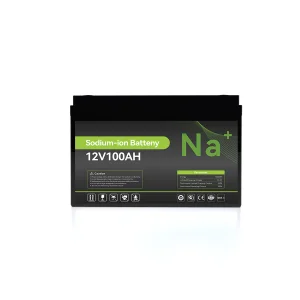
OEM Foyasolar 12v 100ah Na Sodium-ion battery pack Manufacturer, Factory
View Product Specs
Custom 3.2v 54ah LiFePO4 Battery Cell Manufacturers, Supplier
View Product Specs
Custom FOYASOLAR 215KWh Air-cooled / 372KWh Liquid-Cooled Solution
View Product Specs
OEM FOYASOLAR Cylindrical 32140 3.2V 15Ah LiFePO4 Battery Manufacturers
View Product Specs
ODM 25.6/24v 150Ah LiFePO4 Battery Packs Manufacturers, Suppliers
View Product SpecsEngineering Blueprint: The 12V 400Ah LiFePO4 Cell & Pack Architecture
Why enterprise energy storage demands high-density 4S prismatic cell topologies over legacy multi-parallel array builds.
4S Prismatic Topology & Nominal 5.12 kWh Output
In high-capacity low-voltage storage systems, single-pack energy density and thermal uniformity dictate field operational life. A premium Wholesale 12V 400Ah LiFePO4 Battery Pack utilizes a 4S (4 series) configuration composed of ultra-large-capacity 3.2V 400Ah (or matched 3.2V 100Ah/200Ah prismatic Grade A cells engineered in 4S2P or 4S4P configurations).
Delivering a nominal voltage of 12.8V and a total energy capacity of 5,120 Watt-hours (5.12 kWh), this architecture provides a continuous 200A to 350A discharge current without triggering localized thermal hot-spots typical of legacy cylindrical arrays (e.g., 18650/32700 configurations).
BMS Controller Logic & Dynamic Cell Balancing
The heart of an enterprise 12V 400Ah unit is its heavy-duty Battery Management System (BMS). Unlike consumer-grade boards, an industrial manufacturer deploys a multi-layer protective circuit board featuring high-side MOSFET switches, hardware overcurrent protection, and programmable MCU parameters via RS485/CAN/Modbus communication protocols.
To mitigate capacity degradation caused by cell variance over thousands of operational cycles, integrated microprocessors execute active or high-current passive balancing (typically ≥ 100mA to 5A active balance current). This maintains single-cell voltage matching within a tight ±5mV delta, ensuring the full 5.12 kWh capacity is accessible without premature low-voltage cutoffs.
Global Enterprise Procurement: Total Cost of Ownership (TCO) Analysis
Evaluating the long-term capex vs. opex payback metrics for industrial volume purchases of 12V 400Ah LiFePO4 solutions against traditional AGM/GEL battery infrastructure.
| Performance / Financial Metric | Legacy Lead-Acid (AGM/GEL) 12V 400Ah | Standard OEM LiFePO4 12V 400Ah | Tier-1 Wholesale LiFePO4 12V 400Ah (Foya Solar) |
|---|---|---|---|
| Usable Energy @ 80% DOD | 2.04 kWh (50% max recommended DOD) | 4.09 kWh (80% standard DOD) | 4.60 - 5.12 kWh (90%-100% DOD) |
| Cycle Life (to 80% Retained Capacity) | 500 - 800 cycles | 3,000 - 4,000 cycles | 6,000 - 8,000 cycles |
| Pack Weight / Footprint | ~ 120 kg (Heavy, floor loading issues) | ~ 42 kg (65% weight reduction) | ~ 38-40 kg (Compact Prismatic Form) |
| Charge Efficiency ($Round-Trip$) | 75% - 82% (Energy lost to heat/gassing) | 92% - 95% | > 98% Ultra-High Efficiency |
| 10-Year Replacement Frequency | 3x to 4x Replacements Required | 1x Replacement or Zero | Zero Replacement (15-yr Design Life) |
| Levelized Cost of Storage (LCOS) | $0.35 - $0.48 / kWh per cycle | $0.12 - $0.16 / kWh per cycle | < $0.05 / kWh per cycle |
Supply Chain & Cell Grading Transparency
A major procurement risk for B2B buyers is the introduction of Grade B, recycled, or mismatched capacity cells. True OEM manufacturers implement strict automated sorting where cells undergo 100% capacity grading, internal resistance checks, and dynamic voltage matching before battery module assembly.
UN38.3 & Dangerous Goods Logistics
Direct factory sourcing ensures full compliance with international maritime and air freight regulations. Enterprise packages include complete UN38.3 transport test summaries, MSDS documentation, and drop-tested UN-approved heavy packaging for safe international sea freight (Class 9 Hazmat).
Warranty Risk Mitigation
Selecting an established 12V 400Ah LiFePO4 manufacturer offers legal assurance backed by verifiable cycle data logging within the smart BMS memory. This transparent telemetry allows B2B procurement officers to validate claims over 5-to-10-year warranty contracts.
Macro Industry Solutions: Where 12V 400Ah Fits
Analyzing custom deployment scenarios across marine, off-grid telecom, heavy mobile fleets, and hybrid commercial microgrids.
Marine & Luxury Yacht Off-Grid Electrification
Commercial vessel operators and luxury yacht builders are rapidly replacing traditional lead-acid banks with IP67-sealed 12V 400Ah LiFePO4 battery modules. In marine environments, maintaining a stable 12.8V bus under heavy continuous loads (such as air conditioning units, watermakers, and electric winches) prevents voltage sag that causes auxiliary equipment malfunction.
The 5.12 kWh capacity per module permits extended silent-night operation without running diesel generators, drastically reducing fuel burn, carbon emissions, and maintenance overhead for charter fleets.
Off-Grid Telecom Base Stations & Remote IoT Nodes
Telecommunications infrastructure deployed in remote off-grid locations relies heavily on solar PV hybrid energy storage. Standard 48V telecom rectifiers seamlessly integrate four 12V 400Ah modules connected in series (4S config creating 51.2V 400Ah / 20.48 kWh total energy bank).
LiFePO4's ability to operate efficiently in wide temperature windows (-20°C to +60°C) without expensive HVAC enclosure cooling provides global telecom operators with significant annual operational expense reduction.
Specialty Commercial Work Vehicles & RV Fleets
For mobile medical units, overland command vehicles, emergency response vehicles, and luxury motorhomes, space and weight constraints are paramount. A single 12V 400Ah LiFePO4 battery replaces up to four 12V 200Ah AGM batteries, freeing up over 60% of storage compartment volume and cutting vehicle gross payload weight by over 150 kg.
The high continuous current output enables smooth operation of high-draw 3000W to 5000W pure sine wave inverters directly from a single 12V battery bank.
Commercial Microgrids & PV Self-Consumption
Small-to-medium enterprise (SME) facilities utilizing solar self-consumption strategies deploy 12V 400Ah modular building blocks to shave peak demand charges. Combined with hybrid solar inverters, these battery packs store excess daytime photovoltaic generation and discharge during peak grid pricing windows.
Integrated CAN/RS485 communication ports allow master-slave parallel clustering of up to 16 units, expanding total storage capacity dynamically up to 81.92 kWh.
Technical Roadmap: Next-Gen Evolution of 12V Systems
Key technological advancements steering the next decade of lithium iron phosphate and alternative electrochemical storage development.
Smart BMS & Cloud Telemetry
Integration of IoT Bluetooth 5.0, Wi-Fi, and 4G cloud monitoring modules directly onto the BMS board. Real-time cell voltage tracking, State of Charge (SOC), State of Health (SOH) calculation using machine learning algorithms, and remote firmware updates over-the-air (OTA).
Semi-Solid State LiFePO4
Transition from liquid gel electrolytes to semi-solid polymer electrolytes. Boosting volumetric energy density from 160 Wh/kg to over 220 Wh/kg while eliminating free liquid electrolyte leakage risks and expanding safe low-temperature operation down to -30°C.
Sodium-Ion Co-existence
Commercial maturity of Sodium-ion ($Na^+$) battery packs in standard 12V forms for ultra-low temperature applications (-40°C) and cost-critical energy storage projects, serving alongside high-density LiFePO4 systems in enterprise supplier portfolios.
Full Circular Economy Lifecycle
Implementation of EU Battery Passport digital tracking. 95%+ direct recycling and hydrometallurgical recovery of iron, phosphate, and lithium materials, ensuring full ESG compliance for tier-1 industrial clients worldwide.
Localization Support & International Compliance
Navigating stringent regional safety standards, fire suppression protocols, and import regulations across major global markets.
North American Markets (UL Standards)
Entry into the US and Canadian markets requires full verification under UL 1973 (Batteries for Use in Stationary Applications) and UL 9540A (Thermal Runaway Fire Propagation Testing). Factory-direct OEM manufacturers provide certified testing reports enabling EPC contractors to obtain building permits for commercial installations.
European Union (CE, IEC & EU 2023/1542)
European B2B compliance requires adherence to IEC 62619 (Industrial Lithium Cells and Batteries safety) along with CE mark directives (EMC EN 61000-6-2/4). Furthermore, compliance with the newly enacted EU Battery Regulation (2023/1542) ensures carbon footprint reporting and recycled material content disclosure.
Custom OEM/ODM Packaging & Labeling
To empower global distributors, OEM factory services provide custom laser-etched stainless steel or ABS enclosures, private labeling, customized multilingual manual printings, dynamic barcode tracking, and pre-configured inverter protocol files (compatible with Victron, SMA, Growatt, Deye, and Selectronic).
Industrial Manufacturing: From Raw Cell to Finished Pack
Inside a 20,000m² automated battery factory: Rigorous quality assurance protocols guaranteeing 100% field reliability.
Automated Laser Welding & Busbar Integration
Cell interconnects are bonded using continuous-wave fiber laser welding machines. Compared to traditional screwed busbar terminals, laser welding reduces joint electrical contact resistance to under 5 micro-ohms (μΩ), eliminating mechanical loosening caused by transit vibration and preventing dangerous thermal spikes under heavy 300A current loads.
Full-Capacity Aging & Environmental Chamber Testing
Every assembled 12V 400Ah pack undergoes a mandatory 100% automated charge-discharge cycle test at 0.5C rate inside temperature-controlled burn-in rooms. BMS functional verification tests include short-circuit trip timing (< 300 microseconds), overvoltage cutoff accuracy, undervoltage protection, and thermal probe calibration.
Frequently Asked Questions for Engineering & Procurement Teams
Detailed technical answers to common queries regarding 12V 400Ah LiFePO4 battery specification, integration, and bulk purchasing.
Explore Additional Energy Storage & Battery Cell Solutions
From raw 3.2V prismatic cells to complete containerized industrial storage units, select your system requirements below.

ODM FOYASOLAR LiFePO4 51.2V 5KWh Energy Storage Battery Factory
View Product Specs
Custom 3.2v 100ah Lithium Ion Battery Cell Manufacturer, Factories
View Product Specs
OEM 3.2v 59Ah Lithium Ion Battery Cell Factory, Factories
View Product Specs
Wholesale FOYASOLAR LiFePO4 25.6V 50Ah Rechargeable Deep Cycle Pack
View Product Specs
ODM FOYASOLAR LiFePO4 51.2V 5KWh (100AH)*N Energy Storage Systems
View Product Specs
ODM 3.2v 52/50ah Lithium Battery Cell Manufacturers, Suppliers
View Product Specs
Custom 12.8/12v 50ah Lithium Iron Phosphate Battery Suppliers
View Product Specs