
Featured Industrial Lithium & Energy Storage Solutions
Engineered for high-rate discharge, extreme cycle longevity, and precision thermal stability across industrial applications.

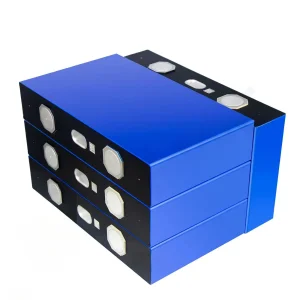






1. Executive Summary & Macro Industry Dynamics: The Shift in Golf 5 Battery Maintenance
Analyzing global fleet electrification trends, chemical architecture migrations, and the engineering imperatives of golf 5 バッテリーメンテナンス.
The global commercial utility vehicle and golf cart ecosystem is currently experiencing an unprecedented technological transition. Historically reliant on legacy flooded lead-acid and absorbed glass mat (AGM) power sources, fleet operators and commercial buyers are now rapidly standardizing on Lithium Iron Phosphate (LiFePO4) chemistry. This transition is not merely an incremental upgrade; it represents a systemic overhaul in how operational maintenance, long-term lifecycle costs, and energy management are executed across massive resort, municipal, and industrial fleets.
In the domain of commercial electric vehicle maintenance—specifically referred to in global technical engineering standards under the industrial umbrella of golf 5 バッテリーメンテナンス (Golf 5 Battery Maintenance)—the industry faces persistent engineering bottlenecks: severe capacity degradation under high ambient temperatures, acid sulfation during prolonged off-season storage, excessive water top-up labor overheads, and unpredictable voltage drops under steep incline loads. Factory-direct OEM and ODM solutions engineered by tier-1 manufacturers like Shenzhen Foya Solar Technology Co., Ltd. directly solve these systemic failure points by replacing legacy chemistry with solid-state integrated BMS LiFePO4 modules.
According to macroeconomic procurement data, utility fleets that transition to direct-fit lithium replacement modules reduce their total cost of ownership (TCO) by up to 62% over a five-year operational horizon. This whitepaper systematically breaks down the maintenance mechanics, manufacturing considerations, and global supply chain frameworks required for large-scale enterprise procurement of Golf 5 and industrial EV battery systems.
2. Technical Deep-Dive: Engineering Protocols for Golf 5 バッテリーメンテナンス
A rigorous examination of cell-level balance, thermal management, BMS algorithms, and operational preventive protocols.
Legacy Maintenance Pitfalls
Traditional lead-acid Golf 5 platforms suffer from rapid plate corrosion, electrolyte stratification, thermal runaway risks during fast charging, and self-discharge rates exceeding 15% per month. Neglecting electrolyte balance leads to permanent cell reversal and rapid fleet downtime.
Next-Gen LiFePO4 Maintenance-Free Standard
Modern LiFePO4 golf cart packs integrate micro-controller-based Battery Management Systems (BMS) featuring active cell balancing, passive heat dissipation architecture, and real-time state-of-charge (SOC) calculation, cutting routine physical maintenance to zero.
Precise Electrical Diagnostic Protocols
Effective enterprise-level maintenance for commercial golf cart batteries centers around maintaining optimum cell voltage equilibrium. Unlike lead-acid systems, where state of charge can be roughly inferred via open-circuit voltage (OCV) or hydrometer specific gravity, LiFePO4 batteries feature an exceptionally flat discharge curve between 20% and 90% SOC.
| Diagnostic Parameter | Legacy Lead-Acid / AGM Standard | Advanced LiFePO4 Standard (OEM Factory) | Engineering Impact on Fleet Operations |
|---|---|---|---|
| Nominal Module Voltage | 48V (6x 8V or 4x 12V block) | 51.2V Nominal (16S Configuration) | Higher sustained voltage eliminates motor sluggishness under heavy load. |
| Energy Efficiency Ratio | 70% - 75% Energy Retention | > 98% Round-Trip Efficiency | 30% lower electricity cost per full charge cycle across the fleet. |
| Depth of Discharge (DoD) | 50% Maximum Recommended | up to 100% Safe Discharge | Doubles operational range per charge without cell degradation. |
| Routine Service Requirement | Bi-weekly distilled water topping | Zero water topping; Automated BMS balancing | Saves hundreds of technician labor hours annually per 100 carts. |
| Cycle Life Expectancy | 500 – 800 cycles @ 50% DoD | 4,000 – 6,000 cycles @ 80% DoD | Lifespan extends from 2 years to over 8-10 years of continuous use. |
BMS Telematics & Cell Balancing Architecture
In high-capacity applications such as the FOYASOLAR 51.2V 105Ah Golf Cart Battery, intelligent maintenance is driven by the internal BMS control matrix. The system continuously monitors individual cell voltages, ambient temperature, charge current, and cumulative operational amp-hours. When passive balancing is triggered during the final constant-voltage (CV) charge phase, excess energy is safely bled off high-voltage cells at a rate of 50mA to 200mA, ensuring all 16 cells in series achieve precise parity at 3.65V per cell.
3. Global B2B Fleet Procurement Demand & Total Cost of Ownership (TCO) Matrix
Quantifying CapEx investment against long-term OpEx labor savings for commercial distributors, OEM brands, and resort managers.
For global fleet procurement officers, purchasing departments, and B2B importers, the decision to migrate golf cart energy systems from legacy suppliers to direct-from-factory OEM manufacturers (such as Shenzhen Foya Solar Technology Co., Ltd.) is fundamentally an exercise in financial modeling and supply chain risk mitigation.
CapEx Efficiency
Direct factory sourcing eliminates multi-tier distributor markups. Advanced prismatic LiFePO4 cells yield a significantly lower cost per kilowatt-hour over the total battery lifecycle.
OpEx Labor Elimination
Eliminating regular watering, terminal cleaning, voltage equalizing, and premature pack replacements slashes operational maintenance labor budgets by over 80%.
Fleet Availability (SLA)
Fast-charging support (0.5C to 1C charging rates) enables opportunity charging during lunch breaks, increasing total cart availability per day by 40%.
5-Year Financial Model: 100-Cart Commercial Golf Fleet
Consider a practical operational comparison for a 100-vehicle golf cart fleet operating across an 18-hole resort over a five-year timeframe:
- Legacy Lead-Acid Fleet: Requires initial battery purchase, plus at least one full battery replacement set at month 30. High labor expenditure for bi-weekly watering, corrosion neutralization, and off-season trickle-charge storage management. Estimated total cost: $185,000 USD.
- Foya Solar Wholesale LiFePO4 Fleet: Zero battery replacements required across the 5-year period. Zero fluid labor cost. 30% reduction in utility grid charging bills due to high electrical efficiency. Estimated total cost: $78,000 USD.
This macro-level economic advantage underscores why high-volume procurement teams are bypassing regional distributors to partner directly with factory engineers for custom OEM/ODM golf cart battery solutions.
4. Macro Industrial Solutions & Factory OEM/ODM Architectural Capabilities
From individual 3.2V cell manufacturing to turnkey 51.2V drop-in packs and integrated smart chargers.
Shenzhen Foya Solar Technology Co., Ltd. operates a state-of-the-art 20,000 m² automated manufacturing complex producing over 2GWh of annual battery capacity. For golf cart manufacturers, industrial equipment OEMs, and custom brand owners, our factory provides end-to-end engineering customization across every layer of the energy storage architecture.
1. Cell Synthesis & Sorting
Utilizing high-purity LiFePO4 cathode powders and automated robotic sorting equipment to ensure exact capacity, internal resistance (<0.5mΩ), and voltage matching prior to module assembly.
2. BMS Communication Protocols
Custom firmware integration supporting CANbus 2.0B, RS485, RS232, and UART protocols, enabling plug-and-play compatibility with mainstream golf cart motor controllers (e.g., Curtis, Sevcon, Danaher).
3. Mechanical Enclosure Design
Heavy-duty sheet metal or drop-in ABS enclosures rated to IP65 / IP67 dust and water protection standards, engineered specifically to withstand severe chassis vibration on rough terrain.
Integrated Charger & Power Conversion Matching
A critical flaw in standard golf 5 バッテリーメンテナンス routines is using legacy lead-acid chargers on upgraded lithium chemistry. Lead-acid algorithms feature high-voltage equalization phases that can cause lithium BMS units to trigger high-voltage disconnect protections. Foya Solar manufactures dedicated, matched intelligent lithium chargers (such as the Custom FOYASOLAR Lithium Battery Chargers) equipped with CC/CV (Constant Current / Constant Voltage) profiles and CAN communications that synchronize directly with the battery BMS for optimized charging speed and thermal security.
5. Global Localization Support, Safety Certification & Regulatory Compliance
Ensuring frictionless international import, regional compliance, and strict dangerous goods transport safety standards.
Navigating international regulatory frameworks is a cornerstone of enterprise procurement. Lithium-based energy storage devices are classified as Class 9 Dangerous Goods for international transport, requiring exhaustive testing and documentation to ensure legal compliance across North American, European, and Asia-Pacific customs regimes.
Key International Certifications
All Foya Solar export-grade cells and packs undergo rigorous third-party verification to meet global standards: UN38.3 (transport safety), IEC 62619 (industrial lithium safety), CE-EMC/LVD, UL 1973 / UL 2580 compliance testing, and updated MSDS / UN Transport Summary reports.
Localized Engineering & After-Sales SLAs
To support global distributors, Foya Solar provides comprehensive localization packages: custom multilingual documentation (English, Japanese, German, Spanish), branded labeling, custom hardware packaging, and dedicated technical service level agreements (SLAs) with 24-hour engineering response windows.
6. Technology Roadmap & Future Outlook (2026–2035)
Pioneering advancements in IoT-connected cloud BMS, sodium-ion cold-climate variants, and semi-solid state technologies.
As golf carts and commercial utility vehicles evolve into autonomous, IoT-connected resort assets, battery systems are transforming from passive power containers into smart network nodes. Foya Solar's R&D product roadmap focuses on three foundational technical pillars:
1. Cloud Telematics & AI Diagnostics
Integrating 4G/5G IoT telematics modules directly into the battery BMS. Real-time telemetry streams cell-level temperature, state-of-health (SOH), and predictive failure analytics directly to cloud dashboards, preventing fleet downtime before it occurs.
2. Sodium-Ion (Na-Ion) Fleet Alternatives
Commercializing industrial-grade Sodium-Ion chemistry (such as the 12V 200Ah Sodium-Ion Battery Pack) for regions subjected to extreme sub-zero working conditions (-30°C to -40°C), providing exceptional low-temperature discharge retention without heater pad overheads.
3. High-Density Semi-Solid State Cells
Next-generation electrolyte research aimed at raising energy density beyond 220 Wh/kg while eliminating flammable liquid electrolytes, establishing ultra-safe power solutions for high-occupancy passenger trams and heavy industrial equipment.
Complete Commercial OEM Product Lineup
Explore our complete catalog of industrial cell configurations, drop-in golf vehicle packs, and utility energy storage units.








7. Enterprise B2B Technical Q&A: Golf 5 バッテリーメンテナンス & Sourcing
Expert diagnostic and engineering answers provided by Foya Solar's senior battery systems division.