
Primary Commercial & Industrial Energy Storage Portfolio
Factory-direct supply of cell-to-system lithium iron phosphate (LiFePO4) and hybrid storage units engineered for global distributors and system integrators.








Executive Industry Briefing: The Architecture of Commercial Energy Storage
Strategic Insights for B2B Importers, Engineering Procurement Construction (EPC) Companies, and Global Energy Project Developers
The global energy landscape is undergoing an unprecedented structural transition. Accelerated by volatile grid tariffs, aggressive corporate carbon-neutrality mandates, and expanding commercial solar installations, Commercial Solar Energy Storage Systems (C&I ESS) have evolved from auxiliary power backups into core financial assets. Modern commercial facilities—ranging from heavy manufacturing plants and logistics hubs to agricultural complexes and EV charging parks—require sophisticated, scalable battery systems capable of high-density energy arbitrage, peak shaving, and seamless microgrid stabilization.
Navigating the complex procurement lifecycle of commercial solar battery storage systems requires a deep understanding of electrochemical architecture, safety compliance, supply chain dynamics, and thermal management economics. As a leading manufacturer and wholesale supplier based in China's battery technology corridor, we provide direct OEM/ODM integration, bridging the gap between raw Grade-A Lithium Iron Phosphate (LiFePO4) cell chemistry and fully integrated, grid-compliant cabinet and containerized solutions.
1. C&I Solar Energy Storage Architecture: Engineering Beyond the Battery Pack
A commercial-grade solar battery storage system is a multi-tiered engineering assembly. Unlike residential systems that prioritize compact aesthetics, commercial units are optimized for maximum energy throughput, system uptime, and extended lifecycle economics under aggressive charge/discharge schedules (e.g., 1C to 0.5C daily dual-cycling).
Electrochemical Core
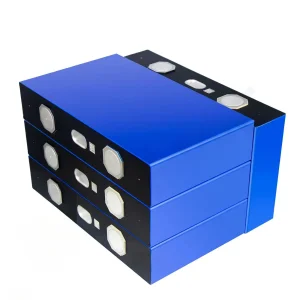
Utilizing premium Grade-A LiFePO4 chemistry (Prismatic 280Ah, 314Ah, and 680Ah cells). LiFePO4 offers unmatched thermal stability, avoiding oxygen release during catastrophic failures and delivering over 6,000 to 10,000 deep cycles.
Intelligent BMS Architecture
Three-tier Battery Management Systems (Cell, Module, Rack) monitoring cell-level voltage, state-of-charge (SoC), state-of-health (SoH), and internal resistance with automotive-grade MCU controllers and CANbus/RS485 protocol stacks.
Thermal Management
Dual thermal strategies: Forced Air Cooling for cost-sensitive 50kW/96kWh cabinets, and Liquid Cooling (glycol-water loop) for high-density 100kW/215kWh and 2MWh containerized utility-scale setups.
Liquid Cooling vs. Air Cooling Thermal Dynamics
In commercial energy storage, temperature uniformity across the battery pack directly dictates degradation rates. A temperature deviation exceeding 5°C between cells accelerates localized aging, causing early system capacity fade.
| Thermal Management Parameters | Air-Cooled Commercial Cabinet | Liquid-Cooled Commercial Container |
|---|---|---|
| Cell Temperature Variation | ≤ 5°C across modules | ≤ 2.5°C across modules |
| Energy Density (kWh/m²) | Moderate (~95 kWh/m²) | Ultra-High (> 180 kWh/m²) |
| Auxiliary Power Consumption | Higher fan dynamic losses at peak thermal load | Up to 30-40% lower HVAC parasitic load |
| Expected Battery Service Life | 10 - 12 Years (4,500 - 6,000 cycles) | 15+ Years (8,000 - 10,000 cycles) |
| Best Application Scenario | Small C&I peak shaving (50kW to 100kW) | Heavy industrial, EV hub buffering (>200kWh) |
2. Supply Chain Synergy: The China OEM/ODM Manufacturing Advantage
Why global EPCs and equipment distributors partner directly with Shenzhen-based energy storage manufacturers
China currently accounts for over 80% of global lithium-ion cell manufacturing and cathode refining capacity. Direct partnership with a verified factory in Shenzhen provides global enterprise buyers with unprecedented supply chain resilience, cost efficiency, and technical responsiveness.
Raw Material Integration
Direct sourcing of raw Lithium Iron Phosphate (LiFePO4) materials and synthetic graphite anodes reduces bill-of-materials (BOM) cost fluctuations, giving wholesale buyers stable long-term pricing.
Custom Firmware & Inverter Protocols
Our in-house software engineering team customizes BMS communication protocols (CAN2.0B, Modbus RTU, TCP/IP) for instant compatibility with global inverter brands including SMA, Victron, Deye, Solis, and Megarevo.
Rigorous Quality Assurance
Every commercial storage cabinet undergoes strict cell sorting (capacity, voltage, internal resistance pairing), automated laser welding, 72-hour burn-in testing, and full simulated load discharge prior to container loading.
3. Regulatory Compliance & Global Safety Assurance
Meeting stringent international standards for grid connection, transport safety, and fire prevention
Deploying commercial battery energy storage systems in North America, Europe, Australia, and Asia-Pacific requires compliance with multi-layered safety and electrical codes. Sourcing certified equipment prevents costly project delays, insurance complications, and grid interconnection rejections.
Thermal Runaway Safety (UL 9540 & UL 9540A)
Our C&I energy storage cabinets are designed in accordance with UL 9540 system safety standards and subjected to UL 9540A unit-level fire testing. Built-in aerosol fire suppression systems, thermal barriers between cells, and pressure relief vents prevent cascading thermal propagation.
International Battery Safety (IEC 62619 & CE)
Fully compliant with IEC 62619 safety requirements for industrial secondary lithium cells and modules. CE certification ensures compliance with Electromagnetic Compatibility (EMC Directive 2014/30/EU) and Low Voltage Safety (LVD 2014/35/EU).
Hazardous Goods Transport (UN 38.3 & MSDS)
All battery modules and customized storage packs are tested under UN 38.3 requirements (altitude simulation, thermal testing, vibration, impact, external short circuit) to guarantee safe air and ocean freight shipping with full MSDS and DG documentation.
Grid Interconnection (IEEE 1547 & VDE-AR-N 4105)
Integrates with PCS units certified for IEEE 1547 (North American grid interconnection), VDE-AR-N 4105 / 4110 (European medium/low voltage grid requirements), and G99 / G100 (UK grid standards) for fast utility clearance.
4. Commercial Application Scenarios & Financial Use Cases
Maximizing corporate return on investment through optimized energy management strategies
Manufacturing Peak Shaving
Industrial plants experience sudden power spikes during heavy machinery startup, incurring massive grid demand charges. C&I energy storage systems discharge instantly during high-demand windows, flattening the load profile and slashing monthly utility bills by up to 35%.
PV Self-Consumption & Arbitrage
Commercial rooftop solar often produces peak power during mid-day when electricity rates are low. Storing surplus solar energy in 51.2V or 1000V high-voltage battery banks allows facilities to utilize clean power during peak evening tariff windows, maximizing solar ROI.
EV Fleet Buffer Systems
Installing ultra-fast EV chargers requires massive grid upgrades. Containerized commercial energy storage acts as a power buffer, charging slowly from the grid or solar array and discharging rapidly to multiple EVs simultaneously without overloading local transformers.
Financial Modeling: Payback Period & LCOE Reduction
The financial viability of a Commercial Solar Energy Storage System is evaluated through Levelized Cost of Storage (LCOS) and Simple Payback Period. Sourcing directly from an established China factory drastically reduces initial capital expenditure (CAPEX), shortening payback windows to 3–5 years in high-tariff regions.
5. Industry Evolution & Localization Support Systems
Future-proofing commercial energy investments with next-generation technology and global service channels
Next-Gen Tech Trends
- 314Ah & 680Ah Large-Format Cells: Upgrading cell density reduces physical footprint, lowers enclosure costs, and minimizes internal interconnecting busbars.
- Sodium-Ion (Na-Ion) Integration: Ideal for extreme cold climate applications (-40°C operation) and budget-sensitive secondary backup systems.
- AI Cloud Energy Management (EMS): Machine learning algorithms predicting local solar generation, weather models, and spot-market electricity pricing for autonomous trading.
Localization & Partner Support
- Spare Parts & Modules: Regional spare parts warehousing (BMS modules, contactors, cooling fluids) to guarantee 48-hour response times.
- Remote Telemetry & Firmware Updates: Secure IoT cloud monitoring platform allowing factory technicians to diagnose systems remotely.
- Custom White-Label Branding: Complete OEM customization including industrial design, silk-screen logos, custom color schemes, and localized documentation.
Frequently Asked Questions for Commercial Sourcing
Detailed technical answers to common questions asked by B2B buyers, EPC contractors, and distributors.
What is the difference between Commercial & Industrial (C&I) storage and Residential storage?
How do I choose between Air Cooling and Liquid Cooling for my project?
Does your factory support full OEM/ODM branding and custom inverter protocols?
What certifications are included with bulk commercial system orders?
What is the typical lead time and production capacity for containerized systems?
Deep-Cycle Battery Packs & Custom Commercial Systems
High-reliability modules, prismatic cells, and mobile energy cabinets for custom OEM integration.







Partner with a Leading China Energy Storage Manufacturer
Whether you are an EPC contractor bidding on a 1MWh C&I microgrid, an equipment wholesaler expanding your lithium portfolio, or an OEM brand requiring custom battery system design, our engineering team provides full design-to-delivery support.
Request Technical Quote & Factory Pricing