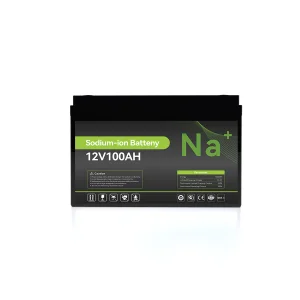
Featured Wholesale LiFePO4 & Sodium-Ion Battery Series
Direct factory supply of high-performance cells, customized battery modules, and integrated energy storage systems designed for global B2B procurement.








Technical Architecture & Electrochemical Superiority of 3.2V 50Ah LiFePO4
An in-depth white-paper analysis of prismatic cell design, safety mechanics, and performance benchmark indicators for B2B engineering procurement.
Prismatic Aluminum-Shell Structure
Our 3.2V 50Ah LiFePO4 cells utilize high-precision laser-welded aluminum housing engineered to withstand structural thermal expansion and physical stress. Compared to legacy cylindrical formats (e.g., 18650 or 32700), the prismatic configuration maximizes volumetric energy density (Wh/L), drastically reducing internal wiring complexity and contact resistance when building multi-cell modules.
Ultra-Low Internal Impedance
By incorporating nanometer-scale carbon-coated $\text{LiFePO4}$ cathode chemistry and multi-tab internal electrode stacking technology, our cells achieve an internal AC impedance of $\le 0.6\,\text{m}\Omega$. Lower internal resistance minimizes $I^2R$ thermal dissipation during continuous high-rate discharge cycles, maintaining superior electrochemical conversion efficiency exceeding 98%.
Inherent Thermal Safety & Stability
Lithium Iron Phosphate features extremely strong covalent P-O chemical bonds. Unlike NCM/NCA chemistries that experience thermal decomposition at $210^\circ\text{C}$, our 3.2V 50Ah LFP chemistry remains structurally stable up to $270^\circ\text{C}$ to $300^\circ\text{C}$, eliminating oxygen release during localized short circuits, preventing thermal runaway, and ensuring compliance with stringent safety benchmarks.
Extended Deep-Cycle Operational Life
Engineered for mission-critical installations, our Grade-A 3.2V 50Ah prismatic cells deliver over 4,000 to 6,000 continuous cycles at 80% Depth of Discharge (DoD) under standard ambient conditions ($25^\circ\text{C}$, 0.5C charge/discharge rate). This translates into an active operational lifespan exceeding 10–12 years in stationary energy storage deployments.
| Electrical & Technical Parameter | Standard Datasheet Specification | Engineering Operational Margin | Commercial B2B Impact |
|---|---|---|---|
| Nominal Voltage / Capacity | 3.2V / 50Ah (160 Wh per Cell) | $\pm 2.0\text{Ah}$ Capacity Tolerance | Guaranteed Nameplate Energy Yield |
| Internal Resistance (AC 1kHz) | $\le 0.6\,\text{m}\Omega$ | Consistent Batch Matching ($\le 0.05\,\text{m}\Omega$) | Prevents Cell Imbalance in Series Strings |
| Max Continuous Discharge Current | 1C to 3C (50A continuous, 150A peak) | Peak Pulse 5C for 10 Seconds | Ideal for High-Torque Electric Drives & AGVs |
| Charge / Discharge Temperature | Charge: $0^\circ\text{C} \sim 55^\circ\text{C}$ | Discharge: $-20^\circ\text{C} \sim 60^\circ\text{C}$ | Optional Self-Heating Film Integration | Reliable Operation in Arctic & Tropical Climates |
| Gravimetric Energy Density | $\approx 140 - 155\,\text{Wh/kg}$ | Optimized Thin-Wall Aluminum Casing | Reduces Overall Battery Pack Dead Weight |
Localized Engineering Application Scenarios & Industry Use-Cases
Discover how system integrators, equipment OEM engineers, and energy developers configure 3.2V 50Ah prismatic cells into versatile battery packs.
Telecommunications & Edge Backup (48V 50Ah)
By connecting 15 or 16 individual 3.2V 50Ah prismatic cells in series (15S1P or 16S1P configuration), telecom engineers construct ultra-compact 48V/51.2V 50Ah (2.56kWh) rack-mounted power units. These systems replace bulky lead-acid VRLA arrays at 5G base transceiver stations (BTS), offering a 70% footprint reduction and 10+ years of zero-maintenance operation in remote off-grid towers.
Industrial Autonomous Guided Vehicles (AGV & AMR)
Modern automated logistics hubs require rapid opportunity charging and sustained high current output. Assembled into 24V 50Ah (8S1P) or 36V 50Ah (12S1P) heavy-duty cases, our 3.2V 50Ah cells empower industrial AGVs, automated warehouse forklifts, and floor cleaning machines to accept 1C fast charging during scheduled 15-minute breaks without inducing lithium plating or capacity thermal degradation.
Micro-Residential & Balcony Solar Energy Systems
With the global shift toward urban localized solar power, miniature home energy storage devices demand modular, lightweight form factors. Using 4 cells in series (12.8V 50Ah / 640Wh), homeowners pair compact LFP battery banks with micro-inverters and balcony PV arrays to store daytime energy generation, providing seamless emergency backup power for routers, refrigeration, and home automation systems.
Marine Trolling Motors & Recreational Vehicles
Off-grid travelers and marine enthusiasts utilize custom 12.8V and 25.6V 50Ah deep-cycle packs built with integrated smart Bluetooth BMS. The high voltage stability of 3.2V 50Ah LiFePO4 ensures trolling motors operate at full constant speed throughout the discharge curve, unlike lead-acid batteries whose voltage drops rapidly under continuous load.
Technology Roadmap & Next-Gen LFP Innovations
Strategic engineering directions driving cell density, intelligent telemetry, and sustainable manufacturing over the next decade.
Nano-Carbon LFP & Smart BMS
Current industrial production focuses on high-purity nanometer $\text{LiFePO4}$ cathodes combined with automated laser tab welding, yielding $\ge 150\,\text{Wh/kg}$ and integrated RS485/CANbus cell monitoring.
Manganese Doping (LMFP Chemistry)
Transitioning toward Lithium Manganese Iron Phosphate ($\text{LiMn}_x\text{Fe}_{1-x}\text{PO}_4$) increases nominal cell voltage from 3.2V up to 3.7V to 4.1V, elevating cell energy density by up to 15-20% while retaining LFP structural thermal safety.
Semi-Solid State Electrolyte Integration
Replacing traditional liquid organic electrolytes with semi-solid gel polymer electrolytes drastically reduces flammability risks, extends cycle life past 8,000 cycles, and widens the operating temperature window down to $-30^\circ\text{C}$.
Closed-Loop Direct Recycling
Establishing advanced hydrometallurgical recycling protocols to reclaim 99.5% of active lithium, iron, and synthetic graphite materials directly within the gigafactory manufacturing chain, achieving net-zero carbon footprints.
China Supply Chain Resilience & Manufacturing Efficiency
Unrivaled scale, precision quality control, and localized ecosystem advantages positioned at the heart of Shenzhen's battery technological hub.
Upstream Material Integration
Direct strategic partnerships with top-tier lithium carbonate refiners and synthetic graphite producers allow us to secure raw material pricing stability. This vertical integration buffers global B2B buyers from extreme market price volatility while ensuring uncompromised cathode purity.
Automated Cell Capacity Sorting
Every single 3.2V 50Ah cell manufactured in our facility undergoes a strict 14-day high-temperature aging process, followed by 100% automated capacity, voltage, and internal resistance sorting using multi-channel micro-ohmmeter equipment. Only perfectly matched cells are bundled into wholesale production lots.
Rapid OEM/ODM Prototyping Lead Times
Leveraging Shenzhen's comprehensive electronics manufacturing infrastructure, custom enclosure tooling, structural busbar fabrication, and customized Smart BMS firmware development can be executed within 14 business days, accelerating your time-to-market.
Global Commercial & Industrial (C&I) Market Landscape
Comparative analysis of battery chemistry economics and localized regulatory drivers shaping wholesale energy storage procurement worldwide.
Total Cost of Ownership (TCO) Economics
While traditional lead-acid AGM batteries exhibit lower upfront acquisition costs, their short cycle life (300-500 cycles @ 50% DoD) results in frequent replacement expenses. Over a 10-year period, 3.2V 50Ah LiFePO4 cells yield a 60% lower TCO per kWh delivered, making them the superior financial investment for commercial operators.
Regional Grid Resilience Demands
From frequency regulation projects in North America and microgrid infrastructure across Southeast Asia, to residential electricity price arbitrage in Western Europe—wholesale demand for stable 50Ah prismatic formats continues to surge as regional grids face renewable energy intermittency.
LFP vs NCM Safety Mandates
Global regulatory bodies are increasingly penalizing high-risk nickel-manganese-cobalt (NCM) chemistries in indoor and residential energy storage installations. LiFePO4's non-combustible nature allows system integrators to bypass complex, high-cost gaseous fire suppression equipment in many jurisdictions.
Localized Support, Quality Control & Global Compliance
Rigorous international safety certifications and comprehensive logistics handling for hassle-free worldwide import.
Global Safety Certifications
Our 3.2V 50Ah LiFePO4 manufacturing lines comply strictly with ISO 9001 quality management standards. Products carry verified documentation including UN38.3, MSDS, CE, UL1973, and IEC 62619, ensuring fast customs clearance across North American, European, and Asia-Pacific ports.
Hazardous Goods (Class 9) Logistics Support
Lithium battery transport requires specialized dangerous goods packaging and documentation. We offer full-service DDP/CIF maritime shipping with UN-approved fiberboard boxes, anti-static foam inserts, and palletized thermal wrapping, supported by expert Hazmat shipping coordinators.
Custom B2B Hardware & Firmware Engineering
We provide full OEM engineering customization for B2B clients: custom laser-cut copper/aluminum busbars, heavy-duty epoxy insulating sheets, localized brand packaging, and customized BMS communications supporting Victron, SMA, Growatt, Deye, and GoodWe inverters.
Frequently Asked Questions (FAQ) for B2B Sourcing Teams
Essential technical and procurement insights for battery pack assemblers, project engineers, and wholesale buyers.
Explore Complementary High-Capacity Cells & Storage Packs
Complete your energy architecture with our broad portfolio of custom deep-cycle cell capacities and complete turnkey battery packs.