
High-Performance OEM Battery Cells & Modules
Precision-engineered deep-cycle LiFePO4 and Sodium-ion battery packs tailored for electric vehicles, material handling, golf cars, and industrial energy storage systems.








Global EV Procurement Dynamics & OEM Battery Supply Chain Strategy
As global transportation electrification accelerates beyond passenger automobiles into commercial fleets, off-highway vehicles, and automated industrial equipment, procurement directors face unprecedented supply chain mandates. Strategic OEM lithium battery sourcing requires balancing electrochemical stability, gravimetric energy density, supply resilience, and stringent global regulatory compliance.
Total Cost of Ownership (TCO) Optimization
Commercial EV operators no longer evaluate lithium batteries based solely on initial cell cost per kilowatt-hour ($/kWh). TCO models dictate cycle endurance over 5,000+ depth-of-discharge (DoD) operational runs, minimal thermal degradation, zero cell watering maintenance, and high energy efficiency (>95% round-trip efficiency).
Cobalt-Free & Thermal Safety Mandates
Thermal runaway risks in high-nickel chemistries have catalyzed a mass industry shift toward Lithium Iron Phosphate (LiFePO4) and Sodium-Ion (Na-Ion). OEM suppliers must deliver intrinsically safe cell structures capable of passing nail penetration tests without oxygen propagation.
BMS Protocol & CAN Bus Integration
Modern electric vehicles demand seamless communication between the Battery Management System (BMS) and Vehicle Control Unit (VCU). OEM suppliers must provide fully customized CANbus protocols (SAE J1939, CANopen) and real-time telemetry diagnostics.
Electrochemical Architectures: LiFePO4 vs. Sodium-Ion for OEM Mobility
Selecting the ideal battery chemistry requires a comprehensive trade-off evaluation between volumetric energy density, discharge rate performance, operating temperature windows, and raw material availability.
| Performance Metrics | OEM Grade-A LiFePO4 | Next-Gen Sodium-Ion (Na-Ion) | Traditional NCM / NCA |
|---|---|---|---|
| Nominal Cell Voltage | 3.2 V | 3.0 V – 3.1 V | 3.6 V – 3.7 V |
| Gravimetric Energy Density | 160 – 185 Wh/kg | 130 – 160 Wh/kg | 220 – 260 Wh/kg |
| 80% DoD Cycle Life | 4,000 – 6,000+ Cycles | 3,000 – 4,000 Cycles | 1,500 – 2,500 Cycles |
| Low-Temp Capacity (-20°C) | 70% – 75% Capacity | 85% – 92% Capacity | 75% – 80% Capacity |
| Thermal Runaway Temp | 270°C (Extremely Stable) | 260°C (High Stability) | 150°C – 210°C (Risk of Oxygen Release) |
| Continuous Discharge Rate | 1C – 3C (Pulse up to 5C) | 3C – 5C (High C-rate Capability) | 1C – 2C |
| Raw Material Supply Risk | Low (Abundant Fe & P) | Zero Lithium Risk (Abundant Sodium) | High (Constrained Co & Ni) |
Deep-Cycle LiFePO4 Chemistry
Lithium Iron Phosphate features an olivine crystal structure with extremely strong P-O covalent bonds. This prevents structural degradation during rapid lithium-ion insertion and extraction, ensuring superior thermal stability and long calendar life (10 to 15 years in industrial duty cycles).
Sodium-Ion Breakthroughs
Sodium-ion battery packs use abundant sodium compounds in place of lithium salts. Sodium-ion exhibits superior fast-charging performance (0–80% in 15 minutes) and maintains exceptional capacity retention under severe sub-zero operating environments (-30°C to -40°C), making it an ideal choice for cold-climate commercial fleets.
End-to-End Battery Manufacturing & Engineering Roadmap
From initial electrochemical cell matching to custom structural enclosure fabrication and BMS firmware tuning, our OEM workflow guarantees rapid prototyping and seamless mass production transition.
Duty Cycle Profiling
Analysis of vehicle weight, peak discharge currents, environmental thermal ranges, and space envelope constraints.
Cell Sorting & Grading
Strict internal resistance (IR) matching (±0.05 mΩ) and capacity grading to prevent cell imbalance in series configurations.
BMS Logic & Firmware
Customizing hardware protection thresholds, Coulomb counting SOC algorithms, active balancing, and CANbus/RS485 messaging.
Structural & Thermal Design
3D CAD modeling of sheet metal or molded IP67/IP65 enclosures featuring thermal insulation plates, liquid cooling channels, and anti-vibration damping.
Regulatory Testing
Full validation under UN38.3, UL 1973, CE, and IEC 62619 standards including vibration, thermal shock, short-circuit, and crush tests.
Custom Industrial & Commercial EV Battery Solutions
Tailored lithium power solutions designed to meet the rigorous demands of specialized electric mobility and heavy industrial machinery.
Golf Carts & Utility Vehicles (UTVs)
Drop-in 48V / 51.2V lithium battery replacements (105Ah, 150Ah) featuring high continuous current output, integrated battery display gauges, zero maintenance requirements, and weight savings up to 70% compared to traditional lead-acid banks.
Electric Forklifts, AGVs & AMRs
Heavy-duty 24V, 36V, 48V, and 80V power modules designed for opportunity charging during break shifts. Engineered to withstand high-impact warehouse operations with heavy structural steel housing and rapid charging capability (1C–2C rate charging).
Light Electric Trucks & Last-Mile Delivery EVs
High-voltage battery packs configured for long-range municipal utility trucks and electric delivery vans. Incorporating smart thermal management to ensure consistent power output across extreme seasonal temperature fluctuations.
Compliance Assurance & Environmental Sustainability (ESG)
Navigating international trade standards requires complete transparency and certified safety documentation. FOYASOLAR ensures full compliance with international hazardous goods transport standards, regional safety mandates, and emerging carbon footprint directives.
UN 38.3 & Dangerous Goods Logistics
All battery cells and modules undergo mandatory UN 38.3 testing protocols (altitude simulation, thermal testing, vibration, shock, external short circuit, impact, overcharge, and forced discharge). Complete MSDS and UN38.3 summary reports are supplied for seamless air and sea freight forwarding.
EU Battery Regulation 2023/1542 Compliance
Prepared for Europe's latest battery framework mandates. OEM processes support supply chain due diligence, recycled content tracking (cobalt, lithium, nickel), performance durability benchmarks, and integration capabilities for future Digital Battery Passport metrics.
ISO 9001 & Quality Traceability
Every individual cell produced is laser-etched with a unique QR barcode tracing batch raw material source, electrolyte injection parameters, automated formation data, and aging test records, ensuring 100% component traceability throughout the product lifecycle.
Specialized Energy Storage & OEM Battery Cell Series
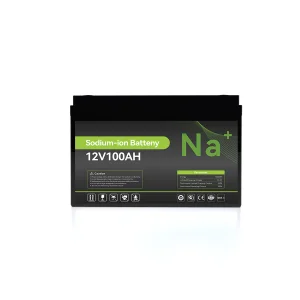
Explore our comprehensive lineup of prismatic lithium iron phosphate cells, rolling ESS battery packs, and next-generation sodium-ion modules.







Future Technology Horizons: Solid-State, Hybrid Na/Li & AI-Driven BMS
The battery industry is undergoing rapid technological evolution. FOYASOLAR's R&D roadmap focuses on three foundational technical pillars designed to enhance safety, energy density, and lifetime intelligence.
1. Solid-State Electrolyte Transition
Replacing flammable liquid electrolytes with solid polymer/oxide electrolytes eliminates risk of fire or leakage under extreme crash impacts, while unlocking gravimetric energy densities beyond 350 Wh/kg for long-range EV powertrains.
2. Sodium-Lithium Hybrid Battery Packs
Integrating Sodium-ion and Lithium Iron Phosphate cells within a single battery pack architecture leverages Na-ion's cold-weather efficiency and low-cost fast-charging alongside LiFePO4's high energy density, managed dynamically via dual-chemistry BMS algorithms.
3. AI & Digital Twin Cloud Diagnostics
Next-generation smart BMS units utilize edge AI models and IoT cloud connectivity to simulate digital twin degradation patterns, predicting thermal anomalies and cell capacity fade up to 500 charge cycles before actual failure occurs.
Frequently Asked Questions for OEM Battery Sourcing
Direct technical answers for automotive OEM engineers, industrial procurement managers, and fleet integrators.