
Grade A Battery Cells & Custom Energy Modules
Precision-engineered lithium iron phosphate (LiFePO4) cells and modular systems built for high thermal stability, long cycle life, and seamless integration into OEM applications.


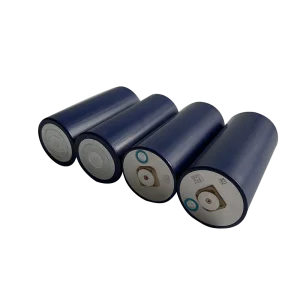





The Architectural Pivot to Liquid Cooling in Industrial Energy Storage
As global energy decarbonization accelerates, Battery Energy Storage Systems (BESS) are scaling rapidly from kilowatt-hour residential units to multi-megawatt commercial, industrial (C&I), and front-of-the-meter utility applications. However, increasing battery pack energy density—paired with continuous high-C-rate charge and discharge cycles—creates unprecedented thermal challenges. Traditional forced-air cooling systems, long considered the standard for stationary energy storage, are increasingly reaching their thermodynamic limits.
Core Technical Paradigm: Liquid cooling offers a thermal conductivity coefficient approximately 25 times higher than air cooling. By utilizing liquid-cooled cold plates directly integrated into cell modules, tier-1 OEM liquid-cooled manufacturers achieve cell temperature uniformities of ΔT ≤ 2.5°C, reducing system auxiliary power consumption by up to 40% while extending total battery lifecycle by over 20%.
For utility-scale assets and commercial peak-shaving installations, thermal variance across battery racks directly leads to localized cell degradation, premature capacity fade, reduced round-trip efficiency (RTE), and heightened risks of thermal runaway. As an established OEM/ODM battery manufacturer based in Shenzhen, China, Shenzhen Foya Solar Technology Co., Ltd. (Foya Solar) leads this architectural transition. Operating over 20,000 square meters of advanced production facilities delivering 2GWh+ of annual capacity, Foya Solar manufactures high-performance lithium iron phosphate (LiFePO4) cells, sodium-ion battery packs, smart residential storage, and turnkey liquid-cooled commercial battery cabinets (including our benchmark 100kW/215kWh liquid-cooled system).
Global Commercial & Industrial Energy Storage Status
The global market for stationary energy storage systems is undergoing a structural expansion driven by renewable energy grid penetration, volatile spot electricity markets, corporate ESG mandates, and grid congestion. Below is a macro overview of regional dynamics shaping the OEM liquid-cooled BESS supply chain.
North American Utility & C&I Expansion
Driven by IRA tax incentives, US projects favor high-density containerized systems. Liquid-cooled BESS systems dominate new utility bids due to reduced footprint requirements, lower land acquisition costs, and compliance with stringent fire safety codes (UL 9540 and UL 9540A).
European Grid Flexibility & Dynamic Tariffs
Surging electricity prices and rapid solar adoption across Germany, the UK, and Southern Europe have made C&I energy storage indispensable for factories. Liquid cooling ensures reliable dual-cycle operation daily to capture peak-shaving and ancillary grid revenues.
Asia-Pacific & Emerging Market Leadership
Led by China’s mandatory renewable coupling policies and Australia’s distributed storage boom, APAC is the central engine for BESS manufacturing innovation. OEMs rely on Shenzhen tier-1 manufacturing ecosystems for custom liquid cold plate assemblies and integrated BMS controllers.
Engineering Comparison: Liquid Cooling vs. Traditional Forced Air Cooling
| Performance Metric | Traditional Forced-Air Cooling | Advanced OEM Liquid Cooling (Foya Solar Standard) | System Advantage |
|---|---|---|---|
| Thermal Conductivity Coefficient | ~ 0.026 W/(m·K) (Air) | ~ 0.60 W/(m·K) (50/50 Glycol-Water Fluid) | 23x to 25x Faster Heat Dissipation |
| Maximum Cell Temp Variance (ΔT) | ≤ 5.0°C – 8.0°C | ≤ 2.5°C | Prevents premature capacity mismatch across battery strings |
| Auxiliary Energy Consumption | High (Continuous HVAC fan operation) | Low (Smart variable-frequency liquid pumps) | Up to 30%–40% Parasitic Load Reduction |
| Energy Density / Footprint | Requires extensive airflow gaps between cells | Compact cold-plate contact sandwich structure | 35%+ Higher Volumetric Energy Density |
| Operating Noise Level | High (> 75 dB due to high-CFM blowers) | Low (< 65 dB whisper-quiet circulation) | Ideal for urban, commercial, and noise-sensitive sites |
| Expected Pack Lifecycle | 4,000 – 6,000 cycles (At standard 0.5C rate) | 8,000 – 10,000+ cycles (Grade A LiFePO4 chemistry) | 20%+ Life Extension (Lower Total Cost of Ownership) |
Liquid-Cooled Cabinet System Architecture & Component Breakdown
Building an industrial-grade OEM liquid-cooled energy storage cabinet requires seamless synchronization between fluid dynamics, mechanical containment, electrical safety, and algorithmic Battery Management System (BMS) controls.
1. Cold-Plate Fluid Routing Design
Aluminum micro-channel cold plates are directly positioned adjacent to the broad faces of high-capacity prismatic cells (e.g., 230Ah, 280Ah, 324Ah, or 680Ah LiFePO4 cells). Coolant channel geometries are optimized using Computational Fluid Dynamics (CFD) modeling to ensure uniform pressure distribution, zero flow stagnation, and optimized heat transfer across all cell interfaces.
2. Multi-Tiered BMS & Thermal Telemetry
Foya Solar’s proprietary BMS architecture integrates high-precision NTC thermistors across every cell cluster. The master BMS dynamically controls variable-frequency liquid pumps and chiller compressors, adjusting flow rates based on real-time C-rate demands, ambient temperatures, and internal cell heat generation curves via RS485, CANbus, and Modbus TCP protocols.
3. Redundant Leak Prevention & Safety Protocols
To eliminate fluid ingress risks, OEM cabinets utilize automotive-grade quick-disconnect couplings, die-cast aluminum liquid manifolds, and IP67-rated sealed module enclosures. Integrated moisture sensors provide instant shutdown warnings, while automated aerosol/pack-level gas detection mitigates thermal runaway escalation in compliance with NFPA 855 and UL 9540A standards.
Turnkey Macro Industry Solutions & Deployment Scenarios
Foya Solar’s OEM liquid-cooled manufacturing capabilities provide tailored energy storage architectures across diverse commercial and industrial application environments.
Solar-Storage-EV Charging Superhubs
Ultra-fast EV chargers cause acute demand spikes on local transformers. Integrating our 100kW/215kWh liquid-cooled battery cabinets buffers high-current charging loads, preventing grid penalties and enabling continuous 1C high-rate discharge without thermal degradation.
Industrial Factory Peak-Shaving & Backup
Manufacturing plants subject to time-of-use (TOU) tariffs utilize liquid-cooled BESS to store low-cost off-peak power and discharge during peak tariff windows. The precise thermal regulation preserves capacity over 10+ years of twice-daily cycling.
Island & Remote Mining Microgrids
Operating in ambient temperatures exceeding 45°C, traditional air-cooled batteries suffer massive thermal derating. Foya Solar’s IP54/IP65 liquid-cooled cabinets actively chill cells down to optimal 25°C operating zones, guaranteeing 100% rated power delivery.
The Next Era of Thermal Management & Battery Chemistry Innovation
As an engineering-driven manufacturer, Foya Solar actively invests in cutting-edge research to drive the next generation of energy storage performance:
- Direct Immersion Liquid Cooling: Transitioning from external cold plates to synthetic dielectric fluid immersion, achieving direct contact cooling for zero thermal resistance and ultra-fast 2C+ charging safety.
- Sodium-Ion Hybrid BESS Systems: Combining high-density LiFePO4 cells with cost-effective sodium-ion (Na-Ion) packs within a unified liquid-cooled cabinet to achieve unmatched cold-weather performance (−40°C operational limits) and reduced supply chain exposure.
- AI Cloud Thermal Modeling: Utilizing digital twin algorithms to dynamically predict localized cell hotspots hours in advance, optimizing coolant pump pressure dynamically to maximize efficiency.
OEM Liquid-Cooled Sourcing & Engineering FAQ
Key technical answers for project developers, integrators, and procurement teams selecting liquid-cooled storage suppliers.
Why is liquid cooling superior to air cooling for 100kW/215kWh+ commercial cabinets?
What liquid coolant mixture is used in Foya Solar OEM systems?
How does Foya Solar handle coolant leak protection and electrical insulation safety?
Can Foya Solar customize BMS communication protocols for third-party inverters?
What international quality and fire safety certifications do your batteries hold?
What is your minimum order quantity (MOQ) and sample lead time for custom OEM projects?
How does sodium-ion (Na-Ion) compare to LiFePO4 for stationary energy storage?
How fast does Foya Solar respond to technical inquiries and support requests?
Industrial Energy Cabinets, Motive Packs & Chargers
Explore our full suite of manufacturing solutions—from high-capacity prismatic cells to commercial liquid-cooled cabinets and high-efficiency smart chargers.







