
OEM / ODM LiFePO4 & Energy Solutions
Precision-engineered lithium battery packs, Grade-A LFP prismatic cells, and custom commercial energy storage systems directly from factory production lines.
-

Wholesale Golf Cart Forklift 51.2v Lithium Battery 105ah Manufacturer, Supplier
-

Wholesale FOYASOLAR LiFePO4 25.6V 50Ah Rechargeable Deep Cycle Battery Pack Manufacturers, Suppliers
-

Custom FOYASOLAR 48V/51.2V-280Ah ON/Off-grid hybrid solar energy storage system Supplier, Factories
-

OEM foyasolar Na12v 200ah Sodium Ion Battery Pack Factory, Factories
-

Custom FOYASOLAR LiFePO4 12.8V 100Ah Rechargeable Deep Cycle Battery Pack Supplier, Factories
-

Custom 3.2v 100ah Lithium Ion Battery Cell Manufacturer, Factories
-

ODM FOYASOLAR LiFePO4 51.2V 5KWh Energy Storage Battery Factory, Factories
-

Custom FOYASOLAR Cylindrical 18650 3.2V 3500mAh LiFePO4 Battery Manufacturer, Factories
1. Executive Summary & Benchmarking of 48V 100Ah LiFePO4 Systems
In the evolving landscape of electrochemical energy storage, the 48V 100Ah (commonly implemented as a nominal 51.2V 100Ah 16S configuration) Lithium Iron Phosphate (LiFePO4) battery module represents the cornerstone of modular energy deployment. Delivering a usable nominal energy output of 4.8 kWh to 5.12 kWh, this specific voltage and capacity ratio has become the global standard across residential microgrids, telecommunication backup infrastructure, marine power systems, and heavy-duty industrial electric mobility (such as forklifts, AGVs, and golf carts).
Compared to legacy lead-acid architectures (AGM/GEL) and alternative lithium chemistries such as Nickel Manganese Cobalt (NMC), LiFePO4 exhibits unprecedented thermal stability, non-toxic environmental compatibility, and exceptional cycle durability. As an OEM manufacturer, our production lines utilize strict cell-matching algorithms, ensuring every 48V 100Ah pack exhibits sub-5mΩ internal resistance variance across constituent prismatic cells.
Comparative Technical Matrix: Electrochemical Chemistries
| Performance Parameter | LiFePO4 (LFP) 48V 100Ah | NCM Lithium-Ion 48V | VRLA / AGM Lead-Acid 48V |
|---|---|---|---|
| Nominal Energy | 5.12 kWh (16S 100Ah) | 4.8 kWh – 5.0 kWh | 4.8 kWh (Rated @ 20Hr) |
| Cycle Life (80% DoD) | > 6,000 Cycles | 2,000 – 2,500 Cycles | 500 – 800 Cycles |
| Thermal Runaway Temp | +270°C to +300°C | +150°C to +210°C | Exothermic Gassing @ >60°C |
| Usable Depth of Discharge | 90% – 100% | 80% – 90% | 50% Max Recommended |
| System Weight | Approx. 42 kg – 46 kg | Approx. 32 kg – 38 kg | Approx. 130 kg – 150 kg |
| BMS Protection Integration | Mandatory Smart BMS (CAN/RS485) | Mandatory Smart BMS | None / External Passive Fuse |
2. Global Sourcing Demands & OEM Customization Framework
International B2B buyers require complete flexibility in physical form-factor, operational software parameters, and communication protocol engineering.
Rack-Mount Server Architecture
Designed for standard 19-inch 3U or 4U server racks. Features dual front-facing RS485/CANbus communication ports, LED state-of-charge (SoC) indicators, DIP switches for multi-pack parallel expansion up to 15 units (76.8 kWh total array capacity).
Wall-Mounted Residential Powerwall
Ultra-slim architectural enclosures featuring integrated breakers, touch LCD diagnostics screens, and plug-and-play compatibility with Tier-1 hybrid inverters (Victron, Deye, Growatt, Sol-Ark, SMA, GoodWe).
Heavy Industrial & Motive Steel Enclosures
Shock-resistant, anti-vibration steel enclosures reinforced with shock-absorbing internal brackets. Specifically engineered for electric forklifts, golf carts, floor cleaning equipment, and rugged off-grid applications.
3. Macro Industry Trends & Market Drivers (2025–2030)
The global demand for 48V 100Ah LiFePO4 batteries is undergoing exponential growth driven by macro-economic energy transition policies, telecommunication base station modernizations, and grid instability across developing and developed nations alike.
Key Market Vectors Transforming 48V Battery Manufacturing:
- Grid Decentralization & Time-of-Use (ToU) Arbitrage: Commercial enterprises and residential home-owners are utilizing 48V 100Ah batteries to store low-cost off-peak solar power, discharging during peak tariff hours to drastically flatten electricity overheads.
- Rapid Decarbonization of Industrial Fleets: Warehouse operations are aggressively replacing maintenance-heavy lead-acid forklift batteries with 48V 100Ah/105Ah LiFePO4 packs capable of fast 0.5C-1C opportunity charging during break hours without battery degradation.
- Telecom 5G Infrastructure Rollouts: 5G macro base transceiver stations (BTS) demand up to 3x the power density of 4G sites. 48V 100Ah rack-mounted LFP modules provide instant high-rate backup power in compact 19-inch cabinets.
- Hybrid Chemistry Co-Deployment: Combining traditional LiFePO4 modules with next-generation Sodium-Ion (Na-Ion) packs in hybrid systems to ensure sub-zero charging capability down to -30°C without requiring internal thermal heating elements.
4. Comprehensive Industrial Solutions & Use-Case Architectures
Deploying OEM 48V 100Ah modules across high-demanding commercial scenarios requires specialized hardware-software integration.
Scenario A: Solar Microgrids & ESS Inverter Integration
When integrated into photovoltaic energy storage systems, the 48V 100Ah pack acts as the secondary energy reservoir. Our smart BMS features dynamic inverter auto-matching protocols. Upon connected RS485 or CAN lines, the BMS automatically dictates optimal charge voltage, float voltage, and current limits directly to the inverter processor (e.g., SMA, Victron, Deye, Schneider) eliminating manual setting errors.
Scenario B: Electric Motive Power (Golf Carts, Forklifts, AGVs)
Motive power applications subject batteries to continuous vibration, physical shock, and high peak-discharge surges during acceleration or heavy hydraulic lifts. Our OEM motive packs utilize laser-welded copper busbars, anti-vibration epoxy cell positioning, and high-amp MOSFET or Contactor-based BMS units engineered to deliver continuous 100A discharge with up to 300A transient peak surges for 5 seconds.
5. Quality Assurance, Compliance & Localized Support
As a senior OEM manufacturer operating out of advanced manufacturing hubs in Shenzhen, China, our manufacturing methodology adheres to strict ISO9001:2015 quality management systems. Every 48V 100Ah battery module undergoes rigorous 5-stage automated quality control testing before entering final packaging.
5-Stage Factory Testing Protocol:
- 1. Incoming Raw Cell Grading: Automated sorting of 3.2V cells by capacity, internal resistance (IR < 0.3mΩ variance), and open-circuit voltage (OCV) to prevent cell imbalance during aging.
- 2. Automated Laser Busbar Welding: High-precision robotic fiber-laser welding ensures zero-resistance connections between cell terminals and nickel-plated copper busbars, eliminating spot-weld detachment risk.
- 3. BMS Functional Validation: Computerized testing of short-circuit protection, over-charge/over-discharge cutoffs, thermal probe accuracy, and CAN/RS485 transceiver signals.
- 4. Full Charge-Discharge Aging Test: 100% of manufactured packs undergo a full cycle burn-in test at 0.5C rate inside climate-controlled testing chambers.
- 5. Vibration & Insulation Testing: High-potential insulation testing (Hi-Pot) up to 1500VDC to ensure dielectric separation between active cell blocks and external metal housing.
6. Technology Roadmap & Future Product Outlook
Semi-Solid State LFP Cells
Transitioning from liquid electrolyte cells to semi-solid state gel-polymer electrolytes, boosting volumetric energy density beyond 210 Wh/kg while rendering thermal runaway virtually impossible even under direct puncture tests.
AI-Powered Cloud BMS IoT
Integrating 4G/WiFi telemetry chips directly into the BMS circuit board. Machine learning algorithms analyze cell degradation curves in real-time, predicting State-of-Health (SoH) and enabling remote OTA firmware updates.
Active Cell Balancing Modules
Replacing conventional 50mA passive resistive balancing with 2A–5A inductive active balancing circuits, transferring energy from high-voltage cells to lower-voltage cells without wasteful heat dissipation.
7. Deep Engineering Q&A for Sourcing & Procurement Teams
In-depth technical answers addressing common engineering inquiries during OEM battery design reviews.
Why is the nominal voltage of a 48V LiFePO4 battery listed as 51.2V?
How many 48V 100Ah battery modules can be safely connected in parallel?
What protection features are integrated into the OEM BMS?
What is the difference between Grade A and Grade B LFP cells in OEM manufacturing?
Can 48V 100Ah LiFePO4 batteries be charged in sub-zero temperatures?
What communications protocols are supported for inverter auto-matching?
Explore Full Range of OEM Battery Solutions
From single prismatic cell components to complete 215kWh commercial liquid-cooled storage cabinets.
-

ODM 3.2v 120Ah LFP Prismatic Lithium Battery Cell Manufacturer, Suppliers
-

-
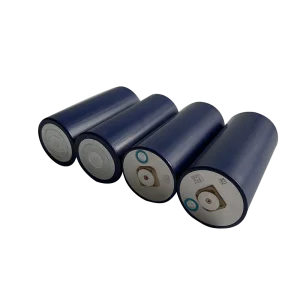
ODM FOYASOLAR Cylindrical 60150 3.2V 50Ah LiFePO4 Battery Manufacturer, Factory
-

-

OEM FOYASOLAR LiFePO4 51.2V 5KWh (100AH) Energy Storage Systems Manufacturer, Suppliers
-

Wholesale OEM/ODM Lithium Battery Chargers Manufacturers, Suppliers
-

-
