Featured Industrial LiFePO4 & ESS Systems
Direct-from-factory modular battery configurations engineered for grid-scale, marine, commercial, and residential deployments.








The Global Shift Toward High-Density 3.2V Lithium Iron Phosphate Infrastructure
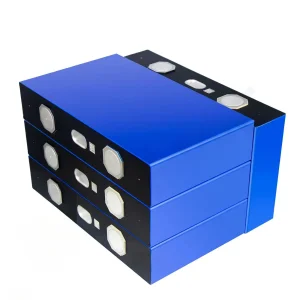
As global decarbonization mandates accelerate under Net-Zero 2050 benchmarks, the industrial procurement landscape for stationary energy storage systems (BESS) and heavy electromobility has experienced a fundamental structural shift toward OEM 3.2V LiFePO4 prismatic cell chemistries.
Modern energy architectures require unprecedented levels of thermal stability, cycle longevity, and Levelized Cost of Storage (LCOS) efficiency. Unlike legacy Nickel Manganese Cobalt (NMC) or lead-acid alternatives, 3.2V LiFePO4 (Lithium Iron Phosphate) cells provide an intrinsically safe olivine crystal matrix capable of enduring thousands of deep discharge cycles without suffering structural thermal degradation.
Global utility-scale project developers, commercial & industrial (C&I) integrators, and marine equipment original equipment manufacturers (OEMs) are increasingly decentralizing their cell sourcing strategies. Securing direct partnerships with specialized OEM LiFePO4 3.2V factories ensures access to Grade-A primary chemistry, custom mechanical engineering, strict internal resistance (IR) matching, and full traceabilities—eliminating secondary market quality risks.
Microstructural Physics of 3.2V LiFePO4 Prismatic Cells
Understanding the electrochemistry behind nominal 3.2V LiFePO4 chemistry explains why industrial BESS integrators prioritize this cell format over high-voltage alternatives.
Crystal Lattice Stability
LiFePO4 possesses a 3D olivine crystal structure with strong covalent P-O bonds. During lithium de-intercalation (charging), the FePO4 lattice structure experiences minimal volume expansion (<6.5%), preserving physical cathode integrity over tens of thousands of chemical cycles.
Thermal Runaway Safeguards
Unlike NMC chemistries that release oxygen at ~210°C, oxygen molecules in LiFePO4 are tightly bound to phosphorus. Oxygen gas isn't released until temperatures exceed 270°C–300°C, drastically reducing thermal runaway propagation risks.
Flat Discharge Plateau
A primary operational benefit is the flat 3.2V discharge plateau. Between 20% and 80% State of Charge (SOC), terminal voltage variations remain minimal, providing consistent power output to connected DC/AC inverters.
Industrial Cell Chemistry Benchmark Metrics
| Electrochemical Metric | OEM Grade-A 3.2V LiFePO4 | Standard NMC 811 | Sodium-Ion (Na+) |
|---|---|---|---|
| Nominal Voltage | 3.2 V | 3.6 V - 3.7 V | 3.0 V - 3.1 V |
| Gravimetric Energy Density | 160 - 185 Wh/kg | 240 - 300 Wh/kg | 130 - 150 Wh/kg |
| Cycle Life (80% Capacity Retention) | 6,000 - 10,000 Cycles | 1,500 - 2,500 Cycles | 3,000 - 5,000 Cycles |
| Thermal Breakdown Start Point | 270°C - 300°C | 210°C | 260°C |
| Raw Material Supply Risk | Low (Iron, Phosphate abundant) | Extreme (Cobalt, Nickel volatility) | Very Low (Abundant Sodium) |
| Projected LCOS ($/kWh/cycle) | $0.02 - $0.04 | $0.08 - $0.12 | $0.04 - $0.06 |
Global Procurement Demand for OEM 3.2V Cells Across Key Sectors
International enterprise buyer intent varies significantly based on target application specs, duty cycle profiles, and geographical environmental factors.
1. Residential ESS & Off-Grid Microgrids
Energy storage system aggregators require 3.2V 100Ah, 280Ah, and 314Ah cells to stack into 51.2V high-voltage or low-voltage modular battery banks. Essential requirements include RS485/CANbus communication compatibility with leading global hybrid inverters (e.g., Victron, SMA, Deye, Growatt), compact footprints, and smart BMS auto-balancing capabilities.
2. Commercial & Industrial (C&I) Energy Storage
Industrial plant managers demand high-capacity prismatic cells (such as 3.2V 230Ah to 680Ah) integrated into 100kW/215kWh or multi-megawatt containerized storage systems. Key procurement drivers include peak-shaving capabilities, diesel generator displacement, robust thermal management (liquid cooling), and rapid C-rate charging response.
3. Electric Mobility, AGVs & Heavy Marine Propulsion
From electric golf carts and automated guided vehicles (AGVs) to deep-cycle marine trawlers, high-discharge 3.2V LiFePO4 cells are replacing legacy flooded lead-acid batteries. OEM buyers require high anti-vibration structural housings, IP65/IP67 ingress ratings, and opportunity fast-charging capabilities without memory effect.
4. Telecom Backup & Uninterruptible Power Supply (UPS)
5G cellular infrastructure requires reliable backup power with tight rack space requirements. 19-inch rack-mounted 48V/51.2V LiFePO4 modules utilizing 3.2V pouch or prismatic cells provide 3x the volumetric density of lead-acid with reliable performance in remote base stations lacking air conditioning.
Inside the Modern OEM 3.2V Cell Factory Workflow
High-quality LiFePO4 performance starts with rigorous automated manufacturing processes. Below is the precise 6-stage engineering control implemented in certified OEM production facilities.
1. Nanoscale Slurry Mixing
High-purity Lithium Iron Phosphate powders are combined with carbon black conductivity agents and PVDF binders inside high-vacuum planetary mixers to guarantee homogenous cathode slurries.
2. Ultra-Precision Coating
Double-sided continuous laser-guided coating machines apply cathode slurry onto aluminum foil and anode graphite slurry onto copper foil with thickness tolerance controlled within ±1.5 µm.
3. Automated Stacking/Winding
Advanced high-speed Z-fold stacking machines position separator films between electrodes to minimize internal stress concentrations and ensure uniform electron distribution during discharge.
4. Laser Welding & Filling
Aluminum alloy prismatic casings are sealed using continuous fiber laser welding. Electrolyte injection is conducted under negative pressure environments to optimize pore saturation.
5. Formation & Aging
Cells undergo precise high-temperature thermal formation to establish a stable Solid Electrolyte Interphase (SEI) layer, followed by a 14-to-28 day ambient aging phase to screen self-discharge rates.
6. 4-Point Digital Matching
Final cell sorting utilizes automated AI testing rigs matching cells based on four crucial metrics: Capacity (Ah), Voltage (mV), Internal Resistance (mΩ), and Capacity Fade Rate (K-Value).
Next-Generation Trajectory: Beyond Standard 280Ah Cells
The lithium battery industry is rapidly evolving. OEM factories are pushing the boundaries of capacity, chemical doping, and hybrid battery storage technologies.
Ultra-Large Form Factor Prismatic Cells (314Ah, 560Ah, 680Ah)
Transitioning from legacy 280Ah cells to next-generation 314Ah and 680Ah prismatic form factors reduces the total cell count per megawatt-hour (MWh) by over 15%. This simplifies Battery Management System (BMS) wiring, eliminates potential mechanical interconnection failure points, and cuts total balance of system (BOS) container costs.
Manganese-Doped LFP (LMFP) Chemistries
Integrating Manganese into the cathode crystal matrix creates Lithium Manganese Iron Phosphate (LMFP). LMFP increases nominal cell voltage from 3.2V up to 3.7V, resulting in a 15%–20% boost in overall volumetric energy density while maintaining the core thermal safety advantages of standard LFP chemistry.
Sodium-Ion (Na+) Hybrid Parallel Integration
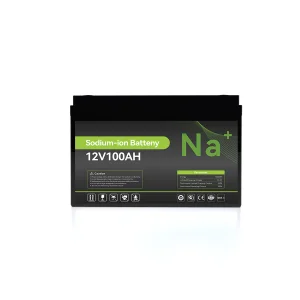
Leading OEM facilities are introducing commercial Sodium-Ion battery packs alongside traditional LiFePO4 lines. Na-ion batteries offer superior cold-weather discharge rates down to -40°C. Future commercial ESS installations will increasingly feature dual LiFePO4 / Na-ion hybrid pack architectures to optimize low-temperature survival and cost performance.
Solid-State Electrolyte Interlayers
Research into semi-solid state LiFePO4 cells utilizing gel-polymer or ceramic matrix electrolytes is eliminating free liquid electrolytes inside the casing. Semi-solid 3.2V cells virtually prevent internal short-circuit ignition even when subjected to extreme mechanical puncture tests.
International Compliance & Safety Certifications
Importing industrial lithium cells requires strict compliance with international transport and grid safety regulations. A reliable OEM manufacturer provides a complete suite of certified testing documentation.
UL 1973 & UL 9540A
Mandatory certifications for stationary energy storage batteries in North America, testing thermal runaway fire propagation at cell and module levels.
IEC 62619 Standard
The essential safety benchmark for industrial lithium secondary cells used in telecom, UPS, and grid-connected storage installations across Europe.
UN 38.3 & MSDS
Comprehensive dangerous goods transport certification covering altitude simulation, shock, vibration, thermal testing, and crushing under Class 9 Hazmat rules.
CE & RoHS Compliance
Confirms electro-magnetic compatibility (EMC) and compliance with hazardous substance limits for seamless commercial importation into the European Economic Area.
Frequently Asked Sourcing & Engineering Questions
Get immediate answers to common technical queries managed by OEM cell procurement teams.
Why choose 3.2V prismatic LiFePO4 cells instead of cylindrical cell formats?
What is the standard tolerance when cell matching in an OEM LiFePO4 factory?
How does depth of discharge (DOD) impact the overall cycle life of 3.2V LiFePO4 cells?
Can 3.2V LiFePO4 cells be charged safely below 0°C (freezing point)?
What communication protocols do custom OEM BMS systems support?
What is the typical production lead time for bulk OEM battery cell orders?
Explore Additional Custom Battery Packs & Chargers
Select from our full line of deep-cycle sodium-ion packs, high-capacity 680Ah cells, and high-frequency lithium smart chargers.