OEM/ODM Custom Lithium Solutions Shelf
Explore our engineering-grade LiFePO4 cells, custom lithium battery modules, and integrated energy storage systems for industrial buyers.








Engineering OEM Custom Lithium 200Ah Energy Storage Systems
An exhaustive analysis of electrochemical cell balancing, physical enclosure thermodynamics, and dual-layer BMS protective architectures.
The global commercial transition toward high-density lithium iron phosphate (LiFePO4 / LFP) chemistry has repositioned the custom lithium 200Ah battery pack as the foundational building block for residential energy storage systems (RESS), commercial and industrial (C&I) power microgrids, marine house power systems, and heavy-duty electric mobility platforms. Selecting a premier OEM custom lithium 200ah supplier requires an in-depth technical evaluation of cell-level chemistry, series-parallel arrangement dynamics, internal busbar resistance, and thermal management safety margins.
Information Gain Insight: Unlike standard off-the-shelf deep-cycle lead-acid replacements, an OEM custom 200Ah LiFePO4 battery system delivers 2.56kWh (at 12.8V nominal) to 10.24kWh (at 51.2V nominal) of usable energy with over 95% round-trip efficiency (RTE). Customizing cell matching tolerances to ΔV < 5mV and ΔR < 0.5mΩ guarantees extended cycle lifespans exceeding 6,000 deep discharge cycles.
1. Electrochemical Foundation: Prismatic vs. Cylindrical Cell Configurations
When sourcing 200Ah battery configurations, OEM engineering teams must choose between high-capacity Grade-A prismatic LFP cells (such as 3.2V 200Ah, 230Ah, or 324Ah single cells) and modular cylindrical cell arrays (e.g., 18650, 26650, 32700 formats). Prismatic cell architectures dominate the 200Ah capacity benchmark due to several structural benefits:
- Volumetric Efficiency: Prismatic 3.2V 200Ah cells achieve volumetric energy densities exceeding 240 Wh/L, drastically reducing the physical envelope required for server-rack or wall-mounted energy storage units.
- Reduced Interconnection Complexity: Utilizing a 4S1P (4 series, 1 parallel) topology to build a 12.8V 200Ah pack eliminates hundreds of wire-bond or laser-weld points required in cylindrical arrays, minimizing potential electrical failure points.
- Laser-Welded Aluminum Busbars: High-amperage continuous discharge (up to 200A continuous, 400A peak) demands heavy-duty nickel-plated copper or solid aluminum busbars joined via robotic fiber-laser welding, guaranteeing contact resistance below 0.15 mΩ per connection.
2. Comparative Performance Matrix: Chemistry & Engineering Trade-Offs
To assist procurement managers and systems integrators in evaluating battery performance across diverse operational environments, the table below highlights the technical metrics of 200Ah battery packs constructed with competing electrochemistries.
| Performance Metric | Custom LiFePO4 (200Ah) | Sodium-Ion / Na-Ion (200Ah) | NMC Lithium-Ion (200Ah) | AGM / Gel Lead-Acid (200Ah) |
|---|---|---|---|---|
| Nominal Voltage (4S Config) | 12.8V (3.2V / cell) | 12.0V (3.0V / cell) | 14.8V (3.7V / cell) | 12.0V (2.0V / cell) |
| Cycle Life (80% DoD @ 25°C) | 6,000 – 8,000 Cycles | 4,000 – 5,000 Cycles | 2,000 – 3,500 Cycles | 500 – 800 Cycles |
| Gravimetric Energy Density | 140 – 175 Wh/kg | 110 – 135 Wh/kg | 220 – 260 Wh/kg | 30 – 45 Wh/kg |
| Low-Temp Charge Cutoff | 0°C (Heater pad option) | -20°C (Native Charge) | -5°C (Native Charge) | -10°C (Reduced efficiency) |
| Thermal Runaway Temp | 270°C (Extremely Safe) | 260°C (Inherent Safety) | 210°C (Requires Active Mitigation) | N/A (Gassing risk) |
| Round-Trip Efficiency (RTE) | > 96% | > 92% | > 95% | 75% – 82% |
Localized Deployment & Custom Sizing Scenarios
Tailored 200Ah battery engineering built to solve distinct operational challenges across global industry verticals.
Off-Grid Solar & Microgrid Energy Storage
Residential solar setups require stable, maintenance-free storage. A 51.2V 200Ah (10.24kWh) wall-mounted or rack-mounted server battery handles daily solar cycling, supporting solar inverter protocols such as Victron, SMA, Growatt, Deye, and Voltronic via RS485 and CANbus communications.
Marine House Power & Trolling Motors
Yachts, commercial fishing vessels, and electric trolling motor setups require ruggedized IP67/IP68 waterproof enclosures. Custom 12V and 36V 200Ah marine packs feature anti-vibration epoxy cell potting, stainless steel hardware, and dual-thermal sensors to withstand humid, saline environments.
Heavy-Duty AGVs, Forklifts & Cleaning Scrubbers
Industrial material handling equipment demands high-rate opportunity charging (up to 1C charge, 2C discharge). A custom 24V or 48V 200Ah LiFePO4 battery pack reduces equipment downtime by charging from 20% to 100% in under 90 minutes while delivering flat voltage curves throughout the shift.
Telecom Base Stations & Remote Microwave Sites
Unreliable grid areas require backup power systems operating in wide temperature ranges (-20°C to 60°C). Custom 48V 200Ah telecommunication batteries incorporate active heating films and cloud telematics (GPS/4G IoT module) for real-time remote State of Health (SoH) diagnostics.
Overlanding RVs & Mobile Work Trucks
Auxiliary house power in expedition vehicles requires compact dimensions and zero toxic off-gassing. 12.8V 200Ah slimline aluminum packs fit into under-chassis compartments, replacing heavy dual 6V lead-acid batteries while cutting system weight by over 60%.
Commercial Peak Shaving & Hybrid Diesel Cabinets
Industrial plants deploy modular 200Ah battery racks combined into 50kW/96kWh or 100kW/215kWh liquid-cooled energy storage cabinets to offset demand charges, capture peak-valley tariff differentials, and back up diesel generator sets.
Technology Roadmap & Next-Gen Lithium Evolution
Strategic technology developments shaping high-capacity 200Ah battery engineering over the next decade.
1. Solid-State & Semi-Solid Electrolyte Transition
The energy storage industry is advancing from conventional liquid organic electrolytes toward semi-solid and all-solid-state lithium chemistry. Semi-solid 200Ah cells incorporate gel-state polymer electrolytes that virtually eliminate flammable liquid solvents. This evolution raises volumetric energy density beyond 350 Wh/L while maintaining thermal stability up to 350°C, providing total resistance against thermal runaway even under severe mechanical puncture.
2. Sodium-Ion (Na-Ion) Commercial Integration
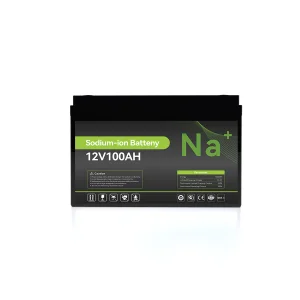
While LiFePO4 remains the primary choice for deep-cycle longevity, sodium-ion chemistry offers strategic raw-material security. Utilizing abundant sodium compounds, 200Ah sodium-ion packs operate down to -40°C with over 80% capacity retention. For cold-climate solar storage and cost-sensitive stationary applications, hybrid LFP/Na-ion dual-chemistry BMS management systems represent a key technological frontier.
3. AI-Driven Smart BMS & Cloud Telematics
Modern OEM customization extends far beyond physical assembly into embedded software intelligence. Next-generation 200Ah BMS designs feature Edge-AI chips that execute Electrochemical Impedance Spectroscopy (EIS) algorithms directly on the board. By monitoring real-time micro-changes in cell internal resistance, the BMS predicts thermal degradation, optimizes active balancing currents (up to 5A per cell), and broadcasts diagnostic data to cloud platforms via MQTT/4G.
4. Circular Economy & Second-Life Recyclability
Sustainability regulations—including the European Union Battery Regulation—mandate full lifecycle traceability via "Digital Battery Passports." Next-gen 200Ah battery packs are engineered with modular disassembly structures, avoiding destructive permanent glue potting. This design ensures individual 3.2V 200Ah cells can be easily unbolted, tested, and repurposed into second-life energy storage applications at the end of their primary lifecycle.
Chinese Supply Chain Resilience & Manufacturing Efficiency
How Guangdong’s lithium-ion ecosystem enables rapid OEM engineering, strict quality control, and cost advantages.
China produces over 75% of the world's lithium-ion battery cells and controls more than 80% of the refined cathode and anode material supply chain. For global B2B buyers, partnering with a Shenzhen-based OEM custom lithium 200ah supplier delivers significant structural and economic advantages:
Vertical Supply Integration
From raw lithium iron phosphate (LiFePO4) powder synthesis and synthetic graphite anodes to precision copper foil milling and automated BMS SMT PCB assembly, the localized Guangdong industrial cluster eliminates long component lead times.
Agile Prototyping & Engineering Cycles
Industrial custom projects demand rapid design iterations. Our dedicated R&D team turns around 3D enclosure CAD drawings, thermal CFD simulations, and custom BMS firmware within 7 days, delivering fully validated functional prototypes in 14 days.
Economies of Scale & Cost Control
Operating out of a 20,000 square-meter advanced manufacturing facility with over 2GWh of annual production capacity allows us to pass raw-material bulk purchasing discounts directly to global OEM brand owners and EPC integrators.
Global Market Dynamics & International Compliance
Navigating strict international safety standards, hazardous goods logistics, and market clearance requirements.
Deploying high-capacity lithium battery systems into regulated markets such as North America, the European Union, Australia, and Japan requires full compliance with international safety and transport mandates. A reliable custom lithium 200Ah factory provides comprehensive testing documentation to guarantee seamless customs clearance and end-user acceptance.
1. Essential Safety & Quality Certification Matrix
- UL 1973 & UL 9540A: Critical for North American stationary energy storage integration. UL 9540A thermal runaway fire propagation testing verifies that cell-to-cell thermal failure does not cascade beyond the localized module enclosure.
- IEC 62619 & CE Marking: Mandatory certification for European industrial and energy storage markets, ensuring electrical safety, mechanical shock absorption, and electromagnetic compatibility (EMC).
- UN 38.3 & MSDS Hazardous Transport Clearance: All 200Ah battery packs undergo rigorous altitude simulation, thermal cycling, vibration, shock, external short-circuit, and overcharge tests to qualify for Class 9 Dangerous Goods transport via sea and air freight.
2. End-to-End Quality Control Architecture
Our quality control protocol guarantees that every customized 200Ah battery leaving the assembly line performs consistently with zero field failures:
Strict Standard Operating Procedure: Incoming Quality Control (IQC) capacity grades 100% of incoming 3.2V cells. In-Process Quality Control (IPQC) verifies automated laser weld penetration and busbar torque values. Outgoing Quality Control (OQC) executes a full 100% charge-discharge cycle test, checking cell balance voltage, BMS cut-off triggers, and communication packet stability across CANbus/RS485 networks.
Technical Q&A for Sourcing & Engineering Teams
Direct technical responses addressing custom BMS logic, thermal performance, series-parallel scaling, and OEM lead times.
What customization options are available for a 200Ah LiFePO4 battery pack?
How many 200Ah lithium battery packs can be connected in parallel or series?
What is the real-world cycle life expectation of a custom 200Ah LiFePO4 battery?
How does low-temperature charging protection function in custom packs?
How do you verify cell grading and prevent non-Grade A cells from entering production?
What are the standard lead times for OEM custom sample development and bulk orders?
Can your 200Ah battery BMS communicate directly with existing solar inverters?
What warranty coverage and post-sales technical support do you provide?
Complete Lithium & Energy Storage Range
Browse our extensive lineup of specialized single cells, fast chargers, sodium-ion batteries, and industrial cabinets.