
High-Performance Lithium Energy Storage Portfolio (Part I)
Direct factory customized battery modules, Grade-A LFP cells, and scalable commercial energy storage architecture.






Macro Commercial Analysis: The Global Accelerated Shift to 12V 50Ah LiFePO4 Architecture
How original equipment manufacturers (OEMs) and commercial system integrators optimize total cost of ownership (TCO) and operational durability by replacing legacy lead-acid with LFP technology.
Total Cost of Ownership (TCO) Disruption
While traditional Sealed Lead-Acid (SLA) or Absorbed Glass Mat (AGM) batteries present a lower initial capital expenditure (CapEx), their operational lifetime rarely exceeds 300 to 500 cycles at 50% Depth of Discharge (DoD). In stark contrast, an enterprise-grade OEM batteria lifepo4 12v 50ah built with Grade-A prismatic or 32140 cylindrical cells delivers over 6,000 continuous deep discharge cycles at 80% DoD (or >3,500 cycles at 100% DoD). Over a 10-year operational horizon, the annualized cost per kilowatt-hour (kWh) drops by over 72% compared to lead-acid counterparts.
Energy Density & Gravimetric Efficiency
Gravimetric efficiency is critical for mobile, marine, and commercial robotic equipment. A conventional 12V 50Ah AGM battery weighs approximately 14.5 kg to 16.0 kg. The equivalent 12.8V 50Ah LiFePO4 battery pack engineered by Foya Solar weighs only 5.8 kg to 6.2 kg—representing a 60% mass reduction. This weight optimization dramatically improves payload capacity in Autonomous Mobile Robots (AMRs), reduces fuel consumption in RV and marine towing, and drastically reduces international freight costs for distributors.
Voltage Stability & Peak Power Delivery
Lead-acid batteries suffer from steep voltage sag during heavy discharge, falling below 11.5V quickly under load. LiFePO4 chemistry maintains a ultra-flat discharge voltage curve, hovering around 12.8V to 13.0V for 90% of its discharge window. This consistent voltage delivery guarantees maximum motor efficiency for trolling motors, uninterruptible power supplies (UPS), and telecom gear, preventing equipment brownouts and thermal stress on sensitive electronic components.
OEM Industry Benchmark Note: When evaluating 12V 50Ah LiFePO4 factory production, nominal cell matching and BMS discharge capacity are decisive. Foya Solar enforces automated cell grading within 2mV voltage variance and 0.5mΩ internal resistance variance, guaranteeing balanced pack aging and eliminating thermal hot spots during 1C continuous discharge cycles.
Detailed Hardware & Engineering Specification Matrix
Standardized specifications for enterprise B2B procurement: Electromechanical properties, BMS protection logic, and thermal limits of 12.8V 50Ah LFP packs.
| Engineering Parameter | Standard OEM Configuration | High-Rate / Heavy Duty OEM Version | Design & Customization Options |
|---|---|---|---|
| Nominal Voltage / Energy | 12.8V / 640Wh | 12.8V / 640Wh | Support Series up to 48V (4S) or Parallel (4P) |
| Nominal Capacity (0.2C) | 50.0 Ah @ 25°C | 50.0 Ah @ 25°C | Guaranteed 100% Rated Capacity Output |
| Internal Cell Topology | 4S1P Prismatic 50Ah / 4S4P Cylindrical 32140 | 4S1P Aluminum-Clad Prismatic Grade-A | Custom Busbar Design (Pure Copper / Nickel Plated) |
| Charge Cut-off Voltage | 14.6V ± 0.2V (3.65V/cell) | 14.6V ± 0.2V (3.65V/cell) | Custom BMS CC/CV Algorithm Tuning |
| Discharge Cut-off Voltage | 10.0V (2.50V/cell) | 10.0V (2.50V/cell) | Adjustable Low-Voltage Cut-off (10.5V optional) |
| Standard Charge Current | 10A (0.2C rate) | 25A (0.5C rate) | Optimized for Fast Solar & AC Charger Compatibility |
| Max Continuous Discharge Current | 50A (1C continuous, 640W load) | 100A (2C continuous, 1280W load) | Enhanced MOSFET Heatsink & Thick Copper Traces |
| Peak Surge Current (3 seconds) | 150A (< 3 seconds duration) | 250A (< 3 seconds duration) | Engineered for High Inrush Current Motors/Inverters |
| Operating Charge Temperature | 0°C to 55°C (32°F to 131°F) | -20°C to 55°C (Internal Heating Film) | Self-Heating Low Temp BMS Module Optional |
| Operating Discharge Temperature | -20°C to 60°C (-4°F to 140°F) | -30°C to 65°C Extreme Environment | Insulated Housing & Cold Temperature Electrolyte |
| Smart BMS Communication | Passive Balancing (50mA) | Active Balancing (1A–2A) + Bluetooth 5.0 | RS485, CANbus 2.0B, UART, SMBus, Dry Contact |
| Enclosure Protection Rating | ABS+PC Heavy-Duty Case (IP65) | IP67 Sealed Marine / Aluminum Alloy Casing | Group 24, Group 27, or Custom Form Factor |
Electrochemical Stability & Thermal Runaway Mitigation
The core mechanism behind the safety of the batteria lifepo4 12v 50ah lies in the covalent bond between phosphorus and oxygen atoms within the octahedral LFP crystal structure ($LiFePO_4$). Unlike Cobalt-based chemistries (NMC or LCO) that release free oxygen ($O_2$) at thermal breakdown temperatures above 200°C—triggering explosive thermal runaway—LiFePO4 chemistry remains structurally intact up to 480°C–500°C. Even under direct mechanical puncture, high-voltage overcharging, or severe external short-circuiting, Grade-A LFP cells do not experience violent combustion.
Furthermore, Foya Solar’s OEM production lines integrate multi-tiered hardware BMS protections featuring high-power solid-state N-channel MOSFETs. The BMS continuously monitors per-cell voltage, total pack amperage, board temperature, and individual cell thermal deltas. If any parameter breaches safe operating thresholds, the BMS disconnects the load circuit in under 250 microseconds, preserving cell integrity and preventing downstream equipment damage.
End-to-End OEM/ODM Manufacturing & Quality Control Framework
How Foya Solar maintains strict quality control from raw materials to mass production of 12V 50Ah LiFePO4 packs in our 20,000m² facility.
1. Automated Cell Sorting & Grading
Every batch of incoming prismatic or 32140 cylindrical cells undergoes a mandatory 72-hour aging rest followed by automated capacity sorting. Cells are grouped according to three strict tolerances: voltage variance ≤ 2mV, internal AC resistance ≤ 0.5mΩ, and capacity variance ≤ 0.5%. This matching guarantees identical charge/discharge rates across all cells in the 4S pack.
2. Precision Laser Busbar Welding
Instead of manual soldering iron assembly which risks thermal damage to cell terminals, Foya Solar utilizes high-precision fiber laser welding stations. High-purity nickel-plated copper busbars are fused to cell terminals, minimizing connection resistance, withstanding extreme mechanical vibrations (IEC 62133 marine standards), and carrying high continuous current without thermal buildup.
3. Custom Smart BMS Firmware Tuning
Our in-house firmware team programs the microcontrollers (MCUs) of the BMS according to client application needs. Whether requiring CANbus 2.0B protocols for automotive compatibility, Victron/SMA inverter communication over RS485, or low-power sleep modes for seasonal solar equipment, every BMS is custom calibrated and flashing-verified prior to potting.
Cell Pre-Screening
100% automated test of OCV, IR, and capacity before pack integration.
Structural Fixtures
Anti-vibration cell holders & thermal insulation sheet insertion.
Laser Fusing
Automated fiber laser welding of copper-nickel busbars.
100% Aging Cycle
Full 1C charge and 1C discharge cycle with FLIR thermal imaging checks.
IP Sealing & Shipping
Ultrasound case sealing, drop testing, and UN38.3 packaging compliance.
Localized Applications & International Certification Standards
Ensuring seamless market clearance and reliable operational performance across diverse global climates and regulatory environments.
Marine Trolling Motors & Electric Boats
Marine environments subject batteries to violent wave impacts and high moisture. The 12V 50Ah LiFePO4 pack in a sealed IP67 ABS casing provides vibration-resistant, zero-leakage energy for 30lb–55lb thrust trolling motors. Sustained flat voltage prevents motor thrust degradation during long fishing trips.
RVs, Motorhomes & Off-Grid Overland Caravans
Overland travelers require rapid charging capabilities via solar panels or vehicle alternators. A 12V 50Ah LFP battery accepts continuous 25A–50A charge currents (0.5C to 1C), enabling full recharge from solar arrays in under 2 hours—a feat impossible for lead-acid batteries without severe plate sulfation.
Telecom BTS, IoT Remote Nodes & Solar Street Lighting
Unattended remote installations demand zero maintenance over multi-year cycles. Built-in low-temperature charge cutoff prevents lithium plating below 0°C, while high-temperature cell chemistry tolerates up to 65°C desert climates in Middle Eastern and African solar street light deployment.
Global Regulatory Certification Compliance
Exporting lithium battery systems worldwide requires adherence to strict safety standards for transport and environmental regulations. Foya Solar manufactures all 12V 50Ah LiFePO4 battery products with full documentation sets for frictionless customs clearance:
Transport safety testing including altitude simulation, thermal shock, vibration, impact, overcharge, and forced discharge.
North American safety standard certification for stationary energy storage batteries and thermal runaway propagation testing.
European market compliance for secondary lithium cells and packs used in industrial and energy storage applications.
Compliance with digital battery passport readiness, carbon footprint disclosure, and recycled content target tracking.
Future Technology Roadmap: LMFP, Sodium-Ion & AI Cloud BMS
How Foya Solar R&D is advancing chemistry formulations and smart edge monitoring for next-generation B2B energy platforms.
1. Lithium Manganese Iron Phosphate (LMFP)
By doping manganese into the olivine crystal cathode structure, LMFP increases the nominal voltage from 3.2V to 3.7V per cell while preserving LFP's inherent thermal safety. This boosts total volumetric energy density by 15% to 20%, allowing a 12V 50Ah footprint to house up to 60Ah–65Ah of usable energy without changing outer casing dimensions.
2. Sodium-Ion ($Na^+$) Battery Module Integration
For extreme cold weather applications (-40°C operating window) and budget-sensitive energy storage projects, Foya Solar offers sodium-ion battery pack integration. Sodium-ion chemistry eliminates reliance on lithium raw material volatility, offering rapid charging capability (80% SOC in 15 mins) and superior sub-zero performance retention (>85% capacity at -20°C).
3. Cloud IoT & Predictive AI Health Monitoring
Future iterations of Foya Solar OEM BMS feature integrated IoT cellular/Wi-Fi modules. Embedded machine learning algorithms track historical State of Health (SOH), impedance growth curves, and charging cycles in real-time, delivering predictive maintenance alerts to fleet operators prior to cell degradation failure.
High-Performance Lithium Energy Storage Portfolio (Part II)
Explore Grade-A LFP battery cells, marine-grade battery systems, and industrial lithium battery chargers.







Frequently Asked Questions for OEM Battery Sourcing
In-depth engineering answers to common procurement questions regarding 12V 50Ah LiFePO4 factory customization.
What is the key structural difference between 4S Prismatic and 4S4P Cylindrical 12V 50Ah battery packs?
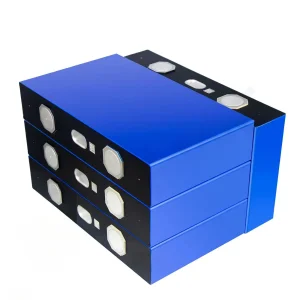
A 4S Prismatic 12V 50Ah pack utilizes four 3.2V 50Ah Grade-A prismatic cells connected in series. This minimizes total internal busbar connections to just 3 joints, lowering overall pack impedance and reducing potential points of failure. Conversely, a 4S4P 32140 cylindrical setup uses 16 individual cells (3.2V 12.5Ah–15Ah each). While cylindrical packs offer slightly improved heat dissipation in high-vibration applications due to air channels between cells, prismatic configurations deliver superior volumetric efficiency and higher continuous discharge stability.
Can Foya Solar's 12V 50Ah LiFePO4 batteries be connected in series and parallel configurations?
Yes. Depending on the BMS specification chosen during OEM ordering, our standard 12V 50Ah batteries support up to 4 units in series (reaching a nominal 51.2V system voltage) or up to 4 units in parallel (expanding system capacity to 200Ah / 2.56kWh). For specialized industrial projects requiring larger banks, we engineer custom BMS boards with high-voltage isolation optics and CANbus inter-pack communication to ensure dynamic balancing during concurrent high-rate charge and discharge.
How does the BMS protect the 12V 50Ah LiFePO4 battery when charging below freezing temperatures?
Charging standard lithium batteries below 0°C (32°F) causes dendrite formation on the graphite anode, permanently degrading cell capacity and risking short circuits. Foya Solar’s smart BMS incorporates low-temperature charge cut-off protection that automatically halts charging when internal cell sensors detect temperatures below 0°C. For extreme cold-climate applications, we offer custom OEM packs integrated with internal silicone heating pads that draw power from incoming solar/charger inputs to warm the cells to 5°C before initiating charging.
What OEM customization options are available for branding, casing, and terminal connectors?
As a direct manufacturer, Foya Solar offers full OEM turnkey branding. Options include custom silk-screened ABS cases (Group 24/27 or customized dimensions), M8 stainless steel screw terminals, Anderson fast-connectors, SAE brass posts, custom box packaging, private label branding, and customized Bluetooth APP interfaces matching your brand identity and color palette.
What is the standard production lead time and Minimum Order Quantity (MOQ) for custom 12V 50Ah orders?
Standard OEM sample production and validation testing typically takes 7 to 10 business days. Mass production lead time for standard 20ft container quantities (approx. 1,200 to 1,500 units) ranges from 20 to 25 days. Minimum Order Quantities (MOQ) start as low as 50 units for standard ABS-housed 12V 50Ah packs, facilitating rapid pilot testing for distributors and system integrators.