








1. Executive Summary: The Strategic Transition to 48V (15S) & 51.2V (16S) Architecture
In the rapidly expanding electrochemical energy storage landscape, global B2B procurement strategies have decisively migrated from legacy lead-acid systems and low-voltage lithium configurations toward engineered 48V (15-Series) and 51.2V (16-Series) Lithium Iron Phosphate (LiFePO4) battery pack architectures.
As global industrial decarbonization accelerates, equipment integrators, residential energy storage distributors, and telecom infrastructure operators require energy storage solutions that combine thermal stability, elevated round-trip efficiency (RTE > 95%), and lower system-level Balance of Plant (BOP) cost. The 51.2V nominal platform—achieved by arranging 16 Grade-A 3.2V prismatic cell units in series—has established itself as the global gold standard for low-voltage residential energy storage systems (ESS), micro-grids, uninterruptible power supplies (UPS), and heavy-duty industrial electric mobility.
This comprehensive industry white paper analyzes the global supply chain mechanics, technical engineering paradigms, OEM/ODM manufacturing standards, and localized deployment models of 48V/51.2V LiFePO4 battery pack manufacturing. Driven by advanced Chinese smart manufacturing hubs, contract production has evolved from basic component assembly into fully integrated, software-defined battery energy storage ecosystem development.
2. Global Enterprise Sourcing & Technical Procurement Demands
Global enterprise buyers—ranging from European solar solution brands to North American commercial fleet operators and African off-grid telecommunication vendors—face distinct commercial and operational friction points. Evaluating OEM 48V/51.2V LiFePO4 pack manufacturers requires rigorous scrutiny of chemical stability, total cost of ownership (TCO), and technical customization capabilities.
Tier-1 solar integrators require 51.2V 100Ah (5.12kWh) and 200Ah (10.24kWh) wall-mounted or rack-mounted server rack modules. Key procurement criteria include seamless closed-loop communication protocols (CANBus 2.0B / RS485 / UART) with leading hybrid inverter brands (e.g., Deye, Victron Energy, Growatt, SMA, Luxpower), parallel scalability up to 15+ units without signal degradation, and slim form-factors fitting standard 19-inch equipment racks.
5G telecommunications tower nodes require ruggedized 48V 100Ah LiFePO4 packs capable of continuous operation in wide temperature envelopes (-20°C to +60°C). Enterprise procurement specifications demand remote SNMP monitoring, multi-stage fire suppression systems, anti-theft tracking (GPS/GPRS integration), and high rate charge acceptance for quick replenishment in grids plagued by frequent load-shedding.
OEM manufacturers of heavy golf carts, commercial cleaning sweepers, floor scrubbers, and automated guided vehicles (AGVs) are replacing 48V lead-acid battery banks with custom-engineered 48V/51.2V lithium packs. These high-vibration applications demand IP67 metal housings, reinforced busbars, high pulse discharge currents (up to 3C), and rapid opportunity charging.
3. China's Smart Factory 4.0: Supply Chain Resilience & Efficiency Advantages
China's battery manufacturing cluster—centered in Guangdong, Jiangsu, and Fujian—controls over 80% of the world's LiFePO4 cathode, cell, and BMS production supply chain. Enterprise B2B buyers sourcing from Chinese OEM factories leverage distinct structural advantages that cannot be easily replicated elsewhere.
| Manufacturing Dimension | Legacy Assembly Model | China Smart Factory 4.0 Model | Buyer Advantage |
|---|---|---|---|
| Cell Sorting & Matching | Manual voltage and internal resistance (IR) sorting | Automated OCV, IR, and capacity binning using AI algorithms | Superior pack balance, extended cycle life (>6000 cycles) |
| Interconnection & Welding | Manual bolt-on busbars or basic spot welding | Automated fiber laser welding with optical vision alignment | Zero contact resistance, ultra-high vibration tolerance |
| Process Traceability | Paper-based batch tracking | Fully integrated Manufacturing Execution System (MES) with QR coding | Cell-level lifecycle traceability and fast RMA diagnostic data |
| BMS Hardware Integration | Third-party generic passive balance boards | Custom active balance software-defined smart BMS architecture | Real-time cell balancing, remote firmware update capabilities |
| Supply Chain Lead Time | Multi-tier component sourcing (60-90 days) | Vertically integrated localized supply chain ecosystems (14-30 days) | Accelerated time-to-market, agile volume scaling |
By combining advanced automated production lines with high supply chain density, specialized 48V/51.2V OEM factories in Shenzhen and surrounding industrial zones provide global clients with unmatched cost-efficiency, reliable Grade-A prismatic cells (such as 100Ah, 230Ah, 280Ah, and 314Ah cell formats), and rapid OEM custom prototyping.
4. Technical Deep-Dive: Engineering High-Performance 51.2V LiFePO4 Battery Packs
Building a commercial-grade 51.2V LiFePO4 battery pack requires rigorous mechanical engineering, electrochemical thermal balancing, and smart electronic protection design. A standard 15S or 16S architecture must prevent thermal runaway, equalize state-of-charge (SOC) drift, and maintain structural integrity under extreme operating environments.
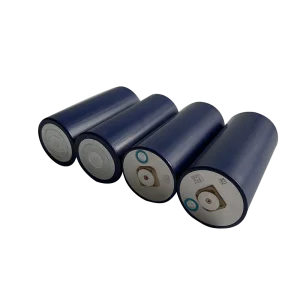
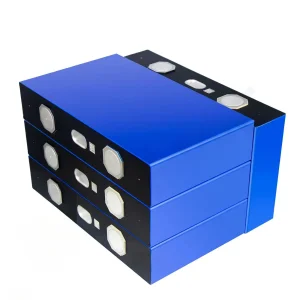
The foundation of a reliable pack relies on Grade-A prismatic lithium iron phosphate cells. LiFePO4 chemistry features an inherently safe olivine crystal structure that eliminates thermal runaway risks up to 500°C. OEM packs are engineered utilizing:
- Prismatic Aluminum Casing: High mechanical rigidity, superior volumetric energy density, and optimized heat dissipation.
- Cell Insulation & Compression: Epoxy insulating sheets paired with mechanical end-plate compression springs prevent cell swelling during continuous cycling.
- Laser Welded Copper/Aluminum Busbars: Reduces contact electrical resistance, minimizing thermal hot spots under 1C/2C continuous discharge rates.
The Battery Management System (BMS) acts as the operational brain of the 48V/51.2V pack. Modern OEM factories integrate intelligent digital BMS boards equipped with microcontrollers supporting advanced telemetry algorithms:
- Active Balancing Technology: Transfers energy from high-SOC cells to low-SOC cells (up to 2A-5A balancing current), maximizing usable capacity.
- Multi-Layer Safety Protections: Over-voltage, under-voltage, over-current, short-circuit, low-temperature charging protection (-5°C heating pad control), and high-temperature cutoff.
- Protocol Compatibility: Pre-programmed with multi-brand inverter CAN/RS485 firmware protocols for zero-configuration plug-and-play installation.
5. Global Commercial & Industrial Applications & Localized Deployment Scenarios
The versatility of 48V and 51.2V LiFePO4 packs allows them to seamlessly integrate into diverse climatic and operational environments across continents. OEM customization ensures tailored enclosures and thermal setups for localized application scenarios.
In areas with unstable electrical grids, localized micro-grids combine solar PV arrays with 51.2V 200Ah–1000Ah floor-standing lithium banks. High thermal tolerance enables reliable energy storage without air conditioning, delivering energy access to rural communities, clinics, and remote agricultural sites.
With rising electricity tariffs and feed-in tariff reductions, home owners in Germany, Italy, and Australia utilize sleek wall-mounted 51.2V 5kWh-10kWh packs. These units dynamically store daytime excess solar output and discharge during peak evening utility hours, slashing energy bills.
Modern automated logistics centers in North America and Europe rely on heavy-duty 48V LiFePO4 packs to power automated guided vehicles (AGVs) and forklifts. Zero off-gassing, 1-hour fast opportunity charging, and 10-year lifespan drastically lower logistics facility operating expenses.
6. Strategic Sourcing Guide: How to Select an OEM 51.2V Pack Factory
Choosing the right contract manufacturer is critical to protecting brand reputation, ensuring safety compliance, and avoiding shipping delays. Importers and integrators should systematically evaluate prospective factory partners against five core technical metrics:
Demand full cell test reports, factory grading documentation, and cell serial number traceability. Verify that the factory utilizes genuine Grade-A cells with matching capacity, voltage, and internal resistance (IR difference ≤ 0.5mΩ).
Ensure the OEM factory maintains comprehensive international certifications necessary for target market customs clearance and insurance: UN38.3 (dangerous goods transportation), MSDS, CE, IEC 62619 (industrial battery safety), UL 1973, and UL 9540A.
A true ODM factory offers complete structural housing design (sheet metal, extruded aluminum, plastic tooling), custom screen printing, branding, LCD display integration, and specialized BMS firmware development.
Verify that 100% of finished battery packs undergo continuous high-current charge/discharge cycling tests, insulation resistance checks, waterproofing enclosure validation, and automated BMS safety triggering before shipment.





7. Frequently Asked Questions (FAQ) for OEM Sourcing Teams
Expert technical and procurement answers addressing key questions when engineering and importing custom 48V/51.2V LiFePO4 battery packs.