
High-Performance ODM Prismatic Battery Solutions
Explore our Tier-1 lithium iron phosphate (LiFePO4) cell models and engineered power packs customized for heavy-duty cycle longevity and zero-defect thermal safety.







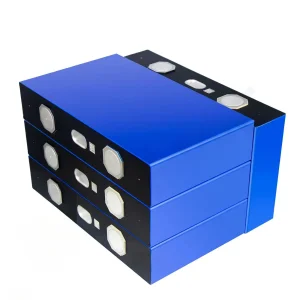
Prismatic Aluminum Casing
Delivers superior structural rigidity, anti-swelling protection, optimized spatial density, and thermal dissipation over pouch or cylindrical alternatives.
Custom BMS & Protocols
Seamless integration with RS485, CANbus, and Modbus protocols for multi-brand inverter communication including Victron, SMA, Growatt, and Deye.
Tier-1 Grade A Matching
Rigorous voltage, capacity, and internal resistance (IR) sorting ensures precise cell pairing, maximizing longevity and preventing premature pack degradation.
Global Commercial & Industrial Status of Prismatic LiFePO4 Batteries
An authoritative technical evaluation of prismatic lithium iron phosphate architecture in modern energy storage systems (ESS) and electric mobility platforms.
The global transition toward decentralized renewable energy generation and industrial electrification has firmly positioned Prismatic Lithium Iron Phosphate (LiFePO4) battery cells as the gold standard for long-duration energy storage and heavy-duty motive power. Unlike NCM (Nickel Cobalt Manganese) chemistries that carry inherent thermal runaway risks or cylindrical 18650/28070 form factors that necessitate thousands of complex interconnect points, prismatic LiFePO4 cells deliver the optimal balance of intrinsic chemical safety, high volumetric efficiency, structural stability, and superior levelized cost of storage (LCOS).
Across North America, Europe, and Asia-Pacific, utility-scale grid stabilization facilities, microgrids, commercial & industrial (C&I) peak-shaving systems, and telecom infrastructure have overwhelmingly shifted toward prismatic cell topologies. The mechanical design of prismatic cells—featuring rigid aluminum alloy enclosures, integrated explosion-proof safety valves, and wide-surface thermal contact areas—enables simplified battery pack design while drastically reducing assembly complexity for Original Equipment Manufacturers (OEMs) and Original Design Manufacturers (ODMs).
Key Technical Insight: Why Prismatic Form Factor Dominates Storage
Prismatic LFP cells offer a volumetric space utilization rate exceeding 80% inside battery enclosures compared to 60-65% for cylindrical configurations. This allows OEM engineers to build higher energy density cabinets within identical footprints, significantly lowering transportation and civil installation overheads for utility projects.
Structural Comparison: Prismatic vs. Cylindrical vs. Pouch Cells
When selecting cell formats for industrial applications, procurement directors and battery engineering teams must analyze key parameters such as mechanical stability, thermal management, cycle life, and manufacturing scalability. The comparative table below outlines the core technical metrics:
| Evaluation Parameter | Prismatic LiFePO4 Cells | Cylindrical LFP Cells | Pouch / Soft-Pack Cells |
|---|---|---|---|
| Volumetric Energy Density | High (300 - 420 Wh/L) | Medium (250 - 320 Wh/L) | High (320 - 450 Wh/L) |
| Mechanical Rigidity | Very High (Solid Aluminum Shell) | High (Steel Enclosure) | Low (Aluminum-Plastic Film) |
| Thermal Management Efficiency | Superior (Large Flat Cooling Surface) | Moderate (Complex Air Flow Gaps) | Moderate (Risk of Swelling Pockets) |
| Pack Assembly Complexity | Low (Fewer cell interconnects) | High (Thousands of wire-bonds) | Moderate (Requires external compression) |
| Swelling & Expansion Control | Built-in Structural Resistance | Internal Roll Structure | High Risk (Delamination over cycles) |
| Optimal Applications | C&I ESS, Solar Wall, Golf/Forklift | Small E-bikes, Power Tools | Consumer Electronics, Light EVs |
China Factory Efficiency & Global Supply Chain Advantages
The manufacturing ecosystem in Southern China—centered in Shenzhen and the Greater Bay Area—represents the world's most complete and technological advanced value chain for lithium iron phosphate cell production. Partnering with an established Chinese ODM factory gives international buyers a strategic competitive edge rooted in several structural advantages:
Vertical Supply Integration
Direct proximity to world-leading synthetic graphite producers, LFP cathode chemical refiners, and aluminum shell stamping facilities minimizes raw material lead times and insulates production against global logistic bottlenecks.
Fully Automated Manufacturing
State-of-the-art Gigafactories utilize automated electrode coating, high-speed jelly-roll winding or z-folding, robotic laser welding, and automated electrolyte vacuum filling to achieve cell consistency within sub-millimeter tolerances.
Rigorous Quality Assurance
Every prismatic cell undergoes a multi-week aging phase, followed by 100% automated screening for open-circuit voltage (OCV), internal AC/DC resistance, and capacity grading under strict ISO9001 and IATF16949 standards.
Furthermore, localized engineering flexibility allows Chinese factories to offer customizable OEM/ODM solutions—ranging from customized terminal busbars, specialized BMS firmwares (RS485, CANbus, Modbus), to branded heavy-duty enclosures designed to meet region-specific grid codes across the EU, US, and emerging markets.
Localized Application Scenarios & Industrial Deployment
Prismatic LiFePO4 cells are deployed across diverse operating environments worldwide. Understanding how cell characteristics match specific load profiles is critical for engineering long-lasting power storage units:
1. Commercial & Industrial Energy Storage Systems (C&I ESS)
In factory microgrids, solar-diesel hybrid setups, and EV fast-charging stations, energy storage cabinets utilize high-capacity prismatic cells (such as 100Ah, 280Ah, 314Ah, and 680Ah). Operating in 1C/1C or 0.5C/0.5C charge-discharge cycles, these cells deliver daily peak shaving, demand charge reduction, and emergency backup power. Integrated liquid cooling plates keep inter-cell thermal deltas under 3°C, extending pack life past 15 years.
2. Residential Solar Backup & Smart Home Power
Homeowners globally are adopting 48V / 51.2V rack-mounted, wall-mounted, and roller-type battery packs built with prismatic cells. The 16S configuration (16 cells in series) provides a stable nominal voltage of 51.2V, pairing seamlessly with hybrid solar inverters. Built-in smart BMS electronics enable remote monitoring via Wi-Fi/GPRS and protect against over-charge, over-discharge, over-current, and extreme low-temperature charging scenarios.
3. E-Mobility, Golf Carts & Heavy Industrial Equipment
Industrial forklifts, AGVs (Automated Guided Vehicles), airport ground support equipment, and golf carts require high pulse-discharge capability and resistance to continuous physical vibration. Prismatic cells wrapped in shock-absorptive casing with heavy-duty laser-welded copper busbars outperform traditional lead-acid batteries by delivering 3x longer operational runtime, zero maintenance, and opportunity charging during shift breaks.
4. Marine & Off-Grid Heavy-Duty Applications
Marine vessel house batteries and off-grid mobile living systems demand high moisture resistance and salt-spray protection. Prismatic packs housed in IP65 or IP67 rated stainless steel or aluminum enclosures ensure reliable performance without risk of acid leakages, toxic gas emission, or mechanical failure under wave impact.
Future Trend: The Rise of Ultra-Large Prismatic Cells (314Ah, 560Ah & 680Ah)
The energy storage industry is undergoing a rapid evolution toward larger cell capacities. Shifting from standard 280Ah cells to 314Ah and 680Ah prismatic designs increases single-cell volumetric capacity by 12% to 140% without expanding system dimensions, allowing integrators to lower total system balance-of-plant (BOP) and installation costs drastically.
Global Enterprise Procurement & Quality Verification Checklist
For international buyers, sourcing ODM prismatic cells requires stringent vendor auditing. Ensuring your OEM/ODM factory supplier possesses the following testing protocols and certifications is essential for smooth customs clearance and market compliance:
- International Safety Certifications: Compliance with UN38.3 (transportation safety), UL1973 (stationary battery safety), UL9540A (thermal runaway fire propagation), IEC 62619 (industrial lithium testing), and CE mark.
- Capacity & Grade Transparency: Full access to cell grading reports verifying 100% Brand-New Grade A quality with factory-matched QR codes, ensuring zero recycled or B-grade cells are introduced into production lines.
- BMS Protocol Compatibility: Comprehensive protocol stack supporting leading inverter brands (CANbus / RS485 communication logs), allowing plug-and-play installation for end users.
- Environmental Reliability Testing: Thermal shock testing (-30°C to 65°C), high-vibration simulation, short-circuit protection testing, and puncture resistance verification.
High-Capacity Industrial Cell & Module Catalog
Select specialized prismatic cell models and customized industrial power systems for golf carts, commercial energy cabinets, and heavy equipment applications.







Frequently Asked Questions on ODM Prismatic LiFePO4 Sourcing
In-depth technical responses covering cell grading, custom BMS engineering, thermal safety, and bulk sourcing protocols for B2B procurement teams.