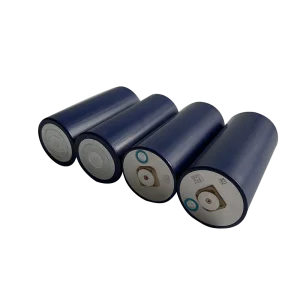
Featured Industrial Energy Storage & Cell Solutions
Direct factory engineered Grade A LiFePO4 cells, customized packs, and megawatt-scale ESS systems.








1. Technical Architecture & Electrochemical Baseline of 3.2V 20Ah LiFePO4 Cells
The global demand for reliable, thermal-stable, and high-cycle energy storage solutions has established Lithium Iron Phosphate (LiFePO4) 3.2V 20Ah cell architecture as an essential modular building block for modern OEM/ODM industrial designs. Operating on an olivine crystal structure with P-O covalent bonds, 3.2V 20Ah cells offer extraordinary structural stability even under severe overcharge, deep cycling, and ambient temperature extremes.
As a leading Shenzhen-based enterprise operating over 20,000 square meters of automated manufacturing infrastructure with an annual production throughput exceeding 2GWh, Shenzhen Foya Solar Technology Co., Ltd. custom engineers 3.2V 20Ah cells across multiple physical form factors, including prismatic aluminum-cased, heavy-duty cylindrical (such as 32140 and 60150 formats), and high-energy pouch structures.
Detailed Electrochemical Performance Specifications
To assist battery system integrators, power electronics engineers, and procurement experts, the parametric blueprint below defines the engineering boundaries of our OEM/ODM Grade A 3.2V 20Ah LiFePO4 cell production line:
| Electrical / Physical Parameter | Standard Specification Value | Engineering Test Condition / Notes |
|---|---|---|
| Nominal Voltage | 3.2 V | Measured at 0.2C rate at 25°C ± 2°C |
| Nominal Capacity | 20.0 Ah | Discharge cut-off voltage 2.5V after standard 0.5C charge |
| Operating Voltage Window | 2.5 V – 3.65 V | BMS lower voltage cut-off 2.5V; upper cut-off 3.65V |
| AC Internal Impedance (1kHz) | ≤ 1.2 mΩ – 1.8 mΩ | 100% SoC condition at initial factory shipment |
| Standard Charge / Discharge Rate | 0.5C / 0.5C (10A) | Constant Current (CC) / Constant Voltage (CV) profile |
| Max Continuous Discharge Current | 3C (60A) | Continuous thermal monitoring required above 45°C ambient |
| Pulse Peak Discharge Rate (10s) | 5C – 8C (100A – 160A) | State of Charge between 50% – 100% |
| Operating Temperature (Charge) | 0°C to +55°C | Heating pad integration optional for sub-zero charging |
| Operating Temperature (Discharge) | -20°C to +65°C | 90%+ capacity retention at 0°C; 75%+ at -20°C |
| Volumetric Energy Density | ~ 270 Wh/L – 310 Wh/L | Form-factor dependent (Prismatic vs. Cylindrical) |
| Gravimetric Energy Density | ~ 145 Wh/kg – 165 Wh/kg | Includes safety relief valve and laser-welded terminal caps |
Every 3.2V 20Ah cell produced at our Shenzhen facility undergoes a 100% 4-tier automated sorting matrix. Cells are matched within narrow tolerance margins: Delta Voltage ≤ 2mV, Delta Impedance ≤ 0.3 mΩ, and Delta Capacity ≤ 0.2Ah before being grouped into custom pack assemblies. This eliminates cell drift and maximizes pack lifetime without over-stressing active BMS balancing circuits.
2. Global Commercial & Industrial Market Landscape
The global energy transformation has catalyzed a structural migration toward scalable, non-hazardous battery chemistries. The 3.2V 20Ah LiFePO4 cell occupies a highly strategic niche within the global commercial landscape. Unlike ultra-large 280Ah/314Ah energy storage cells tailored exclusively for stationary utility containers, or small 18650/21700 cells used in consumer devices, the 20Ah form factor delivers optimal modular flexibility for medium-duty power demands.
Macroeconomic Drivers & Energy Transition
Strict carbon reduction mandates across Europe, North America, and the Asia-Pacific region have accelerated the electrification of commercial fleets, telecom base stations, and distributed solar microgrids. Importers and system integrators increasingly prioritize LiFePO4 due to its compliance with stringent EU Battery Passport regulations, cobalt-free chemistry, and superior thermal tolerance under fast-charging stress.
Supply Chain Reliability & Cost Dynamics
Over the past three years, lithium carbonate price stabilization combined with advanced automated slitting and laser-welding automation has reduced the levelized cost of storage (LCOS) for 20Ah LiFePO4 modules. This cost decline allows B2B OEM buyers to offer 5 to 10-year warranties on commercial battery systems while maintaining healthy gross margins.
Comparative Technology Matrix: Chemistries & Form Factors
To guide procurement directors when selecting cell chemistries for specialized applications, the table below compares 3.2V 20Ah LiFePO4 cells with alternative market chemistries:
| Battery Chemistry | Nominal Cell Voltage | Cycle Life (80% DoD) | Thermal Safety Threshold | Raw Material Cost Index | Primary Industrial Fit |
|---|---|---|---|---|---|
| LiFePO4 (3.2V 20Ah) | 3.2 V | 4,000 – 6,000 | > 270°C (Ultra High) | Low / Stable (Cobalt-Free) | C&I Storage, Telecom, Marine, Golf Carts |
| NMC / NCA (3.7V Prismatic) | 3.6 V – 3.7 V | 1,500 – 2,500 | ~ 210°C (Moderate) | High (Dependent on Co/Ni) | High-Density Passenger EVs |
| Sodium-Ion (Na-Ion) | 3.0 V – 3.1 V | 2,000 – 3,500 | > 260°C (High) | Very Low (Abundant Na) | Extreme Cold Weather & Budget ESS |
| LTO (Lithium Titanate) | 2.3 V | 15,000 – 25,000 | > 300°C (Maximum) | Very High | Heavy Rail, Sub-Zero Fast Charging |
3. Technology Roadmap & Future Industry Evolution (2025–2030)
The manufacturing landscape for 3.2V 20Ah cells is evolving rapidly due to innovations in material chemistry, intelligent BMS telemetry, and zero-carbon green factory standards.
Silicon-Carbon Anode Composite
By integrating micro-silicon doping (3% to 5%) into traditional synthetic graphite anodes, our R&D roadmap increases 20Ah cell energy density by up to 14% without compromising the physical volume of custom module enclosures.
Semi-Solid Electrolyte Integration
Transitioning from pure liquid organic electrolytes to solid-state polymer membranes eliminates free electrolyte leakage risks, raises thermal runaway immunity up to 320°C, and doubles low-temperature discharge retention at -30°C.
Smart BMS & Module-Level Telemetry
Next-generation ODM 20Ah modules integrate embedded micro-sensors directly into cell tabs. Combined with RS485, CANbus, and Bluetooth 5.0 protocols, this provides real-time State of Charge (SoC) and State of Health (SoH) diagnostics.
4. Localized Commercial Application Scenarios & Engineering Case Studies
The versatility of 3.2V 20Ah LiFePO4 cells allows custom pack developers to design multi-configuration voltage banks tailored to distinct operational environments across global markets.
Scenario A: 48V Telecom Base Station Backup (15S / 16S Configuration)
Challenge: Cellular tower operators in Southeast Asia and Africa require backup power units capable of operating at elevated ambient temperatures without air conditioning, enduring frequent grid outages.
Engineering Solution: Foya Solar custom manufactures 15S1P and 16S1P rack-mounted 48V 20Ah battery modules. Integrated with automated heating films and high-rate discharge BMS, these packs replace heavy 48V 100Ah lead-acid racks, cutting cabinet footprint by 65% and delivering a 10-year operational lifecycle.
Scenario B: Light Commercial Mobility & Industrial AGVs
Challenge: Warehouse automated guided vehicles (AGVs) and commercial floor scrubbers demand rapid 1C opportunity charging during shift breaks and high peak-current draw during incline climbs.
Engineering Solution: Utilizing low-resistance prismatic 3.2V 20Ah cells arranged in 24V (8S) and 36V (12S) configurations, our design enables 1-hour fast charging (0% to 90%) and delivers up to 100A continuous pulse current without triggering thermal protection throttles.
Scenario C: Marine & Off-Grid RV Auxiliary Energy Systems
Challenge: Marine vessels and expedition RVs encounter harsh moisture, vibration, and salt-fog conditions requiring IP67 splash-proof enclosures and steady voltage output under inverter surge loads.
Engineering Solution: Foya Solar constructs custom modular 12.8V 20Ah to 100Ah deep-cycle drop-in replacement batteries utilizing robust laser-welded busbars and vibration-damping epoxy potting compound, fully certified under UN38.3 marine transport guidelines.
Scenario D: Edge Data Center UPS & Solar Microgrids
Challenge: Industrial edge computing nodes mandate sub-10ms power transfer times with high peak power density during utility outages.
Engineering Solution: High-voltage modular battery strings built from 3.2V 20Ah cells coupled with smart CANbus communication enable seamless integration with hybrid solar inverters and industrial uninterruptible power supplies (UPS).
5. OEM/ODM Factory Customization & Quality Assurance Framework
As an authoritative ODM manufacturer, Shenzhen Foya Solar Technology Co., Ltd. provides end-to-end customization services designed to streamline procurement for global B2B clients, OEMs, and EPC contractors.
The 5-Step Custom Engineering Workflow
Step 1: Application Review
Evaluation of electrical load profiles, continuous/peak current demand, dimensional constraints, thermal limits, and target compliance standards (UL, CE, IEC).
Step 2: Prototyping & Design
Computer-Aided Design (CAD) of structural housing (ABS enclosure, sheet metal cabinet, or aluminum casing), customized PCB/BMS layout, and circuit topology.
Step 3: Automated Assembly
High-precision laser welding of nickel-plated copper busbars, automatic silicone insulation potting, thermal pad insertion, and wire harness loom fitting.
Step 4: 100% Quality Validation
Every manufactured batch undergoes mandatory burn-in testing, multi-channel capacity verification, short-circuit protection testing, and high-voltage isolation inspection.
Step 5: Export Packaging & Logistics
UN-certified heavy-duty corrugated cartons with foam inserts, Dangerous Goods (DG) maritime packaging, complete with UN38.3, MSDS, and transport safety reports.
6. Frequently Asked Questions (B2B Procurement & Technical FAQ)
Direct technical answers addressing search intent, engineering standards, and global import requirements for 3.2V 20Ah LiFePO4 cells.
Why choose 3.2V 20Ah LiFePO4 cells over larger 280Ah or smaller 18650 cells?
The 3.2V 20Ah cell format offers an optimal balance between modularity, heat dissipation, and mechanical repairability. While 280Ah cells are ideal for large megawatt grid installations, they lack flexible voltage granularity for smaller 12V, 24V, or 36V packs. Conversely, building a 24V 20Ah battery using 18650 cells requires hundreds of soldered joints, increasing points of failure. A 20Ah cell allows clean, high-reliability series-parallel designs with minimal inter-cell resistance.
What is the expected lifespan of Foya Solar 3.2V 20Ah Grade A cells?
Under standard operating conditions (0.5C charge/discharge at 25°C with an 80% Depth of Discharge), our Grade A 3.2V 20Ah cells maintain over 80% of their initial rated capacity after 4,000 to 6,000 complete cycles. In stationary solar backup applications, this translates to an operational service life of 10 to 12 years.
Can 3.2V 20Ah cells be connected directly in series and parallel without a BMS?
No. Connecting lithium iron phosphate cells in series or parallel without a Smart Battery Management System (BMS) is strongly discouraged. A dedicated BMS monitors individual cell voltages, prevents overcharging (>3.65V), over-discharging (<2.5V), thermal runaway, and short circuits while maintaining cell balance during charge cycles.
What custom OEM/ODM options are available for bulk factory orders?
We provide extensive ODM/OEM customization including terminal configurations (M6/M8 screw studs, laser-welded copper tabs, or Anderson connectors), custom casing (ABS plastic, stainless steel, aluminum), specialized BMS communication protocols (RS485, CANbus 2.0B, UART, Modbus), heating pads for cold environments, and branded silk-screen labeling.
How does Foya Solar ensure cell quality consistency across large orders?
We enforce a strict quality management system. All raw materials (cathode powder, separator films, electrolytes) undergo Incoming Quality Control (IQC). During production, automated slot-die coating and laser welding ensure tight physical tolerances. Before packing, 100% of cells undergo high-precision computer testing to match voltage, internal resistance, and capacity within minimal tolerance windows.
What international certifications do Foya Solar battery products carry?
Our battery manufacturing facility operates under ISO9001 quality management standards. Product lines hold certifications including UN38.3, MSDS, CE, RoHS, and IEC 62619, facilitating smooth customs clearance in Europe, the Americas, Australia, and Asia-Pacific markets.
What is the typical lead time for custom sample prototypes and bulk production?
Standard sample prototypes for technical evaluation are typically dispatched within 7 to 12 business days. Bulk OEM manufacturing orders (10,000+ cell units or customized battery packs) are fulfilled within 21 to 30 days depending on specialized enclosure tooling and testing requirements.
Additional Specialized Cells, Packs & Battery Chargers
Explore our broader range of high-capacity cells, marine packs, and wholesale lithium battery chargers.