
High-Performance Grade A Cells & Custom Modules
Direct-from-factory procurement for wholesale buyers, B2B integrators, and OEM brands requiring certified cell consistency, tailored BMS communication, and long cycle life.








The Global Sourcing Paradigm for Wholesale Batteries (Groothandel Batterijen)
The international energy transition has drastically elevated the strategic importance of high-volume battery procurement. B2B importers, EPC (Engineering, Procurement, and Construction) contractors, and commercial OEMs searching under terms like "ODM groothandel batterijen manufacturers & suppliers" are no longer merely seeking off-the-shelf electrochemical packs. They require vertically integrated manufacturing partners capable of navigating complex European compliance frameworks (such as the EU Battery Regulation 2023/1542), supply chain traceability rules, and stringent carbon footprint disclosures.
Raw Material Pricing Volatility
Fluctuations in Lithium Carbonate (Li2CO3) and Hydroxide benchmarks demand robust supply chain integration. By locking in Grade A raw materials directly at the cathode level, tier-1 OEM manufacturers mitigate price spikes and ensure steady wholesale pricing for global distributors.
Regulatory & ESG Compliance
Modern B2B channels require full digital battery passports, recycled content quotas, and strict CE, UN38.3, IEC 62619, and UL 1973 certifications. Sourcing from experienced original design manufacturers eliminates compliance bottlenecks at import customs.
Shift from Lead-Acid & NCM to LFP
Lithium Iron Phosphate (LiFePO4) has captured over 65% of the stationary storage market thanks to its intrinsic thermal stability, zero cobalt/nickel dependencies, and superior cycle life exceeding 6,000–8,000 deep discharge cycles.
Inside OEM Battery Manufacturing: Grade A Cell Matching & Smart BMS Design
True technical competence in lithium battery manufacturing lies in micro-level consistency. When procuring wholesale battery packs (groothandel batterijen), failure to match cell internal resistance (IR) and open-circuit voltage (OCV) leads to premature pack degradation, severe cell imbalance, and thermal management failures.
| Chemistry / Technology | Nominal Cell Voltage | Cycle Life (80% DoD) | Thermal Runaway Threshold | Ideal Application Scenario |
|---|---|---|---|---|
| LiFePO4 (Lithium Iron Phosphate) | 3.2V | 6,000 - 8,000 Cycles | ~270°C (Extremely Safe) | Solar ESS, Marine, Golf Carts, C&I Storage Cabinets |
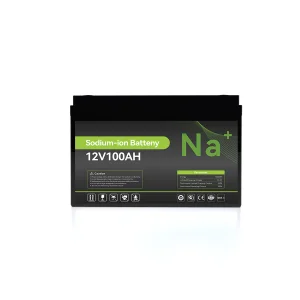
| Sodium-Ion (Na-Ion) | 3.0V - 3.1V | 3,000 - 4,500 Cycles | ~260°C (High Stability) | Cold-Climate Storage (-40°C), Telecom, Budget Off-Grid |
| NCM / NCA (Ternary Lithium) | 3.6V - 3.7V | 1,500 - 2,500 Cycles | ~210°C (Thermal Sensitive) | High Energy Density EVs, Lightweight Portable Power |
| Solid-State (Emerging Tech) | 3.8V+ | 10,000+ Cycles (Lab) | >350°C (Solid Electrolyte) | Aerospace, Premium Automotive, Next-Gen Microgrids |
Cell Sorting & Auto-Grading
Every cell in custom packs undergoes automated 4-point internal resistance measurement and 72-hour OCV static aging. Voltage tolerance is controlled within ΔV ≤ 3mV, and capacity deviation within ΔC ≤ 0.5% before tab welding.
Custom Smart BMS Architecture
Proprietary Battery Management Systems support multi-protocol communications (CANbus 2.0B, RS485, Modbus RTU, UART). Native integration with tier-1 inverter protocols (Victron, SMA, Growatt, Deye, Sofar) enables true plug-and-play setup.
Multi-Tier Thermal Mitigation
From structural aluminum busbars with laser welding to aerosol thermal runaway suppression tubes and liquid-cooled cold plates, heat dissipation is engineered for zero propagation across adjacent prismatic cells.
Macro-Level Industrial & Utility Storage Infrastructure
As renewable energy penetration rises, commercial and industrial (C&I) facilities face severe demand charges, grid instability, and solar curtailment. Custom OEM energy storage solutions bridge the gap between intermittent clean power generation and continuous industrial operations.
C&I Peak Shaving & Arbitrage
Deploying containerized 215kWh–372kWh ESS cabinets allows factories to charge during low-cost off-peak hours and discharge during peak rate windows, significantly flattening monthly utility peak demand charges.
Hybrid PV-Diesel Microgrids
For remote mining operations, island grids, and agricultural facilities, customized LiFePO4 storage integrates seamlessly with existing diesel generator fleets, cutting fuel consumption by up to 60% and reducing carbon emissions.
Liquid-Cooled vs Air-Cooled Systems
While air cooling remains cost-effective for lower-power racks, liquid heating and cooling cabinets maintain cell temperature variance within ≤ 2.5°C, expanding thermal efficiency by 40% and extending system service life beyond 12 years.
Localized Use-Cases: Tailoring Battery Engineering to Regional Operating Demands
Battery degradation dynamics vary substantially by geography and operational stress profiles. OEM customization must account for environmental extremes, regulatory grid codes, and specific duty cycles.
Northern Europe & Cold Regions
Sub-Zero Heating & Na-Ion Deployment
Standard LiFePO4 batteries cannot accept charge below 0°C without lithium plating damage. For Nordic wholesale markets, OEM packs feature embedded PTC self-heating films or utilize cold-resilient Sodium-Ion chemistry capable of discharging at -40°C with over 85% capacity retention.
Maritime & Coastal Logistics
IP67 Marine Power & Salt Mist Protection
Shipboard battery systems demand anti-corrosive stainless steel enclosures, conformally coated BMS circuit boards, and vibration-isolated cell holders certified to withstand continuous pitch, roll, and harsh marine environments.
Industrial Fleet Electrification
Forklifts, AGVs & Sweepers
Warehouse material handling equipment demands fast 1C–2C opportunity charging during lunch breaks. High-rate prismatic cells coupled with heavy-duty copper busbars deliver zero maintenance compared to legacy flooded lead-acid batteries.
Residential & Off-Grid Solar
Modular Wall & Roller Battery Packs
European home storage distributors require sleek, stackable or wheeled 51.2V 100Ah / 280Ah cabinets with integrated touchscreens, WiFi/Bluetooth telemetry, and automatic parallel BMS synchronization up to 15 modules.
Electrochemical Roadmap (2025–2035): Beyond Standard Lithium
As an advanced OEM manufacturer, staying ahead of commercial technology waves ensures that long-term wholesale buyers maintain a decisive market advantage over local competitors.
1. Sodium-Ion Industrialization
Abundant raw sodium materials yield a 30% cost savings over lithium chemistry. Sodium-ion is rapidly scaling for stationary storage and low-speed mobility, delivering near-zero risk of thermal runaway and superior low-temperature performance.
2. Semi-Solid State Electrolytes
Replacing volatile liquid electrolytes with gel-polymer and solid ceramic membranes pushes energy densities past 350 Wh/kg while rendering internal short circuits harmless. Commercial production ramps up for specialized military and aviation applications.
3. AI Cloud BMS & Digital Twins
Next-generation BMS connects directly to cloud telemetry, leveraging machine learning algorithms to predict cell health, detect insulation faults weeks before failure, and optimize real-time charge curves dynamically.
Industrial Cells, Deep-Cycle Packs & Solar Battery Systems
Browse our remaining standard catalog configurations available for OEM customization, private labeling, and bulk container export.







Quality Assurance & Five-Step OEM Sourcing Workflow
Risk mitigation is the core priority for international battery procurement. Our manufacturing facilities enforce rigid quality management protocols aligned with ISO 9001 and ISO 14001 guidelines to guarantee batch-to-batch repeatability.
Step 1: Application Engineering
We audit your technical spec sheet: operating temperature, continuous/peak discharge current, physical dimension constraints, IP rating requirements, and target communication protocols.
Step 2: Prototyping & BMS Tuning
Engineers select matched Grade A cells, program custom BMS logic thresholds (over-voltage, under-voltage, over-current, temp cutoffs), and build initial prototype samples within 14 working days.
Step 3: Validation & Certification
Prototypes undergo rigorous environmental chamber thermal cycling, high-vibration testing, short-circuit protection verification, and full UN38.3 transport safety validation.
Step 4: Automated Assembly
Mass production utilizes automated cell-sorting lines, laser tab welding robots, and automated dynamic load testing banks to maintain 100% inline yield controls.
Step 5: Export Packaging & Logistics
Every order is packed using UN-certified hazardous materials shipping cartons or heavy-duty wood crates, complete with MSDS, dangerous goods declaration, and sea/air freight documentation.
Frequently Asked Questions for Wholesale Battery Procurement
Key technical and commercial considerations for B2B procurement managers, engineering teams, and wholesale distributors (groothandel batterijen buyers).
What is the distinction between OEM and ODM battery manufacturing services?
ODM (Original Design Manufacturing): Our engineering team designs the entire battery system from scratch based on your target operational requirements (e.g., system voltage, discharge rate, dimensional envelope, inverter compatibility, and target market budget). We handle full electrical, thermal, structural, and software engineering.
Why should wholesale buyers prioritize Grade A prismatic LiFePO4 cells over Grade B cells?
What communication protocols are supported for energy storage inverters?
When should an energy storage project choose Liquid Cooling over Air Cooling?
What are the key advantages of Sodium-Ion batteries for wholesale distribution?
1. Sub-Zero Temperature Operation: Na-Ion retains >85% capacity at -40°C, rendering it superior to standard LiFePO4 for cold-climate telecom and outdoor storage.
2. Supply Chain Risk Mitigation: Sodium utilizes non-critical raw materials, offering lower long-term material cost volatility and zero reliance on lithium market dynamics.