
Featured Energy Storage Systems & Lithium Cells
Grade A Factory Outlet







Executive Summary: Global Enterprise Demand for Grade A Battery Architecture
In an era defined by grid instability, aggressive corporate decarbonization mandates, and high-duty electrification, procurement managers and B2B engineering integrators face critical choices. Sourcing industrial energy storage and motive power solutions requires uncompromising cell verification, strict electrochemical consistency, and advanced ODM customization capabilities.
Grade A Cell Integrity vs. Market Realities
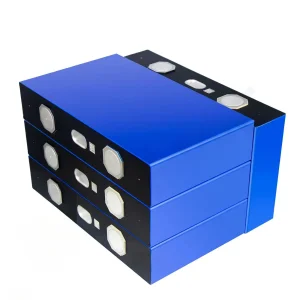
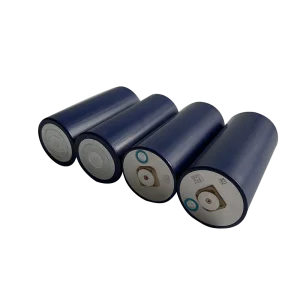
Global battery supply chains are frequently polluted with "Grade B" or re-wrapped B-grade cells that suffer from micro-delamination, uneven capacity fading, and high self-discharge rates. As a premier original design manufacturer (ODM), our commitment centers exclusively on prime-tier Grade A Lithium Iron Phosphate (LiFePO4) and sodium-ion chemistry with zero-defect tolerance.
Total Cost of Ownership (TCO) Optimization
Procuring true Grade A modules reduces long-term operational expenditures (OPEX) by ensuring 6,000 to 10,000 deep discharge cycles at 80% Depth of Discharge (DoD). This longevity drastically decreases pack replacement frequency, downtime, and field servicing penalties for commercial and utility systems.
Tailored ODM Electro-Mechanical Design
Off-the-shelf storage systems rarely satisfy complex footprint constraints, varying thermal environments, or proprietary communication protocols. Our ODM engineering workflow delivers bespoke structural housings, localized thermal management, and fully custom Battery Management Systems (BMS) supporting RS485, CANbus, and Modbus TCP.
Grade A Cell Verification & Quality Assurance Engineering
What truly defines a Grade A LiFePO4 or Lithium-ion cell? In enterprise ODM manufacturing, Grade A status is not a marketing label—it is an electro-chemical guarantee verified via automated sorting protocols.
| Evaluation Parameter | Factory Grade A Standard | Grade B / Repurposed Market Cells | Impact on Enterprise Performance |
|---|---|---|---|
| Capacity Consistency ($\Delta C$) | 100% Nominal Capacity ($\pm 0.5\%$) | 90% – 95% Nominal (Unmatched) | Eliminates premature pack shutdown caused by weak cells. |
| Internal Resistance ($\Delta R$) | AC IR Variance $\le 0.15 \text{ m}\Omega$ | High AC IR Variance ($\gt 0.5 \text{ m}\Omega$) | Minimizes internal thermal heat build-up under high C-rate discharge. |
| Voltage Delta ($\Delta V$) | Static Voltage Matching $\le 2\text{ mV}$ | Unbalanced Voltage ($\gt 15\text{ mV}$) | Prevents passive BMS thermal throttling and extends total pack life. |
| Mechanical Shell Integrity | Laser-welded, pristine aluminum casing | Dented, re-sleeved, or bloated casing | Guarantees IP65/IP67 mechanical seal compliance and zero gas leak risk. |
| Lifespan & Degradation | 6,000–10,000 cycles to 80% SOH | 1,500–2,500 erratic cycles | Lowers levelized cost of storage (LCOS) by up to 62% over 10 years. |
Automated Cell Grading & Optical Sorting
Our manufacturing facility utilizes fully automated optical inspection (AOI) combined with multi-channel electrochemical impedance spectroscopy (EIS). Every single cell undergoes 14 days of high-temperature aging followed by strict capacity categorization. Cells failing to meet precise capacity curves are immediately quarantined, ensuring that only peak Grade A units enter module production lines.
Laser Busbar Welding & Structural Stability
Improper busbar connection introduces localized resistance spikes, accelerating pack failure. We utilize high-precision robotic fiber laser welding systems to join nickel-plated copper busbars to cell terminals. This process delivers mechanical vibration resistance exceeding UN38.3 vibration tests and reduces connection resistance to virtually zero.
Macro Industry Solutions: Tailored Energy Systems
From utility-scale peak shaving cabinets to heavy motive power applications, our ODM battery systems are engineered to perform in demanding operational environments worldwide.
Commercial & Industrial (C&I) Energy Storage
Our 50kW/96kWh to 372kWh liquid-cooled and air-cooled battery cabinets enable factories, commercial real estate, and microgrids to perform peak shaving, demand response, and solar-plus-storage integration. Integrated fire suppression (Aerosol/Novec1230) ensures thermal stability.
- Liquid-cooling for $\le 2.5^\circ\text{C}$ cell temperature variance
- Seamless EMS integration via Modbus TCP / MQTT
Motive Power & Industrial Equipment
Replacing traditional lead-acid traction batteries in golf carts, forklifts, AGVs, and floor sweepers requires high pulse discharge capabilities. Our 48V/51.2V deep-cycle lithium packs feature fast-charging capabilities (1C continuous) and maintenance-free operation.
- Opportunity charging without battery memory effect
- Drop-in replacements for standard lead-acid trays
Residential Storage & Mobile Off-Grid Solutions
From wall-mounted 5.12kWh home storage units to heavy-duty rolling wheel storage cabinets, we empower global brands with consumer-ready home energy products. Featuring smart app monitoring, automatic inverter matching, and stylish metallic enclosures.
- Compatible with 20+ global inverter brands
- Modular expansion up to 15 units in parallel
Full-Spectrum ODM Customization Workflow
We partner with OEM brands, EPC engineering firms, and global distributors to transform technical specs into market-ready energy products. Our end-to-end ODM framework eliminates engineering friction.
Specification & Simulation
Electrochemical modeling, thermal fluid dynamics (CFD) analysis, and mechanical enclosure stress testing tailored to your load profile and climatic conditions.
BMS Firmware Engineering
Custom software architecture development. Programming passive/active balancing logic, SOC/SOH estimation algorithms, and custom CAN/RS485 protocol mapping.
Prototyping & Testing
Rapid physical prototyping followed by rigorous internal validation: thermal runaway shock, high-vibration isolation, drop testing, and environmental chamber cycling.
Mass Automated Output
Scalable manufacturing across 20,000m² facility. MES production tracking, 100% end-of-line (EOL) automated testing, and export palletization.
Technology Roadmap (2025–2030): Next-Gen Energy Chemistries
Navigating the next decade of battery innovation requires dual investment in established LiFePO4 enhancements and emerging solid-state / sodium-ion paradigms.
Sodium-Ion (Na-Ion) Commercial Integration
As lithium raw material pricing exhibits cyclical volatility, Sodium-Ion chemistry represents a game-changing alternative for low-temperature and high-safety storage. Delivering operating capability from $-40^\circ\text{C}$ to $+65^\circ\text{C}$, our ODM sodium-ion packs (such as our 12V 100Ah/200Ah models) eliminate thermal runaway risks and provide exceptional cost stability for cold-climate telecom and solar backup applications.
High-Density LFP & Semi-Solid State Migration
Advances in cell structural engineering are pushing LiFePO4 volumetric energy densities beyond $210 \text{ Wh/kg}$. Simultaneously, our R&D engineering track is preparing semi-solid electrolyte integration for enterprise clients seeking ultra-compact commercial footprints without sacrificing the inherently non-combustible nature of phosphate cathodes.
Global Compliance & Regional Market Adaptation
Navigating international trade laws, transport certifications, and electrical safety codes is crucial for frictionless cross-border sourcing. We guarantee complete regulatory documentation with every shipment.
North American Market
Complete compliance readiness for US/Canada B2B buyers. Systems engineered to meet UL1973 (stationary batteries), UL9540 (system safety), and UL9540A thermal runaway fire propagation testing standards, simplifying local municipal AHJ permitting.
European Union Framework
Full alignment with the new EU Battery Regulation (2023/1542), covering digital battery passports, supply chain due diligence, CE marking, EN 62619 safety certification, and UN38.3 transport compliance for dangerous goods shipping.
Emerging Markets & APAC
Ruggedized designs explicitly built to handle unstable electrical grids, high ambient humidity, and frequent load shedding across Southeast Asia, Africa, and Latin America. Heavy-duty tropicalized coating on all BMS circuit boards.
Industrial Motive Power & Deep-Cycle Battery Solutions
Custom OEM/ODM Available





Frequently Asked Questions for B2B Sourcing Teams
In-depth answers to critical technical, engineering, and commercial questions asked by international procurement buyers and integrators.
How do you guarantee that cells are genuinely Grade A and not re-sleeved Grade B?
What is the minimum order quantity (MOQ) and lead time for custom ODM engineering?
Can your battery management system (BMS) integrate with existing hybrid inverters?
What thermal management options are available for industrial energy storage cabinets?
What commercial warranty and field support policies do you provide?
How are lithium and sodium battery shipments handled for global transport compliance?
Accelerate Your Energy Transition Project Today
Partner directly with a certified ODM Grade A battery manufacturer. Speak with our electro-mechanical engineering team to request custom CAD models, BMS communication protocols, or factory-direct price quotes.
Request ODM Technical Consultation