
Featured Lithium Cells & Custom Battery Systems
Direct-from-factory Grade A prismatic cells, custom lithium-ion battery packs, and intelligent energy storage cabinets engineered for high duty-cycle performance.







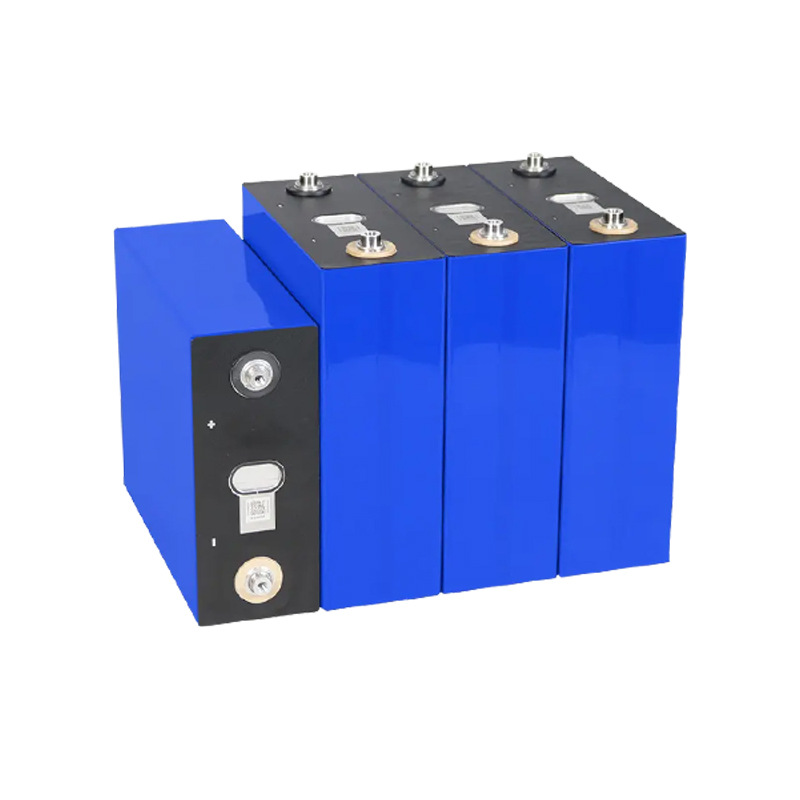
Technical Leadership in Custom Cellule de Batterie Lithium Manufacturing
In the rapidly changing landscape of industrial electrification and grid-scale energy storage, procurement managers and original equipment manufacturers (OEMs) demand far more than standard electrochemical hardware. Sourcing a dependable cellule de batterie lithium (lithium battery cell) requires deep insight into solid-electrolyte interphase (SEI) stability, prismatic cell structural integrity, internal impedance matching, thermal runaway suppression, and custom Battery Management System (BMS) protocol integration. As a leading tier-1 ODM and OEM manufacturer based in Shenzhen, China, Shenzhen Foya Solar Technology Co., Ltd. sets the benchmark for high-reliability cell manufacturing, delivering engineered solutions across Europe, North America, Asia-Pacific, and emerging markets.
This comprehensive industry whitepaper explores the critical engineering parameters of prismatic Lithium Iron Phosphate (LiFePO4 / LFP) cells, evaluates sodium-ion (Na-ion) technological maturation, outlines ODM customization workflows, and demonstrates how automated Industry 4.0 manufacturing delivers unmatched supply chain resilience for enterprise B2B buyers worldwide.
Technical Roadmap & Future Outlook of Cellule de Batterie Lithium
The global transition toward net-zero carbon emissions is accelerating the electrochemical evolution of battery cells. For B2B buyers evaluating long-term equipment lifecycles, understanding cell chemistries, physical formats, and structural integrations is paramount.
1. Advanced LiFePO4 (LFP) Prismatic Chemistry
Lithium Iron Phosphate remains the undisputed standard for stationary Energy Storage Systems (ESS), commercial electric vehicles, marine vessels, and industrial motive equipment. Featuring an olivine crystal structure, LFP offers intrinsic thermal stability, preventing oxygen release even at elevated junction temperatures (>270°C). Our ODM manufacturing process integrates nano-structured carbon coating on the cathode and synthetic graphite anodes to reduce internal DC resistance (DCR ≤ 0.5 mΩ), enabling standard 1C continuous discharge rates and cycle lives exceeding 6,000 to 8,000 cycles at 80% Depth of Discharge (DOD).
2. Commercialization of Sodium-Ion (Na-Ion) Cells
As lithium raw material pricing fluctuates, Sodium-ion chemistry emerges as a vital, cost-stable complementary alternative. Utilizing layered transition metal oxides for cathodes and hard carbon for anodes, Na-ion cells eliminate expensive nickel, cobalt, and lithium salts entirely. Crucially, sodium-ion battery cells exhibit superior low-temperature performance, retaining up to 85% usable capacity at -20°C, and supporting zero-volt transport safety without copper foil corrosion risk. Foya Solar integrates Na-ion cells into 12V 100Ah/200Ah battery packs tailored for cold-climate telecom backup and off-grid solar.
3. Cell Geometry: Large-Format Prismatic vs. Cylindrical
While cylindrical cells (e.g., 32700, 4680) excel in high-power automated tooling, large-format prismatic cells (ranging from 54Ah, 100Ah, 205Ah, 230Ah, 324Ah up to 680Ah) represent the optimal building blocks for high-capacity battery systems. Prismatic aluminium casing maximizes volumetric packing efficiency (>75% pack level efficiency), minimizes inter-cell busbar connections, simplifies BMS voltage tapping, and optimizes thermal contact channels for liquid cooling plates.
Electrochemical Performance Matrix for B2B Procurement
| Cell Parameters | Grade A LiFePO4 (LFP) Cell | Sodium-Ion (Na-Ion) Cell | High-Nickel NCM Cell |
|---|---|---|---|
| Nominal Cell Voltage | 3.2V (Operating 2.5V – 3.65V) | 3.0V (Operating 1.5V – 4.0V) | 3.6V - 3.7V (Operating 2.8V – 4.2V) |
| Gravimetric Energy Density | 160 – 185 Wh/kg | 130 – 150 Wh/kg | 240 – 300 Wh/kg |
| Cycle Life (80% DOD, 25°C) | 6,000 – 10,000 Cycles | 3,000 – 5,000 Cycles | 1,500 – 3,000 Cycles |
| Thermal Runaway Temp | > 270°C (Highly Safe) | > 260°C (Highly Safe) | > 210°C (Requires Thermal Barriers) |
| Low-Temp Capacity (-20°C) | 65% – 70% Capacity | 80% – 88% Capacity | 70% – 75% Capacity |
| Primary B2B Target Applications | Residential/C&I ESS, Marine, Golf Carts | Cold Storage, Telecom, Cost-Sensitive ESS | High-Performance Automotive, Aviation |
Custom ODM/OEM Cell-to-Pack (CTP) Engineering Framework
From electrochemical cell matching to custom firmware programming, Foya Solar transforms client technical specifications into commercial-grade certified hardware.
Requirement Analysis
Deconstructing application loads, continuous/peak discharge C-rates, envelope dimensions, IP ratings (IP54 to IP67), operating temperatures, and target regional certifications.
Cell Selection & Grading
Sorting Grade A 3.2V cells within strict tolerances: Capacity delta ≤ 1%, Voltage delta ≤ 2mV, Internal Resistance delta ≤ 0.05 mΩ to ensure pack consistency.
Smart BMS Development
Engineering hardware & software protection architecture, configuring active/passive cell balancing, and implementing RS485, CAN 2.0B, UART, or Modbus protocols.
CAD & Thermal Simulation
3D structural enclosure design, anti-vibration mechanical ribbing, finite element analysis (FEA), and liquid/air channel thermal modeling under heavy load conditions.
Validation & Mass Production
UN38.3 short-circuit, impact, thermal abuse testing, prototype sign-off, automated laser busbar welding, and 100% full-cycle factory burn-in inspection.
Macro-Industry Solutions & Application Architecture
Modern energy systems demand tailored battery cell integration to withstand diverse environmental stresses, continuous deep cycling, and complex electrical grid interactions. Our ODM battery architecture powers strategic global industrial verticals:
1. Commercial & Industrial (C&I) Energy Storage Systems
For factories, commercial plazas, and microgrid installations, demand charges and grid volatility pose operational challenges. Foya Solar engineers liquid-cooled energy storage cabinets (such as our 100kW/215kWh and 50kW/96kWh hybrid PV-Diesel systems). Utilizing high-capacity 3.2V 280Ah/314Ah or 680Ah cells, these systems enable peak shaving, emergency load backup, and seamless photovoltaic self-consumption. Liquid cooling maintains cell temperature variance within ≤ 2.5°C across the cabinet, doubling thermal lifespan.
2. Residential Solar Storage (Wall-Mounted & Mobile Roller Packs)
Homeowners require plug-and-play, aesthetically appealing, and ultra-safe battery systems. Our 51.2V (16S) 100Ah, 280Ah, and 314Ah LiFePO4 battery modules feature modular expansion, built-in breaker disconnects, visual LCD touchscreens, and broad protocol compatibility with premier global off-grid and hybrid inverters (including Victron, SMA, Growatt, Deye, and Luxpower). Mobile roller designs allow easy indoor/outdoor positioning with IP54 ingress protection.
3. Heavy E-Mobility, Golf Carts & Marine Motive Power
Replacing heavy, high-maintenance lead-acid traction batteries with deep-cycle LiFePO4 chemistry yields instant performance gains: 70% weight reduction, 3x longer runtime, zero watering maintenance, and opportunity fast-charging. We customize 24V 75Ah, 36V, 48V, and 51.2V 105Ah drop-in replacement battery packs for golf carts, electric utility vehicles, floor cleaning scrubbers, forklifts, AGVs, and marine trolling motors equipped with heavy-duty anti-shock stainless steel internal framing.
China Industry 4.0: Supply Chain Resilience & Manufacturing Efficiency
Shenzhen sits at the heart of the world's most concentrated battery technology ecosystem. Foya Solar leverages this strategic industrial cluster, combining advanced gigafactory automation with rigid quality control frameworks to provide international enterprise partners with unmatched cost efficiency and execution speed.
Automated Cell Sorting & Laser Welding
Manual assembly introduces human error and resistance variations. Our automated assembly line employs high-precision optical sorting robotics to screen 100% of incoming 3.2V cells. Laser welding stations utilize real-time beam intensity control to bond copper/aluminium busbars with zero heat-affected zone damage to cell seals.
Traceability & MES Quality Execution
Every cell entering our facility receives a unique laser-etched 2D matrix code linked to our Manufacturing Execution System (MES). We record initial cell capacity, voltage curves, internal impedance, welding torque, and aging test metrics, ensuring complete supply chain transparency and batch-level warranty traceability.
Upstream Raw Material Integration
Direct long-term procurement partnerships with top-tier lithium refiners and cathode material producers protect our customers from spot-market price volatility. This integration guarantees consistent access to high-purity Grade A raw materials, preventing supply disruptions for multi-gigawatt procurement programs.
Localized Technical Support & Regulatory Compliance
Navigating international trade laws, dangerous goods shipping classifications, and regional electrical safety mandates requires an experienced global partner. Foya Solar provides seamless compliance coverage so your products clear customs cleanly and launch without regulatory hurdles.
Global Safety Certifications
Our battery cells, BMS designs, and packed storage systems are tested and certified to international standards including UN38.3, MSDS, CE, IEC 62619, UL 1973, UL 9540A, and CB. We support enterprise clients with custom laboratory testing for specific market entries.
Hazmat Logistics & DDP Freight
Lithium batteries are classified as Class 9 Dangerous Goods (UN3480 / UN3481). Foya Solar manages full UN-certified hazard packaging, drop-test documentation, sea/air transport certification, and offers complete Delivered Duty Paid (DDP) logistics directly to client warehouses across North America and Europe.
Post-Sale Technical Support
We offer dedicated engineer-to-engineer technical assistance, including remote BMS diagnostic support, firmware CAN-bus protocol field flashing, replacement module logistics, and comprehensive warranty coverage backed by dedicated international account managers.
Wholesale Battery Modules & Turnkey Cabinets
Explore our deep-cycle rechargeable battery packs, commercial storage cabinets, and customizable prismatic cell lines.







Frequently Asked Questions (FAQ) for Enterprise Buyers
Direct technical answers to common questions regarding cell procurement, engineering tolerances, lead times, and customization possibilities.