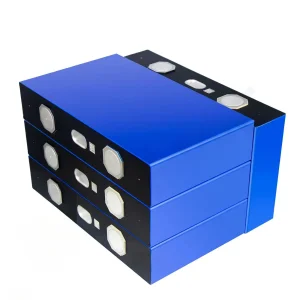
Featured ODM/OEM Battery Cells & Energy Systems (Block 1)
Explore our top-tier lithium iron phosphate (LiFePO4) cells, sodium-ion battery packs, and industrial energy storage systems manufactured in accordance with strict international schematic standards.

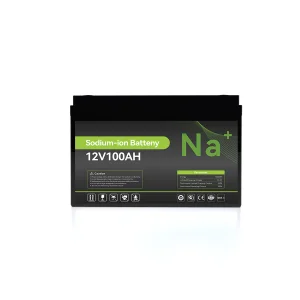






Understanding the Battery Cell Symbol in Modern Electrical Schematics & ODM Engineering
In complex electrical engineering, the battery cell symbol serves as the universal graphical representation for electrochemical energy sources. Whether designing portable consumer devices, electric vehicle (EV) traction packs, or multi-megawatt commercial and industrial (C&I) energy storage systems (ESS), engineers rely on standardized schematic notations—primarily defined under IEC 60617 and IEEE Std 315 / ANSI Y32.2—to specify polarity, cell configuration, balance connections, and internal sensing architecture.
A single-cell symbol consists of two parallel lines of unequal length and thickness: the longer, thinner line represents the positive (+) terminal (anode during discharge), while the shorter, thicker line indicates the negative (-) terminal (cathode during discharge). When evaluating an ODM battery cell symbol supplier & factories setup, understanding how these schematic representations translate into physical battery assembly, Battery Management System (BMS) wiring harnesses, and terminal pinouts is paramount to preventing costly engineering mistakes and ensuring operational safety.
Single-Cell Symbol (IEC 60617)
Denotes a nominal cell unit (e.g., 3.2V LiFePO4 or 2.1V Sodium-Ion). Crucial for schematic layouts indicating isolated sensing, voltage measurement points, and cell-level fuses.
Multi-Cell Series Bank Symbol
Consists of multiple interleaved long/short line pairs connected in series. Indicates total pack voltage scaling, such as 16S configuration for 51.2V residential batteries.
Smart Cell Schematic Integration
Modern ODM cell symbols incorporate integrated NTC thermistors, active balancing nodes, and CANbus/RS485 communication lines directly mapped onto EDA CAD footprints.
Global Commercial & Industrial Landscape for Battery Cell ODM Factories
The global transition toward renewable energy and electrification has driven exponentially higher demands for original design manufacturing (ODM) in the lithium-ion and sodium-ion sectors. Industrial procurement teams no longer seek off-the-shelf cells; they require custom cell dimensions, specialized terminal lug geometries, exact cell schematic symbols for CAD modeling, and custom BMS protocol integration.
Leading tier-1 manufacturing hubs like Shenzhen Foya Solar Technology Co., Ltd. bridge the gap between schematic engineering and physical execution. By offering custom prismatic cells (such as 3.2V 50Ah, 120Ah, 324Ah, and ultra-high-capacity 680Ah cells) as well as sodium-ion (Na+) chemistry alternatives, ODM suppliers give global B2B clients an unprecedented competitive edge in cost optimization, energy density, and thermal stability.
ODM Cell Chemistry & Symbol Specifications Comparison Matrix
The table below details technical parameters, standard schematic symbol mapping, and ideal deployment scenarios across our ODM product lines.
| Cell Chemistry / Format | Nominal Voltage | Available Capacities | Schematic Symbol Type | Cycle Life (80% DoD) | Primary Industrial Application |
|---|---|---|---|---|---|
| Prismatic LiFePO4 (LFP) | 3.2V | 50Ah, 120Ah, 324Ah, 680Ah | IEC Single Cell / Multi-Tap Symbol | > 6,000 Cycles | C&I Energy Storage, Solar Off-Grid, Heavy Traction |
| Cylindrical 32140 LiFePO4 | 3.2V | 15Ah | Standard High-Rate DC Cell Symbol | > 3,500 Cycles | Golf Carts, Light Electric Vehicles (EV), Portable Power |
| Sodium-Ion (Na+ Pack) | 12V (3.0V - 3.1V/cell) | 100Ah, 200Ah | Cold-Climate Specific DC Cell Symbol | > 4,000 Cycles | Extreme Low-Temp (-40°C) Marine, Telecom, RV Storage |
| Liquid-Cooled ESS Module | 51.2V / 100kW+ System | 280Ah, 314Ah, 215kWh Cabinet | Complex Busbar & BMS Telemetry Symbol | > 8,000 Cycles | Peak Shaving, Microgrids, Factory Photovoltaic-Diesel |
Technology Roadmap: Next-Gen Cell Symbol Standards & Smart Battery ODM
As battery systems transition toward higher integration and software-defined power architectures, the traditional cell symbol is expanding into digital twin representations. The future of ODM battery cell manufacturing rests on three key technological pillars:
Digital Twin & EDA Cell Footprints
Foya Solar provides native CAD/EDA schematic symbol libraries (Altium Designer, KiCAD, OrCAD) for customized ODM cells, allowing system architects to simulate thermal and electrical characteristics prior to physical prototyping.
Sodium-Ion (Na+) Commercialization
Providing non-lithium cathode alternatives that offer robust cold-temperature performance (retaining over 85% capacity at -20°C) and lower raw material volatility for price-sensitive grid projects.
Ultra-Large Form Factor Prismatic Cells
Scaling from standard 280Ah/314Ah cells up to 680Ah single-cell architectures, significantly cutting the number of series/parallel connections, busbar welding points, and schematic system complexity.
The 5-Step Custom ODM Sourcing & Production Workflow
Our Shenzhen manufacturing facility guarantees 100% inspection, strict E-E-A-T quality compliance, and seamless transition from electronic schematic design to mass production.
Analysis of cell symbols, pinouts, voltage requirements, thermal boundaries, and mechanical form factors.
Selection of Grade A LiFePO4 or Sodium-Ion cells with exact internal resistance and matched capacity tolerances.
Building functional prototypes with integrated RS485/UART/CANbus protocols and smart balancing logic.
Rigorous safety testing including UN38.3, UL1973 thermal shock, vibration, and overcharge protection checks.
Scalable manufacturing in our 20,000m² facility delivering 100% inspected shipments to over 80 countries.
Frequently Asked Questions: Battery Cell Symbols & ODM Sourcing
Got technical questions regarding battery cell schematic representations or factory ODM capabilities? Read answers from our chief engineers.
Featured ODM/OEM Battery Cells & Energy Systems (Block 2)
Complete your equipment design with our high-capacity prismatic cells, mobile off-grid power solutions, and containerized energy storage units.