
Featured High-Performance 50Ah & Deep-Cycle Modules
Explore our custom OEM and ODM engineered battery cells and systems, designed for high safety, deep cycling reliability, and scalable power density.








Macro Economic & Global Industrial Landscape of 50Ah Lithium Battery Solutions
The global transition toward clean energy storage and electrification has accelerated the demand for standardized, modular energy storage building blocks. Among various volumetric configurations, the 50Ah form factor (spanning individual 3.2V prismatic cells up to integrated 12.8V, 25.6V, and 48V/51.2V packs) has established itself as an indispensable industrial paradigm.
Why the 50Ah Capacity Vector Matters
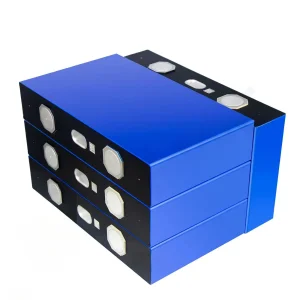
Industrial procurement teams choose the 50Ah specification because it balances hand-portability with high thermal stability and ease of parallelization. A single 3.2V 50Ah prismatic LiFePO4 cell provides ~160Wh of energy. When arranged in a 4S1P configuration, it builds a standard drop-in 12.8V 50Ah (640Wh) SLA (Sealed Lead Acid) replacement battery. Arranged in 16S arrays, it forms compact 51.2V 50Ah (2.56kWh) rack-mount or wall-mounted energy storage modules suitable for telecommunications micro-sites and residential PV backups.
Chemistry Breakdown: LiFePO4 vs. Alternatives
Compared to Nickel Manganese Cobalt (NMC) or Lithium Cobalt Oxide (LCO), Lithium Iron Phosphate ($LiFePO_4$) exhibits superior crystal structure stability (olivine architecture), preventing thermal runaway up to 270°C. Moreover, with raw material innovations in Sodium-Ion (Na-Ion) 50Ah chemistry, manufacturers now offer cold-weather resilient options operating down to -40°C without requiring internal heating pads.
Technical Insight for Engineering Procurement: OEM customization of "batteria litio 50ah" is not merely about cell shrink-wrapping; it requires precise laser welding of nickel-plated copper busbars, impedance matching (ΔIR < 0.3mΩ), and microsecond-response smart BMS protection.
Deep Technical Architecture & Custom ODM Engineering Whitepaper
Designing industrial-grade 50Ah lithium battery systems requires rigorous electro-chemical engineering, thermal optimization, and robust firmware protocols. Below is a comprehensive engineering benchmark comparing 50Ah module configurations across key parameters.
| Specification Parameter | 3.2V 50Ah Prismatic Cell | 12.8V 50Ah Pack (4S) | 25.6V 50Ah Pack (8S) | 51.2V 50Ah Module (16S) |
|---|---|---|---|---|
| Nominal Voltage | 3.2 V | 12.8 V | 25.6 V | 51.2 V |
| Rated Energy Capacity | 160 Wh | 640 Wh | 1,280 Wh | 2,560 Wh (2.56 kWh) |
| Operating Voltage Range | 2.5V - 3.65V | 10.0V - 14.6V | 20.0V - 29.2V | 40.0V - 58.4V |
| Gravimetric Energy Density | ~165 Wh/kg | ~140 Wh/kg (with IP65 Case) | ~145 Wh/kg | ~150 Wh/kg (Rack Mount) |
| Standard Continuous C-Rate | 1C (50A continuous) | 1C (50A continuous) | 1C (50A continuous) | 0.8C - 1C (40A - 50A) |
| Peak Pulse Current (10s) | 3C (150A) | 3C (150A) | 3C (150A) | 2C (100A) |
| BMS Protection Hardware | N/A (Bare Cell) | 4S Integrated 50A/100A BMS | 8S Smart BMS with CAN/RS485 | 16S Smart Master/Slave BMS |
| Typical Weight Range | ~1.15 kg | ~5.8 kg | ~11.2 kg | ~22.5 kg |
1. Smart BMS Topology
Our custom ODM battery management systems incorporate hardware over-current cutoffs, cell-level overvoltage/undervoltage protection, and passive/active cell balancing (up to 2A balancing current). Real-time state of charge (SoC) and state of health (SoH) are calculated via high-precision Coulomb counting microcontrollers.
2. Multi-Protocol Integration
Seamless communication interfaces including RS485, CAN-bus 2.0B, UART, and Bluetooth Low Energy (BLE). Pre-programmed protocols ensure zero-configuration compatibility with leading off-grid and hybrid inverters (Victron, SMA, Growatt, Deye, Voltronic, GoodWe).
3. Enclosure & Thermal Engineering
ODM enclosure solutions range from heavy-duty ABS flame-retardant (UL94-V0) cases to aluminum alloy IP67 marine containers. Built-in thermal shock absorbers and silica aerogel insulation pads prevent heat propagation between 50Ah prismatic cells.
Global Commercial & Industrial Market Analysis
The market for 50Ah lithium battery systems is experiencing unprecedented dynamic shifts across key regional industrial sectors.
European Union & United Kingdom Market Focus
Driven by strict decarbonization targets and the European Green Deal, regional distributors prioritize compliance with the new EU Battery Regulation (2023/1542), demanding full carbon footprint transparency and digital Battery Passports. 12.8V 50Ah and 25.6V 50Ah LiFePO4 batteries are heavily sought after as direct maintenance-free replacements for AGM/Gel batteries in marine vessels, mobile motorhomes (RV), and remote off-grid telemetry nodes across Northern and Western Europe.
North American & LATAM Industrial Dynamics
In North America, UL 1973 and UL 9540A certification standards govern the deployment of 50Ah prismatic modules in light commercial energy storage cabinets and industrial AGVs (Automated Guided Vehicles). Meanwhile, in Latin America, rapid expansion of off-grid solar infrastructure in agricultural and mining zones relies on stackable 51.2V 50Ah modules for consistent, long-cycle energy storage resistant to severe temperature fluctuations.
Localized Application Scenarios & Real-World Implementations
The versatility of the 50Ah lithium chemistry makes it ideal for specialized equipment and infrastructure. Here are five detailed OEM integration scenarios where 50Ah modules deliver distinct performance advantages.
1. Telecom & Edge Data Backup
Remote 4G/5G cell towers utilize 51.2V 50Ah 19-inch rack-mounted LiFePO4 batteries. These systems provide 2.56kWh of reliable power per 2U/3U module, offering 5x the lifespan of lead-acid alternatives and enabling remote telemetry monitoring over SNMP/RS485 networks.
2. Industrial AGVs & Floor Scrubbers
Automated forklifts, AGVs, and industrial cleaning machines require fast opportunity charging. Custom 25.6V 50Ah and 51.2V 50Ah packs accept continuous 1C charge rates (0% to 100% in 60 minutes) without degrading cell longevity, drastically minimizing machine downtime.
3. Marine & Electric Boating Power
Sealed IP67 12.8V 50Ah and 25.6V 50Ah lithium packs power electric trolling motors and house loads. Resistant to salt-fog corrosion and vibration, these lightweight packs prevent voltage sag during heavy motor throttle bursts.
4. Solar Microgrids & Street Lighting
Commercial solar street lighting systems and isolated off-grid cabins utilize 12.8V 50Ah LiFePO4 packs combined with MPPT solar controllers, ensuring non-stop operations through multi-day rain periods with 100% Depth of Discharge capability.
5. Cold-Chain & Medical Mobile Units
Equipped with Sodium-Ion 50Ah cells or built-in silicone heating films, specialized 50Ah medical cart and cold-chain monitoring power supplies operate continuously at freezing temperatures down to -30°C without capacity drop.
6. Portable Emergency Power Stations
OEM brands package 50Ah prismatic LiFePO4 cells into rugged, outdoor portable power stations featuring 500W-1500W pure sine wave inverters, providing silent, zero-emission back-up power for emergency response teams.
Localized Support, Certification & Compliance Assurance
Navigating global trade and regulatory frameworks requires comprehensive certification documentation and localized engineering service.
Global Safety & Transport Certifications
Our OEM manufacturing lines operate strictly under ISO 9001:2015, ISO 14001, and ISO 45001 quality management protocols. Every custom 50Ah battery pack design is eligible for and pre-tested against major global standards:
- UN38.3 & MSDS: Guaranteed air/sea transport safety compliance including thermal shock, altitude simulation, vibration, and external short-circuit test reports.
- IEC 62619 & CE-EMC: Industrial safety standards for stationary energy storage and industrial motive equipment.
- UL 1973 & UL 1642: Rigorous cell-level and module-level safety verification for North American customs import compliance.
- RoHS & REACH: Eco-friendly material standards free of hazardous heavy metals (lead, cadmium, mercury).
Localized Engineering & After-Sales Logistics
To reduce sourcing lead times and guarantee seamless post-delivery support for overseas buyers, we provide:
- Technical Pre-Sales Consulting: Dedicated FAE (Field Application Engineers) assistance for custom BMS firmware tweaking and communication protocol decoding.
- DDP Freight & Customs Clearance: Complete hazardous materials (Class 9 Lithium Ion) logistics management including UN-approved fiberboard box packaging.
- Warranty & Replacement Assurance: Transparent 3-year to 5-year factory warranties with direct spare-parts dispatch centers.
Technical Roadmap & Future Engineering Outlook (2025–2030)
As energy density demands increase and digital intelligence becomes standard, our R&D engineering roadmap focuses on three technological pillars for the 50Ah module series.
Solid-State & Semi-Solid Electrolytes
Transitioning standard liquid electrolyte 50Ah prismatic cells toward solid-state chemistry. Semi-solid state 50Ah cells will push volumetric energy density beyond 220 Wh/kg while eliminating the risk of electrolyte leakage or flammability even under mechanical puncture.
AI-Driven Digital Twin BMS
Incorporating IoT-connected cloud BMS diagnostics. Using Machine Learning algorithms to build a digital twin model for every 50Ah pack, predicting cell degradation dynamic curves, detecting micro internal short circuits, and preventing thermal events days before they occur.
Direct Commercialization of Sodium-Ion 50Ah
Commercializing sodium-ion 50Ah cells using Prussian White or Layered Oxide cathodes. Na-Ion offers exceptional low-temperature discharge (retaining >85% capacity at -30°C) and reduced reliance on lithium carbonates, lowering long-term raw material costs.
Commercial & High-Voltage Storage Solutions
Browse our enterprise-scale container solutions, rolling energy storage units, and specialized LiFePO4 cells.







Frequently Asked Questions (FAQ) for Engineering & Sourcing Teams
Direct, highly detailed answers addressing common technical and procurement queries regarding custom 50Ah lithium battery manufacturing.