
Featured Industrial 48V & Cell Products
Explore our core OEM/ODM cell offerings, deep-cycle modules, and intelligent home/commercial energy storage systems built to international compliance standards.







1. Executive Overview: Why the 48V (51.2V Nominal) Architecture Dominates Industrial Energy Storage
In the evolving landscape of electrochemical energy storage systems (BESS), the 48V LiFePO4 battery pack format (technically configured as 16S / 51.2V nominal voltage) has established itself as the global industry benchmark for telecom backup, residential solar integration, commercial microgrids, and electric motive power. This dominance is not accidental; it stems from a critical engineering balance between safety, energy density, voltage safety limits, and systemic round-trip efficiency (RTE).
From an electrical safety standpoint, 48V systems fall squarely under the Safety Extra Low Voltage (SELV) threshold defined by international standards (IEC 60364-4-41). Operating below 60V DC minimizes arc flash hazards, simplifies field maintenance without requiring high-voltage specialized certification for installers, and substantially reduces regulatory compliance costs compared to high-voltage (HV) battery stacks exceeding 400V DC.
Furthermore, compared to lower voltage topologies such as 12V or 24V systems, a 48V architecture reduces current draw by 75% for an equivalent power load (P = V × I). According to Joule's First Law ($P_{loss} = I^2 R$), reducing the current by four times decreases thermal dissipation and resistive line losses by a factor of 16. This enables systemic copper conductor downsizing, slashes cabinet wiring mass, and enhances overall energy conversion efficiency across hybrid inverters and DC-DC converters.
Intrinsically Safe Chemistry
Lithium Iron Phosphate ($LiFePO_4$) features a olivine crystal structure with robust P-O covalent bonds. Unlike NMC/NCA chemistries, it releases zero oxygen during thermal stress, preventing thermal runaway up to 500°C.
High Round-Trip Efficiency
16S 51.2V configuration maintains nominal matching with modern 48V hybrid inverters, delivering over 96.5% DC-to-DC charge and discharge cycle efficiency under standard 0.5C operating rates.
Modular Scalability
Integrated master-slave CANbus/RS485 communication interfaces permit seamless parallel expansion up to 15 to 32 battery packs (exceeding 160kWh) without external control units.
2. OEM/ODM Engineering Architecture: Grade A Cell Selection & BMS Integration
A high-performance 48V LiFePO4 battery factory must be evaluated by its rigorous engineering protocols. A battery pack is only as reliable as its weakest cell. At our ODM manufacturing facilities, every custom 48V/51.2V assembly undergoes a multi-tier manufacturing process designed to maximize cycle longevity, thermal uniformness, and volumetric energy density.
2.1 Precision Grade-A Prismatic Cell Matching
We source ultra-high-density prismatic cells (ranging from 50Ah, 100Ah, 230Ah, 280Ah, 314Ah up to 680Ah) directly from tier-1 manufacturers. Prior to laser welding into modules, automated testing sorters grade each cell based on three strict parameters:
- Capacity Consistency: Variance delta constrained within $\Delta C \le \pm 0.5\%$.
- Internal AC Resistance (ACIR): Impedance matching measured at 1kHz with $\Delta R \le 0.15\text{ m}\Omega$.
- Open Circuit Voltage (OCV): Voltage grading synchronized within $\Delta V \le 2\text{ mV}$ after 14-day static aging.
2.2 Smart Battery Management System (BMS) Topology
The neural engine of our ODM 48V batteries is an industrial-grade Smart BMS equipped with dual automotive-tier microcontrollers (Texas Instruments / NXP). Key protective & diagnostic features include:
| BMS Protection Layer | Technical Threshold / Protocol | Operational Value for B2B Importers |
|---|---|---|
| Active Cell Balancing | 1A–5A transformer-based active transfer | Prevents premature capacity fade, extending pack service life by 25-30% compared to standard passive discharge balancing. |
| Multi-Protocol Bus Interface | CANBUS 2.0B, RS485, RS232, Modbus RTU | Native handshake plug-and-play compatibility with global inverter brands (Victron, SMA, Deye, Growatt, Solis, Luxpower). |
| Thermal Matrix Monitoring | 4 to 8 NTC temperature sensors per 16S module | Real-time thermal monitoring across cell terminals and power MOSFETs, automatically throttling current during thermal spikes. |
| Cloud IoT & Remote Telemetry | 4G LTE / WiFi / Bluetooth App integration | Enables remote firmware updates (OTA), field diagnostic logs, and predictive failure alerts for asset managers. |
3. Localized Application Scenarios for 48V LiFePO4 Systems
Custom 48V lithium solutions tailored to harsh operational environments, varied load profiles, and international grid requirements.
Telecom BTS & Edge Data Centers
48V 100Ah / 200Ah standard 3U/4U rack-mount LiFePO4 batteries replace heavy lead-acid VRLA banks at base transceiver stations. Designed for continuous float charge, ambient operating tolerance up to 60°C, and 19-inch cabinet integration.
Residential Off-Grid & Hybrid ESS
Rolling-wheel, wall-mounted, and stackable 51.2V 5kWh-30kWh home energy storage units designed for solar self-consumption, grid peak-shaving, and seamless UPS-level automatic power transfer during power outages.
Motive Power: Forklifts & AGVs
High-discharge 48V packs engineered for heavy-duty electric forklifts, automated guided vehicles (AGVs), and warehouse scrubbers. Supports fast opportunity charging (up to 1C), allowing 24/7 multi-shift logistics operation.
Electric Golf Carts & Utility Vehicles
Drop-in replacement 48V (51.2V 105Ah) battery kits tailored for EZGO, Club Car, and Yamaha fleets. Cuts vehicle mass by 70%, increases speed and acceleration, and eliminates acid spills and maintenance overhead.
Marine House Power & Electric Propulsion
Sealed IP67/IP68 48V battery systems with marine-grade anti-corrosion enclosures. Supplies steady house power for deep-sea yachts, electric trolling motors, and commercial fishing vessels without noise or diesel fumes.
Microgrids & Remote Mining Sites
Modular 48V scalable energy blocks integrated inside containerized ESS (50kW/96kWh up to 372kWh liquid-cooled units) coupled with solar PV arrays and diesel gensets to power off-grid mining camps and remote agricultural sites.
4. Technical Roadmap & Future Outlook: 2025–2030 Energy Storage Innovations
As an authoritative ODM 48V LiFePO4 battery factory, keeping pace with technological advances is paramount. Over the next five years, four fundamental technology transitions will reshape 48V and 51.2V energy storage architecture:
4.1 High-Capacity Large-Format Prismatic Cells (314Ah to 680Ah)
The industry is transitioning rapidly from standard 280Ah prismatic cells to next-generation 314Ah and ultra-large 560Ah/680Ah cell formats. Utilizing larger capacity cells in a 16S 48V module reduces the number of internal mechanical connections, busbar weld points, and voltage monitoring channels by over 50%. This lower structural complexity enhances volumetric efficiency and reduces potential failure points while reducing total packaging cost per kWh.
4.2 Sodium-Ion (Na-Ion) & LiFePO4 Hybrid Topologies
Sodium-ion technology offers key advantages in sub-zero operational environments and raw material cost stability. While LiFePO4 remains king for energy density and cycle performance in temperate zones, custom ODM factories are deploying hybrid Sodium/LiFePO4 dual-chemistry packs. By running Na-Ion cells in parallel with LFP cells managed by dual-zone BMS logic, 48V packs maintain reliable cold-start discharge down to -40°C without requiring energy-intensive internal heating pads.
4.3 Solid-State & Semi-Solid Electrolyte Integration
Semi-solid state LiFePO4 battery chemistry is transitioning from laboratory research to pilot industrial lines. Replacing traditional liquid organic electrolytes with semi-solid gel polymer electrolytes boosts energy density past 220 Wh/kg while eliminating internal leakage risks and suppressing lithium dendrite formation during rapid charging phases.
4.4 AI-Driven Battery Diagnostics & Cloud Digital Twin
Future 48V ODM batteries will incorporate edge-AI processing directly on the BMS motherboard. By continually transmitting charging telemetry to cloud-based Digital Twin models, AI algorithms predict cell degradation curves, detect micro-short circuits prior to thermal events, and dynamically recalibrate cell balancing routines based on real-world usage patterns.
5. China's Battery Supply Chain Resilience & OEM/ODM Manufacturing Advantages
China accounts for over 75% of global lithium-ion battery manufacturing capacity and over 85% of global LiFePO4 cathode production. Sourcing custom 48V LiFePO4 batteries directly from a Shenzhen-based specialized manufacturing center like Foya Solar offers distinct strategic, technical, and commercial advantages for international B2B buyers:
Vertical Ecosystem Integration
Immediate proximity to raw lithium refiners, precursor chemical plants, copper foil manufacturers, and SMT PCB assembly lines ensures uninterrupted raw material supply and short production lead times.
Advanced Laser Welding & MES
Automated fiber laser welding robotics ensure gas-tight, high-conductivity copper-aluminum busbar joints. Manufacturing Execution Systems (MES) track every cell barcode from initial sorting to final shipment.
Rapid NPI Prototype Cycle
Our dedicated engineering team translates custom mechanical, electrical, and firmware requirements (OEM/ODM) from CAD drawings into fully functional sample packs in under 14 working days.
Scale & Cost Efficiency
Automated high-volume assembly lines minimize manual labor overhead, delivering lower unit costs ($/kWh) without compromising quality controls or international compliance certifications.
6. Global Commercial Landscape & Regional Compliance Frameworks
Navigating global market entry requires strict adherence to regional electrical, environmental, and transport safety regulations. A specialized ODM factory acts as a compliance partner for global importers:
| Target Region | Primary Regulatory Frameworks | Engineering Compliance Requirements |
|---|---|---|
| North America (US / Canada) | UL 1973, UL 9540, UL 9540A, UN 38.3 | Mandatory cell level thermal runaway propagation testing, heavy-gauge steel fireproof enclosure, dual redundant BMS cutoffs. |
| European Union (EU) | CE, IEC 62619, EU Battery Regulation 2023/1542 | Mandatory Battery Passport integration, hazardous substance compliance (RoHS/REACH), eco-design recyclability documentation. |
| Australia & Oceania | AS/NZS 5139, CEC Listing | Strict arc fault protection, outdoor IP65 ingress protection rating, integration support with off-grid solar standards. |
| Global Logistics | UN 38.3, MSDS, Dangerous Goods (DG) Code | Certified drop testing, thermal shock resistance, altitude simulation, drop-proof heavy-duty UN-rated export crates. |
7. Step-by-Step OEM/ODM Customization Process
From initial design concept to mass delivery, our standardized manufacturing engineering workflow guarantees quality at every stage:
Specification Consultation
Define operational voltage, nominal capacity, max discharge current, housing dimensions, IP rating, and inverter communication protocol.
3D CAD & BMS Architecture
Mechanical enclosure design, thermal simulation modeling, busbar route optimization, and custom BMS firmware programming.
Prototype Validation
Physical sample assembly followed by rigorous testing: environmental chamber cycling, short-circuit protection, vibration, and thermal stress tests.
Mass Production & EOL
Automated module production, 100% full charge-discharge aging test cycles, custom branding, and shipping documentation.
Complete ODM Battery Catalog
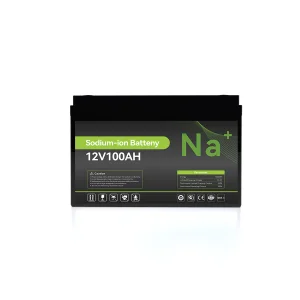
Browse additional high-performance battery modules, sodium-ion solutions, and industrial-scale energy storage containers.






Frequently Asked Questions (Technical Sourcing FAQ)
Get immediate, expert-backed answers regarding ODM technical procurement, BMS customization, and factory quality assurance.
What is the difference between 48V and 51.2V nominal LiFePO4 battery systems?
While often used interchangeably in marketing, a 48V system built with LiFePO4 cells traditionally refers to a 15-cell series (15S) arrangement (15 × 3.2V = 48.0V). However, the modern industrial global standard is 51.2V nominal, which uses a 16-cell series (16S) arrangement (16 × 3.2V = 51.2V). The 16S 51.2V configuration perfectly matches the optimal DC operating window of commercial off-grid and hybrid inverters (48V-58.4V operating range), providing higher overall efficiency and extended capacity delivery.
Can your factory customize BMS CANbus communication protocols for our existing inverters?
Yes. Our ODM engineering team provides custom BMS firmware matching for all major global inverter brands (including Victron Energy, SMA, Studer, Deye, Growatt, Solis, Luxpower, and Schneider Electric). We can pre-flash your specific CANbus / RS485 protocol stack or provide dual-protocol dip-switch selectable firmware directly from the production line.
What is the typical Minimum Order Quantity (MOQ) and lead time for OEM custom packs?
For standard module branding (custom logo, outer casing color, custom carton packaging), our typical MOQ starts at 50 units. For fully customized mechanical dimensions, custom tooling, and bespoke BMS designs, prototype samples are delivered within 14–21 days, while mass production batches are completed within 25–35 days upon drawing approval.
How does your factory ensure cell quality and prevent capacity loss over time?
We implement a 100% Grade-A cell policy, sourcing brand-new prismatic cells with full manufacturer traceability barcodes. Every cell undergoes automated grading for capacity, internal resistance ($\le 0.15\text{ m}\Omega$), and OCV stability. Before packing, finished 48V modules complete a full 100% DOD charge-discharge validation cycle using automated testing channels.
When should an importer choose Sodium-Ion (Na-Ion) over LiFePO4 for 48V applications?
LiFePO4 remains superior for maximum cycle life (6,000+ cycles) and high volumetric energy density. However, Sodium-Ion is recommended if your operational environment experiences extreme cold climate down to -40°C where standard lithium batteries struggle without heating systems, or for projects requiring cathode material independence from lithium price volatility.