
Featured Prismatic & Custom Battery Products
Explore our high-density Grade A lithium iron phosphate cells, custom cylindrical modules, and containerized energy storage platforms built for heavy-duty industrial compliance.






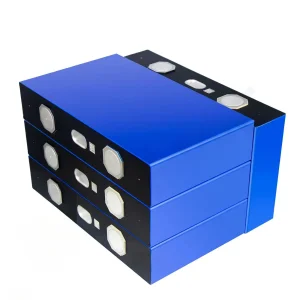

Global B2B Sourcing for Prismatic LiFePO4 Architecture
The worldwide transition toward renewable microgrids, heavy-vehicle fleet electrification, and utility-scale energy storage has shifted the paradigm of battery cell procurement. Prismatic Lithium Iron Phosphate (LiFePO4) cell technology has emerged as the global benchmark for safety, volumetric packing efficiency, and extended lifecycle operational economics.
Structural Supremacy of Prismatic vs. Cylindrical Form Factors
While cylindrical cells (such as 18650 or 32140) serve specialized high-discharge or compact applications, **prismatic LFP cells** dominate the industrial procurement sector. Their rigid aluminum enclosure, high single-cell capacity (from 50Ah up to 680Ah), and flat rectangular surfaces optimize structural thermal dissipation, eliminate parasitic void space in battery racks, and simplify automated busbar laser welding. This reduces overall battery pack complexity and minimizes potential electrical failure points in high-vibration environments.
Total Cost of Ownership (TCO) & Safety Compliance
For Tier-1 B2B buyers, EPC contractors, and system integrators, initial capital expenditure (CapEx) is inextricably linked to long-term lifecycle yield. Prismatic LiFePO4 chemistry inherently resists thermal runaway due to its robust P-O covalent atomic bonds, remaining stable even under extreme overcharge, physical puncture, or elevated ambient temperatures up to 270°C. Lower degradation rates ensure a minimum 10-to-15-year operational longevity, significantly driving down levelized cost of storage (LCOS).
Prismatic Cell Architecture & Electrochemical Fundamentals
A comprehensive engineering evaluation of high-capacity prismatic cells requires examining internal layering, ceramic separator technology, explosion-proof pressure relief vents, and terminal post design.
Aluminum Casing & Hermetic Seal
Our prismatic cells utilize precision-extruded 3003-series aluminum alloy enclosures. Laser micro-welding along the top cap guarantees a hermetic seal against moisture ingress and electrolyte leakage, withstanding internal gas pressure up to 0.8 MPa.
Ceramic-Coated Separators
To mitigate thermal shrinkage and prevent micro-short circuits caused by lithium dendrites during fast charging, an ultra-thin nanometer-scale Al2O3 ceramic layer is applied to the polyolefin separator substrate, increasing thermal stability beyond 180°C.
Explosion-Proof Pressure Vent
In the improbable event of critical internal gas buildup, a calibrated directional explosion-proof valve ruptures precisely at 0.3–0.5 MPa. This safely releases pressure downward, isolating the gas away from sensitive electronic BMS components above.
Industrial Cell Technical Specification Matrix
| Cell Model / Format | Nominal Voltage | Rated Capacity | Internal Impedance (AC 1kHz) | Standard Charge/Discharge | Cycle Life (80% EOL) | Operating Temp (Discharge) |
|---|---|---|---|---|---|---|
| 3.2V 50Ah Prismatic | 3.2 V | 50 Ah | ≤ 0.6 mΩ | 0.5C / 1.0C | ≥ 4,000 Cycles | -20°C to 60°C |
| 3.2V 100Ah / 102Ah | 3.2 V | 100 Ah / 102 Ah | ≤ 0.45 mΩ | 1.0C / 1.0C continuous | ≥ 5,000 Cycles | -20°C to 60°C |
| 3.2V 184Ah Deep Cycle | 3.2 V | 184 Ah | ≤ 0.35 mΩ | 0.5C / 1.0C peak 2C | ≥ 6,000 Cycles | -30°C to 60°C |
| 3.2V 324Ah High Density | 3.2 V | 324 Ah | ≤ 0.22 mΩ | 0.5C continuous | ≥ 6,500 Cycles | -30°C to 65°C |
| 3.2V 680Ah Utility ESS | 3.2 V | 680 Ah | ≤ 0.15 mΩ | 0.25C / 0.5C optimal | ≥ 8,000 Cycles | -30°C to 65°C |
Macro-Industry Solutions & Application Scenarios
From kilowatt-level marine propulsion modules to multi-megawatt containerized grid storage cabinets, custom prismatic LiFePO4 cells provide scalable power infrastructure tailored to demanding load profiles.
Containerized Utility ESS (215kWh - 372kWh+)
Our 215kWh air-cooled and 372kWh liquid-cooled storage containers integrate high-capacity 324Ah/680Ah prismatic cells with HVAC controls, automated aerosol fire suppression systems, and Modbus TCP/CANbus telemetry for grid frequency regulation and peak shaving.
Commercial & Industrial (C&I) Peak Shaving
Modular 48V/51.2V racking configurations allow manufacturing facilities, data centers, and agricultural complexes to capture peak solar generation, buffer power quality, and provide uninterrupted emergency backup during utility outages.
E-Mobility, Golf Carts & Marine Electrification
Custom 24V, 36V, and 48V battery packs replace toxic lead-acid units in golf fleets, electric workboats, AGVs, and scrubbers, offering a 70% weight reduction, 3x longer runtime, and fast 1C opportunity charging support.
End-to-End Customization & Quality Assurance
To maintain total transparency and compliance, our 20,000m² manufacturing plant enforces rigorous quality controls at every operational phase—from raw cathode slurry preparation to final pack burn-in testing.
Automated Sorting
Cells undergo automated OCV sorting to match initial voltage (ΔV < 2mV) and internal resistance (ΔR < 0.2mΩ) prior to pack assembly.
Laser Tab Welding
High-precision fiber laser spot welding ensures low electrical resistance across copper and aluminum busbars, preventing localized thermal hot spots.
Smart BMS Tuning
Integrated Smart BMS units are programmed with customized high/low voltage cutoffs, passive/active balancing parameters, and RS485/CANbus communications.
Full Load Burn-In
100% finished packs undergo full automated charge-discharge testing cycles inside temperature-controlled burn-in chambers to verify rated energy output.
Technology Roadmap: Sodium-Ion & Liquid-Cooled Evolution
As energy storage requirements scale toward long-duration storage (LDES) and extreme temperature resiliency, our research and engineering teams are actively commercializing next-generation chemistries and cooling architectures.
Sodium-Ion (Na-Ion) Chemistry Hybridization
To complement lithium iron phosphate in sub-zero environments, we offer **Sodium-Ion battery packs** (e.g., 12V 100Ah/200Ah formats). Sodium-ion cells retain over 85% usable energy capacity at -30°C and eliminate reliance on cobalt, nickel, or scarce lithium reserves, serving as a cost-efficient backup alternative for cold-climate telecom and solar sites.
Advanced Liquid Thermal Plates & AI-Driven BMS
Direct-to-cell liquid cold plate technology maintains cell temperature differentials (ΔT) within 2.5°C across massive 372kWh storage systems. Paired with cloud-connected Digital Twin BMS algorithms, operators gain predictive analytics for State of Health (SOH) degradation and thermal runaway pre-warning 48 hours in advance.
Localization Support, Certifications & Risk Mitigation
Navigating global trade compliance and hazardous material transport regulations is critical for seamless B2B importing. Our dedicated logistics team provides complete documentation for customs clearance across Europe, North America, APAC, and LATAM markets.
Safety & Transport Compliance
Every product line carries UN38.3, MSDS, and Class 9 dangerous goods ocean shipping documentation. Complete UN-certified heavy packaging boxes ensure shock isolation during maritime transit.
Regional Standards Adherence
Cell and battery configurations comply with UL1973, UL9540A, CE, IEC 62619, and CB standards, giving engineering teams the confidence needed for prompt grid interconnect approval.
Engineering Field Warranty
We offer back-to-back factory warranties up to 10 years for integrated energy storage systems, supported by remote engineering diagnostic teams and guaranteed spare-parts availability.
Frequently Asked Sourcing & Engineering Questions
Clear, detailed answers regarding prismatic LiFePO4 cell customization, charging profiles, BMS integration, and factory lead times.
Wholesale Systems, Sodium-Ion & Specialty Packs
Browse our expanded selection of roller-mounted residential storage, marine/golf cart batteries, sodium-ion solutions, and custom cell series.






