
Featured Prismatic Cells & OEM Battery Modules
Direct factory supply of precision-engineered 3.2V prismatic LFP cells and heavy-duty battery packs tailored for high-cycle industrial deployments.

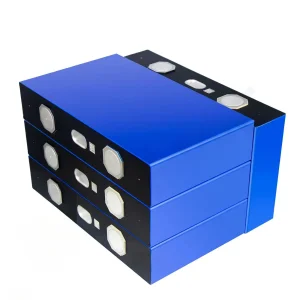






Global B2B Procurement Dynamics for Custom Prismatic Cells
How global Tier-1 integrators, ESS manufacturers, and heavy OEM equipment builders are restructuring their battery supply chains around large-format prismatic lithium-ion cells.
Shift Toward Large-Format Prismatic Geometry
In the rapidly evolving global energy ecosystem, B2B procurement strategies are shifting away from small cylindrical (e.g., 18650, 21700) and soft-pack pouch cells toward rigid aluminum-cased prismatic Li-ion cells. Driven by demands for higher volumetric packing efficiency, robust mechanical safety, and simplified battery management system (BMS) architectures, prismatic cells have become the benchmark standard for commercial battery storage, utility microgrids, and electric mobility platforms.
By utilizing high-capacity prismatic cells ranging from 50Ah up to ultra-large 680Ah formats, system integrators drastically reduce the number of parallel cell connections. This minimizes potential points of failure, lowers internal contact resistance, and substantially reduces labor cost during pack assembly.
Addressing Sourcing Risk & Lifecycle Economics
Global supply chain leaders face complex procurement hurdles: balancing energy density ($Wh/kg$) against thermal stability, ensuring strict batch-to-batch consistency in internal resistance ($\le 0.3m\Omega$), and verifying international certification standards such as UL 1973, UN 38.3, and IEC 62619.
Partnering with a specialized custom prismatic Li-ion battery cell manufacturer allows enterprise clients to bypass standard off-the-shelf constraints. Direct factory collaboration provides tailored electrode chemical formulations, customized busbar terminal designs, specialized laser welding, and optimized casing dimensions designed explicitly for unique space enclosures and duty cycles.
Anatomy & Structural Architecture of Prismatic Cells
An engineering analysis of cell chemistry, mechanical housing, thermal dissipation vectors, and internal safety mechanisms.
Aluminum Alloy Housing & Vent Seals
Our prismatic cells feature an ultra-lightweight, high-strength aluminum alloy casing (Al3003) engineered to resist mechanical deformation, environmental vibration, and thermal expansion. Each cell is equipped with a high-precision, directional explosion-proof pressure relief vent that activates deterministically if internal pressure exceeds safe operating thresholds, preventing violent rupture or catastrophic thermal propagation.
Electrochemical Chemistries: LFP vs. NCM
We manufacture custom prismatic cells utilizing advanced Lithium Iron Phosphate ($\text{LiFePO}_4$) and Nickel Manganese Cobalt ($\text{LiNi}_x\text{Mn}_y\text{Co}_z\text{O}_2$) chemistries. $\text{LiFePO}_4$ offers unparalleled thermal runway limits ($270^\circ\text{C}$ decomposition threshold) and extended cycle life ($>6,000$ cycles at 80% DOD), whereas NCM formulations provide exceptional gravimetric energy density ($>240\,Wh/kg$) for weight-sensitive applications.
Winding vs. Stacking Manufacturing Technology
Using state-of-the-art z-fold lamination (stacking process) rather than traditional jelly-roll winding, our ultra-large prismatic cells achieve uniform internal current distribution, lower thermal gradient variations ($\Delta T < 2^\circ\text{C}$ across the cell body), and minimized internal mechanical stress during long-term charge-discharge expansion cycles.
| Cell Architecture | Volumetric Efficiency ($Wh/L$) | Mechanical Safety & Housing | Thermal Management Efficiency | Vibration Resistance | Assembly Complexity |
|---|---|---|---|---|---|
| Custom Prismatic (Aluminum Enclosure) | High (400–550 Wh/L) | Rigid Al-Shell / Integrated Relief Vent | Excellent (Large Flat Surfaces) | Superior (Heavy-duty Bolt Terminals) | Low (Fewer parallel cells) |
| Cylindrical (e.g., 21700 / 32140) | Moderate (300–450 Wh/L) | Steel Can / Top CID Vent | Moderate (Air Gap Voids) | High (Requires Complex Holders) | High (Thousands of wire bonds) |
| Pouch (Soft Polymer Foil) | High (450–600 Wh/L) | Flexible Foil (Vulnerable to Swelling) | Good (Surface Cooling) | Moderate (Requires External Clamping) | Moderate (Tab Welding Sensitivity) |
Turnkey Macro-Industry Battery Solutions
Tailored electrochemical and structural designs optimized for specific operational profiles, continuous C-rates, and harsh operating climates.
Commercial & Industrial (C&I) Energy Storage
For factory peak shaving, microgrid stabilization, and solar PV self-consumption systems. Built with high-capacity 280Ah, 314Ah, or 680Ah LiFePO4 cells configured into modular rack cabinets. Features liquid-cooling plate compatibility to maintain balanced cell temperatures under high continuous 1C/1C charge-discharge cycles.
Heavy Industrial E-Mobility & Material Handling
Specially engineered for electric forklifts, Automated Guided Vehicles (AGVs), airport ground support equipment, and golf cart fleets. High-power cell variants accommodate continuous high-rate discharges (3C–5C peak) while withstanding intense structural vibration and thermal fluctuation in round-the-clock logistics hubs.
Off-Grid Hybrid Solar & Marine Power
Custom low-voltage and high-voltage prismatic battery strings designed for remote telecom base stations, residential solar backup wall units, and marine vessels. Provides salt-mist corrosion resistance, integrated aerosol fire-suppression options, and zero-gas emission operation indoors or at sea.
End-to-End OEM & ODM Customization Workflow
How we transform your technical requirements into mass-produced, certified prismatic battery modules and systems.
1. Dimension & Terminal Customization
Custom cell aspect ratios, thickness scaling, welded M6/M8 threaded copper/aluminum terminals, or customized laser-welded busbar tab geometries.
2. Smart BMS & Protocol Integration
Engineered with multi-protocol communication (CANbus, RS485, Modbus, UART) compatible with leading energy storage inverters (Victron, SMA, Growatt, Deye).
3. Automated Laser Welding & Sorting
100% automated voltage, capacity, and internal resistance sorting ($\Delta IR \le 0.05m\Omega$, $\Delta V \le 2mV$) followed by industrial robotic laser beam welding.
4. Strict QA & Environmental Testing
Every production batch undergoes X-ray weld inspection, thermal shock testing ($-40^\circ\text{C}$ to $+65^\circ\text{C}$), drop tests, and 100% full-cycle burn-in validation.
Technology Roadmap: Next-Gen Prismatic Innovations
Key trends reshaping prismatic battery manufacturing over the next decade.
Ultra-Large Formats (314Ah – 680Ah)
The industry is moving aggressively toward ultra-large prismatic form factors. By upgrading standard 280Ah cells to 314Ah and 680Ah while maintaining similar volumetric footprints, system-level energy density increases by up to 12%, while reducing system balance-of-plant (BOP) costs by 8-15%.
Solid-State & Semi-Solid Prismatic Cells
Integrating semi-solid gel and solid oxide electrolytes into rigid prismatic aluminum casings boosts gravimetric energy density beyond $350\,Wh/kg$, while virtually eliminating liquid electrolyte combustion risks under puncture or extreme crushing tests.
Sodium-Ion Prismatic Hybrid Chemistry
Sodium-ion (Na-ion) prismatic cells offer lower material costs and exceptional sub-zero temperature capacity retention ($>85\%$ at $-20^\circ\text{C}$). Hybrid Na-ion/LiFePO4 battery pack configurations are emerging as the ideal choice for cold-climate industrial energy storage.
International Certifications & Safe Transportation
Ensuring smooth global customs clearance, hazardous material transport compliance, and international grid compliance.
Regulatory Certification Suite
All custom prismatic cells and modules manufactured at our facility carry full international compliance documentation necessary for importation into North America, Europe, Australia, and Asia-Pacific:
- UL 1973 & UL 9540A: Battery safety for stationary energy storage & thermal runaway propagation testing.
- IEC 62619 & IEC 62620: Safety requirements for industrial secondary lithium cells and modules.
- UN 38.3 & MSDS: Dangerous goods transport validation, altitude simulation, thermal test, and shock resistance.
- CE, RoHS, & REACH Compliance: Environmental standard adherence for European markets.
UN-Certified Hazmat Packaging & Shipping
Battery transport requires strict Class 9 dangerous goods logistics execution. We package all prismatic cells using certified heavy-duty UN cartons with anti-static foam inserts, insulated terminal protection caps, and flame-retardant outer lining.
Whether shipping via sea freight (FCL/LCL), air cargo, or express courier, we supply complete Dangerous Goods (DG) documentation, MSDS, UN38.3 summary reports, and sea transport safety certificates for seamless port clearance.
Frequently Asked Buyer Questions
Clear engineering answers to critical questions asked by B2B procurement managers and system designers.
What is the expected cycle life of your custom prismatic LiFePO4 cells at 80% DOD?
Why choose prismatic aluminum cells over cylindrical cells for ESS projects?
Can you provide custom terminal types such as M6/M8 screw threads or laser welding tabs?
How do you ensure cell-to-cell consistency across large wholesale volume orders?
What is the standard lead time for OEM sample prototypes and bulk mass production?
Explore Our Full Range of Custom Prismatic Cells & Chargers
Select from our specialized LFP cell capacities, integrated energy storage systems, and industrial lithium battery chargers.







