
Featured Custom Battery Packs & Cells (Top Solutions)
Explore our high-demand Grade A LFP prismatic cells, sodium-ion alternatives, and fully integrated modular lithium battery systems manufactured directly in our Shenzhen facility.




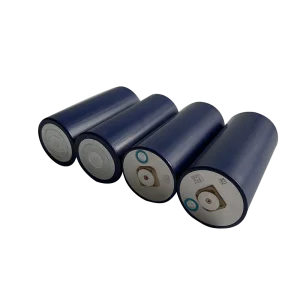


1. Executive Summary: The Structural Paradigm Shift to Custom LFP Prismatic Cells
In the rapidly evolving electrochemical energy storage landscape, Custom Lithium Iron Phosphate (LiFePO4 / LFP) Prismatic Cells have established an unquestioned dominance across utility-scale energy storage systems (BESS), industrial & commercial (C&I) microgrids, and heavy-duty electromobility (commercial vehicles, e-forklifts, and marine transport). Driven by superior intrinsic thermal stability, long cycle life (>6,000 to 10,000 deep cycles), low levelized cost of storage (LCOS), and zero cobalt or nickel dependency, LFP chemistry has shifted from a low-cost alternative to the mainstream architecture of choice for tier-1 global engineering teams.
Unlike standard cylindrical cells (such as 18650 or 21700 formats) or flexible pouch cells, the prismatic cell format offers an aluminum-hardened shell casing, optimum volumetric space utilization (up to 92% packing efficiency inside modules), simplified cell-to-pack (CTP) structural design, and superior heat dissipation channels. As a specialized custom LFP prismatic cell manufacturer based in Shenzhen, China, Shenzhen Foya Solar Technology Co., Ltd. bridge advanced electrochemical cell design with flexible manufacturing automation to fulfill bespoke OEM/ODM hardware demands.
"The transition from cell-to-module (CTM) to cell-to-pack (CTP) and cell-to-chassis (CTC) architectures requires prismatic cell geometries with custom terminal laser welding, high-capacity single-cell footprints (280Ah, 314Ah, 680Ah), and integrated burst-proof anti-explosion valves to guarantee zero-thermal-propagation integrity."
2. Prismatic vs. Cylindrical & Pouch Cell Architectures: Electrochemical Engineering Comparison
Selecting the optimal form factor for industrial battery packs is a critical decision for product managers and engineering lead directors. Below is a detailed technical matrix demonstrating why top-tier integrators choose custom LFP prismatic cells for large-capacity applications:
| Technical Dimension | LFP Prismatic Cells (Custom Factory) | Cylindrical Cells (18650 / 4680) | Pouch Cells (Soft-Pack Polymer) |
|---|---|---|---|
| Single Cell Capacity Range | 50Ah to 680Ah+ (High Capacity) | 2.5Ah to 25Ah (Low to Medium) | 10Ah to 100Ah (Medium) |
| Volumetric Packing Efficiency | High (88% - 93% CTP Efficiency) | Moderate (65% - 75% due to voids) | High (80% - 85% initially) |
| Mechanical Structural Integrity | Rigid Aluminum Enclosure & Explosion Vents | High Cylindrical Pressure Tolerance | Vulnerable to swelling & mechanical puncture |
| Thermal Management Complexity | Simplified (Flat surface liquid cooling plates) | Complex 3D inter-cell cooling channels | Requires surface tab cooling jackets |
| BMS Interconnect Reliability | Low failure points (Fewer cells in parallel) | High risk (Thousands of wire bonds) | Moderate (Welded tab stress) |
| Cycle Life Expectancy (@25°C 0.5C) | 6,000 - 12,000 Cycles | 2,000 - 4,000 Cycles | 2,500 - 4,500 Cycles |
For high-capacity static energy storage cabinets and commercial EV platforms, utilizing 3.2V 280Ah, 314Ah, or 680Ah LFP prismatic cells reduces total welded inter-cell connections by up to 90% compared to cylindrical arrays. This directly translates to lower internal impedance ($R_{int}$), diminished thermal hotspots, and vastly elevated BMS measurement accuracy for State of Charge (SoC) and State of Health (SoH) monitoring.
3. China Supply Chain Resilience & Shenzhen Manufacturing Dominance
Why sourcing custom LFP prismatic cells from a Guangdong-based manufacturer delivers unmatched cost structure, rapid engineering prototyping, and robust raw material security.
Upstream Chemical Integration
Direct supply agreements with leading Chinese cathode (Lithium Iron Phosphate powder) and anode (synthetic graphite) refiners guarantee strict chemical purity, uniform particle size distribution, and immunity to international raw material bottlenecks.
Fully Automated Coating & Stacking
Our 20,000 m² factory utilizes high-speed double-sided slurry coating, laser slitting, ultra-high precision z-fold stacking, and automated helium leak detection to eliminate human variance and achieve <5 PPM defect rates.
Economies of Scale & Rapid NPI
With 2GWh+ current output and scalable production lines, international buyers benefit from short New Product Introduction (NPI) cycles, taking custom cell dimensions from initial CAD modeling to working physical prototypes in under 45 days.
4. Complete OEM/ODM Customization Spectrum for LFP Prismatic Cells
At Shenzhen Foya Solar Technology Co., Ltd., custom manufacturing extends far beyond simple white-labeling. We collaborate with international client design teams at every level of the electrochemical and mechanical engineering lifecycle:
1. Electrochemical & C-Rate Tuning
We modify cathode tab density, electrolyte formulation, and separator porosity depending on your system's operational load profile:
- Energy Density Optimized (0.5C - 1C): Optimized for residential energy storage and daily solar peak-shaving applications requiring maximum Ah capacity per unit mass.
- Power Density Optimized (3C - 5C Continuous, 10C Pulse): Engineered with ultra-thin aluminum foil substrates for electric forklifts, AGVs, heavy machinery starter systems, and frequency regulation reserves.
2. Mechanical Case Geometry & Terminals
Customize the structural housing and external interface points of your prismatic cells:
- Aluminum Case Thickness & Coating: Custom outer dimensions, anti-corrosion blue PVC insulating sleeves, or powder-coated ceramic dielectric protection.
- Terminal Configurations: M6/M8 female threaded copper-aluminum composite terminals, dual-hole busbar interfaces, or specialized solid-tab welding studs for automated laser assembly.
3. Smart BMS Integration & Telemetry
Seamlessly integrate custom BMS architectures tailored for specific system telemetry requirements:
- Communication Protocols: Native support for CANbus 2.0B, Modbus RS485, UART, and SMBus for direct handshake with Victron, SMA, Deye, Growatt, and Sol-Ark inverters.
- Active Balancing & Thermal Sensing: Multi-point NTC temperature monitoring embedded directly alongside prismatic cell busbars with 2A to 5A active cell-balancing circuits.
4. Safety Valves & Explosion Proofing
Integrated mechanical safety features built directly into cell top caps:
- Calibrated Pressure Relief Valves: Precise actuation between 0.2 MPa to 0.6 MPa to vent gas harmlessly in severe abuse conditions without flame ignition.
- Flame-Retardant Packaging: Complete UL94-V0 compliance across all external spacers, bracket holders, and insulation layers.
5. Localized Application Scenarios Across Global Markets
Operating conditions, regulatory frameworks, and duty cycles vary dramatically across key overseas markets. Here is how Foya Solar customizes LFP prismatic cells for localized demand:
North America: Grid Storage & Heavy Duty
Tailored for high capacity (280Ah / 314Ah) containerized BESS installations requiring strict UL1973 and UL9540A thermal runaway non-propagation testing. Built to withstand extreme regional temperature swings from Canadian winters (integrated self-heating film) to Texas summers (liquid cooling plate pairing).
European Union: Sustainable C&I & EU Regs
Engineered to meet the stringent requirements of the EU Battery Regulation 2023/1542, including digital Battery Passport traceability, carbon footprint documentation, CE compliance, and IEC62619 safety standards for commercial peak-shaving and EV fleet fast-charging hubs.
APAC, LATAM & Africa: Off-Grid Microgrids
Optimized for high-temperature tropical operation (up to +60°C ambient tolerance) and frequent deep discharging (100% Depth of Discharge daily cycling). Essential for remote telecom tower power, island mini-grids, and rural solar energy storage systems.
6. Technical Roadmap & Future Outlook (2025–2030)
As a technology-driven manufacturer, Foya Solar invests heavily in next-generation electrochemical developments to ensure our OEM partners remain at the forefront of energy density and cost efficiency.
LMFP Chemistries (Manganese Doped)
By doping manganese into the standard LiFePO4 cathode crystal lattice (Lithium Manganese Iron Phosphate / LMFP), working cell voltage increases from 3.2V to 3.7V. This boosts single-cell energy density by 15-20% without sacrificing standard LFP safety characteristics.
Semi-Solid State LFP Integration
Replacing liquid electrolyte slushing with polymer/ceramic semi-solid electrolytes in prismatic formats eliminates liquid leakage risks, drastically suppresses lithium dendrite formation, and enables safe operation up to +85°C.
Next-Gen Ultra-Large Formats (680Ah+)
Moving beyond the industry-standard 280Ah cell, ultra-large 500Ah to 680Ah LFP prismatic cells enable 5MWh+ single-container utility storage designs, further reducing Balance of Plant (BOP) and installation costs.
7. Industrial Quality Control & International Compliance Guarantees
Battery safety and reliability are non-negotiable. Shenzhen Foya Solar Technology Co., Ltd. operates under an ISO9001:2015 and IATF16949 automotive-grade quality management framework. Every custom prismatic cell undergoes 100% multi-stage factory inspection before shipment:
IQC Raw Material Audit
100% purity check on slurry chemicals, separator thickness, and aluminum casing alloy consistency.
X-Ray Electrode Alignment
In-line CT X-ray scanning verifies precise cathode-anode overlap margins during stacking.
Helium Mass Spectrometry
Helium leak detection under high vacuum ensures 100% airtight hermetic sealing around terminal rivets.
Formation & Aging
High-temperature electrochemical formation followed by 14-day high-temp storage aging to isolate micro-self-discharge cells.
Final Grading & Matching
Cells are strictly sorted by capacity (ΔAh < 0.5%), internal resistance (ΔRi < 0.05mΩ), and voltage before laser coding.
Our cell products are fully certified for international transport and regional deployment with UN38.3, MSDS, DG Shipping Documentation, CE, UL1973, UL1642, and IEC62619 certification packages available to streamline your customs clearance and product listing processes.
Featured Custom Battery Packs & Cells (Bottom Solutions)
Browse additional custom capacity options, high-voltage commercial cabinets, and portable deep-cycle lithium packs for specialized applications.








8. Frequently Asked Questions (Procurement & Engineering FAQ)
Key technical considerations and commercial terms for B2B buyers sourcing custom LFP prismatic cells directly from our factory.
What is the Minimum Order Quantity (MOQ) for custom LFP prismatic cell manufacturing?
For standard capacity Grade A cells (such as 3.2V 50Ah, 100Ah, 230Ah, 280Ah, or 314Ah), our MOQ starts as low as 1 pallet (approx. 32–64 cells) for sample evaluation and prototyping. For bespoke cell geometries requiring custom aluminum casing molds, custom tab offsets, or modified slurry formulations, the NPI MOQ is typically 10,000 units or 1 MWh total capacity equivalent.
How does Foya Solar ensure cell-to-cell consistency in multi-cell battery packs?
Cell sorting and matching is the foundational pillar of long cycle life in prismatic arrays. Before packing, our automated grading system sorts cells according to three strict tolerances: Capacity difference ($\Delta Ah \le 0.5\%$), Internal Resistance difference ($\Delta R_{int} \le 0.05\,\text{m}\Omega$), and Open Circuit Voltage difference ($\Delta OCV \le 2\,\text{mV}$). This prevents premature cell degradation and balancing overload in customer ESS configurations.
Can your factory customize the BMS communication protocol for specific solar inverters?
Yes. Our in-house firmware software engineering team can flash pre-configured CANbus or Modbus RS485 communication protocols onto your battery management systems. We maintain native protocol compatibility with major global inverter brands including Victron Energy, SMA, Deye, Sol-Ark, Growatt, GoodWe, Sofar, and Luxpower.
What are the environmental storage and thermal operational limits of your LFP prismatic cells?
Our standard LFP prismatic cells operate reliably across broad thermal ranges: Continuous Discharge from -20°C to +60°C; Continuous Charge from 0°C to +55°C. For arctic or sub-zero applications below -20°C, we supply custom integrated silicone heating jackets or cold-temperature electrolyte formulations capable of low-temp charge acceptance.
What certifications and test reports are provided with custom B2B orders?
Every shipment comes complete with UN38.3 test summaries, MSDS, Safe Transport Documentation (Air/Sea Dangerous Goods clearance), 100% Factory OQC Inspection Sheets, and CE certificates. Furthermore, full UL1973, UL9540A, and IEC62619 compliance documentation is available for regional regulatory approval in North America and Europe.
How do sodium-ion battery packs compare with LFP prismatic cells for specialized applications?
Sodium-ion (Na-ion) battery chemistry avoids lithium entirely, providing cost advantages and superior sub-zero performance down to -40°C. However, standard LFP prismatic cells maintain higher volumetric energy density (~160Wh/kg vs. ~120Wh/kg for Na-ion) and longer cycle life. Our engineers can advise you on whether LFP or Sodium-ion best suits your localized load and price profile.