
Featured Energy Storage Products & Modular Components
Explore our industrial-grade cells, sodium-ion innovations, chargers, and high-voltage energy storage systems designed for residential and commercial deployments.






The Paradigm Shift in Household Energy Storage (BESS) Architectural Engineering
A Technical Whitepaper on Chemistry Selection, BMS Architecture, and Ecosystem Integration for Global B2B Procurement Teams
Evolution of Residential Battery Chemistries: LFP vs. Sodium-Ion
The global household energy storage landscape is experiencing a rapid technological transition. While legacy lead-acid systems have been systematically phased out due to low volumetric energy density and toxic chemical overhead, Lithium Iron Phosphate (LiFePO4 / LFP) has established itself as the baseline standard for residential safety and thermal stability.
LFP chemistry eliminates thermal runaway risks inherent in high-nickel NCM formulations by providing a robust crystal structure featuring strong phosphorus-oxygen covalent bonds. Operating safely up to 500°C without decomposition, modern Grade A LFP prismatic cells deliver over 6,000 to 8,000 deep-discharge cycles at 80% Depth of Discharge (DoD).
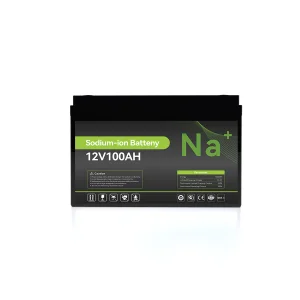
Simultaneously, Sodium-Ion (Na-Ion) battery technology has emerged as a disruptive secondary chemistry. Operating without reliance on lithium, cobalt, or nickel cathode materials, Na-Ion battery packs provide superior cold-temperature discharge rates (retaining >85% capacity at -20°C) and robust resistance to over-discharge, creating an essential option for cold-climate household installations and budget-optimized energy resilience projects.
Architectural Shifts: From Low-Voltage Parallel to High-Voltage Stackables
Historical residential solar battery storage relied heavily on low-voltage (48V/51.2V) parallel battery configurations paired with low-voltage hybrid inverters. While 51.2V architectures remain highly effective for standard home retrofits (e.g., 5kWh–15kWh capacities), large-scale residential and light commercial loads require a move toward High-Voltage (HV) Stackable BESS Systems.
By arranging battery modules in series to achieve operating voltages between 192V and 600V DC, high-voltage battery systems drastically cut current draw. Lower operating current minimizes I²R thermal resistive losses across copper busbars, slashes cable gauge requirements, and boosts overall round-trip efficiency (RTE) above 95.5%.
Modern OEM/ODM engineering demands modular, stackable enclosures featuring wireless blind-mating connectors, integrated automated cell balancing, and rapid snap-on mounting. This design cuts field installation labor costs by up to 60% while empowering homeowners to scale capacity from 10kWh to 40kWh without rewiring electrical mains.
The Unrivaled OEM/ODM Advantage of China’s Energy Storage Infrastructure
How Tier-1 Vertical Integration, Raw Material Security, and Advanced Automated Assembly Empower International Buyers
Grade A Cell Sourcing & Sorter Sorting
As a leading Shenzhen-headquartered manufacturer, our ecosystem leverages direct supply contracts with primary lithium cell foundries. Every prismatic cell (3.2V 50Ah, 100Ah, 280Ah, 314Ah, up to 680Ah) undergoes rigorous static and dynamic grading.
Before module assembly, automated sorters test and match cells to exact tolerance bands: voltage variance ≤ 2mV, internal AC resistance (IR) delta ≤ 0.05 mΩ, and capacity matching within 0.5%. This eliminates early capacity fading caused by mismatched cell strings.
Custom BMS Protocol Engineering
The core intelligence of a custom household battery lies within its Battery Management System (BMS). Our in-house firmware development team builds proprietary hardware and software platforms that support auto-detecting inverter communications.
We provide full multi-protocol firmware libraries supporting dual CANbus 2.0B, RS485, RS232, and Modbus RTU standards. Our systems offer native, plug-and-play compatibility with world-leading hybrid inverters, including Victron Energy, Deye, Growatt, Sol-Ark, GoodWe, Megarevo, Luxpower, and SMA.
Rigorous Structural & Safety Validation
China's advanced manufacturing infrastructure permits end-to-end quality control under one roof. Mechanical enclosures are constructed from cold-rolled steel or anodized aluminum with IP65 weatherproofing, anti-corrosion coatings, and integrated aerosol fire suppression safety units.
Every completed battery system undergoes 100% end-of-line (EOL) automated functional testing, thermal imaging evaluation under max continuous load, and high-potential (Hi-Pot) insulation validation before export packaging.
Enterprise OEM/ODM Customization Matrix for Global Brands & Distributors
Tailored Technical Engineering Solutions Designed to Meet Market-Specific Import Regulations and Brand Requirements
| Customization Dimension | Standard OEM Offering | Advanced ODM / Enterprise Custom Options | Primary Target Benefit |
|---|---|---|---|
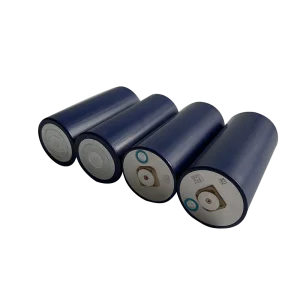
| Battery Cell Chemistry | Grade A Prismatic LiFePO4 (3.2V 100Ah / 280Ah) | Sodium-Ion (Na-Ion), High-Density 314Ah LFP, Cylindrical 60150 | Optimized energy density, cost profile, and sub-zero temperature operational limits. |
| BMS Architecture | 16S 51.2V 100A/200A Smart BMS with Passive Balancing | High-Voltage BMS (up to 800V DC), Active Balancing (2A–5A rate), Dual Microprocessors | Extended overall pack lifespan, rapid balancing speed, and reduced capacity drift. |
| Communication Interfaces | CANbus, RS485, Bluetooth Mobile App | Wi-Fi/4G IoT Gateway, Cloud Telemetry, MQTT Data Pipelines, SNTP Synchronization | Real-time remote diagnostics, OTA firmware upgrades, and fleet monitoring for installers. |
| Mechanical Enclosure | Standard Wall-Mount / 19-inch Rack Cabinet (IP20/IP54) | Stackable Slimline Modular, IP65 Outdoor Rated, Integrated Heating Pads / Liquid Cooling | Enhanced aesthetics, exterior floor/wall mounting flexibility, and extreme weather resilience. |
| Thermal Management | Natural Convection & Variable Speed Aluminum Heatsinks | PTC Heating Films (-30°C pre-heating), Liquid Heating/Cooling Plates | Prevents lithium plating during freeze charging; prolongs cell life in high heat zones. |
White-Label Branding & Regional Packaging
For international energy equipment distributors and solar brand managers, maintaining brand equity is paramount. Our factory provides turn-key white-label OEM manufacturing services.
This includes custom silk-screened metal chassis, laser-etched branding plates, customized LCD display boot animations, localized User Manuals in multi-languages (English, German, Spanish, French, Italian), and heavy-duty UN38.3 certified export carton and wooden crate packaging.
Scalable Modular Growth for Residential Microgrids
Household power consumption requirements fluctuate based on electric vehicle (EV) charging demands, heat pump adoption, and home electrification upgrades. Our customized battery systems are designed with native scalability in mind.
Utilizing master-slave BMS architecture, up to 15 to 32 battery packs can be connected in parallel without requiring external control boxes. This enables frictionless system expansion from an entry-level 5.12kWh single module up to 163.84kWh for estate-scale off-grid installations.
Localized Application Scenarios & Real-World Operating Contexts
Engineered to Excel Across Complex Grid Conditions, Dynamic Pricing Markets, and Harsh Climate Environments
Time-of-Use (TOU) Peak Shaving & Dynamic Rate Arbitrage
In regions such as Western Europe, California (NEM 3.0), and Australia, electrical utilities impose aggressive Time-of-Use tariff rates. Our smart battery storage systems integrate seamlessly with dynamic spot-market pricing APIs via intelligent BMS control.
The storage system automatically charges during low-cost off-peak solar hours or overnight grid periods, then discharges stored energy during expensive peak hours, reducing electricity utility bills by up to 80% while shielding homeowners from grid inflation.
Off-Grid Autonomy & Emergency Backup (UPS Mode)
For regions with unstable electrical grid infrastructure, extreme weather blackouts, or remote rural homesteads, our battery systems deliver true off-grid independence. Featuring an ultra-fast hardware transfer time of < 10 milliseconds, the system acts as an uninterruptible power supply (UPS).
Sensitive electronics, medical devices, refrigeration, and home heating systems operate uninterrupted during sudden utility failures, backed by high surge current capability (2x rated continuous output for 10 seconds) to start heavy inductive motor loads.
Extreme Low-Temperature Operation (Sub-Zero Environments)
Standard lithium batteries cannot safely accept charging currents below 0°C due to metallic lithium dendrite formation, which risks internal short circuits. Our custom cold-climate household systems incorporate dual thermal protection strategies.
By pairing internal silicon PTC self-heating membranes powered by incoming PV energy with optional Sodium-Ion cell formulations, our cold-region energy storage units safely charge and discharge in Nordic, North American, and Alpine winter conditions down to -30°C.
Global Regulatory Compliance, Standards & Local Support Framework
Ensuring Streamlined Customs Clearance, Grid Interconnection Acceptance, and Long-Term Field Reliability
Essential International Safety & Transport Certifications
Navigating global regulatory landscapes requires full compliance with strict safety testing directives. Our manufacturing lines produce battery systems that strictly adhere to international safety mandates:
- UL 1973 & UL 9540: Essential safety standards for stationary energy storage batteries and overall system safety in North America.
- IEC 62619 & CE-EMC: Mandatory European standards governing safe operation, thermal propagation resistance, and electromagnetic compatibility.
- UN 38.3 & MSDS: Comprehensive transport safety testing validation ensuring safe global air and sea freight logistics operations.
- Grid Code Interconnection: Pre-configured compliance for VDE-AR-N 4105 (Germany), IEEE 1547 (USA), and G99 (UK) grid coupling requirements.
Localization & Field Support Logistics
Successful international B2B partnerships extend beyond factory dispatch. We provide global B2B clients with comprehensive post-procurement technical support packages:
- Field Service Replacement Kits: Modular spare parts packages (BMS boards, fuses, wiring looms, indicator modules) shipped with main container orders for quick local servicing.
- Engineer Training & Documentation: Complete technical training suites, schematic diagrams, and video walkthroughs provided for localized installer teams.
- 24-Hour Technical Escalation: Direct access to senior electrochemical and engineering specialists for system design advice and inverter debugging.
- Warranty Protection Options: Flexible 5-year, 10-year, or 12-year standard linear performance warranties backed by guaranteed cycle metrics.
Industrial, Mobility & Deep-Cycle Lithium Packs
Complete your fleet with specialized LiFePO4 packs engineered for golf carts, industrial forklifts, deep-cycle applications, and high-density cells.








Technical FAQ: B2B Sourcing & Engineering Enquiries
In-Depth Technical Solutions to Common OEM/ODM Procurement, Customization, and Regulatory Questions
How do you ensure cell quality consistency across large-volume OEM production runs?
Our manufacturing plant enforces a strict zero-compromise cell management policy. We utilize exclusively Grade A prismatic cells sourced directly from primary foundries. Every cell lot undergoes automated 4-point sorting testing: voltage matching within ±2mV, internal AC resistance (IR) matching within ±0.05mΩ, and automated 100% capacity grading cycle checks.
During pack construction, high-precision laser welding is utilized for cell busbars to eliminate mechanical vibration issues and contact resistance variances, ensuring long-term string stability over thousands of cycles.
Can your custom BMS firmware seamlessly communicate with third-party hybrid inverters?
Yes. Our engineering division maintains a dedicated protocol emulation lab. Our custom smart BMS platforms come pre-loaded with multi-protocol firmware auto-detection algorithms. By simply selecting the inverter protocol via the integrated touchscreen LCD or mobile Bluetooth application, our batteries instantly establish dual CANbus or RS485 communication with leading inverter brands including Victron Energy, Deye, Growatt, Sol-Ark, GoodWe, Megarevo, Luxpower, and SMA.
For proprietary commercial projects, our engineers can program custom Modbus register mappings based on your specific communication specification.
What are the operational advantages of Sodium-Ion (Na-Ion) over traditional LiFePO4 in residential systems?
Sodium-Ion batteries offer two key engineering advantages for targeted deployment scenarios: extreme cold-temperature operation and cathode raw material independence. While LiFePO4 charging must be restricted below 0°C without active heating, Sodium-Ion chemistry retains exceptional charge/discharge efficiency down to -20°C (and up to +60°C) without suffering lithium plating hazards.
Additionally, Na-Ion cells can be safely discharged down to 0 Volts for transport without permanent cell damage, drastically lowering international shipping risk profiles.
What Minimum Order Quantities (MOQ) and lead times apply for custom OEM branding?
For standard custom branding (white-label metal casing, custom laser-etched logos, branded packaging, and custom user manuals), our typical starting MOQ is 50 units for 51.2V residential wall-mounted or rack battery systems. For complete ODM projects involving bespoke sheet-metal tooling, custom BMS PCB layouts, or liquid-cooling integration, sample prototyping lead times are typically 3 to 4 weeks, with full production runs delivering within 30 days after sample approval.
How does the system handle high thermal load or potential thermal runaway propagation?
Safety is engineered into the system at every structural layer. At the cell level, prismatic LiFePO4 cells feature built-in explosion-proof safety pressure valves. At the module level, aerogel insulation pads and phase-change thermal barriers are inserted between adjacent cells to prevent thermal cascading.
At the system cabinet level, our outdoor enclosures feature built-in automated aerosol fire suppression units that trigger instantly upon detecting abnormal smoke or thermal spikes, completely isolating the fault before external damage can occur.
What certification documentation is provided to support regional import compliance?
Every shipment is accompanied by a full compliance documentation package necessary for smooth customs clearance and grid coupling acceptance. This includes UN38.3 transport safety reports, MSDS material safety data sheets, hazardous goods sea freight certificates (DG Packaging Certificates), IEC 62619 safety test reports, CE-EMC compliance documentation, and UL 1973 / UL 9540 test summaries where applicable.