
Featured Commercial LiFePO4 & ESS Solutions
Explore our core lineup of high-capacity lithium iron phosphate cells, deep-cycle industrial packs, and intelligent containerized systems designed for demanding global deployments.








Global Commercial & Industrial Landscape of Fosfato de Hierro y Litio
The global transition toward sustainable power networks and high-density motive platforms has placed fosfato de hierro y litio (lithium iron phosphate, or $LiFePO_4$) at the epicenter of energy storage chemistry. Known for its intrinsic thermal security, cobalt-free formulation, and exceptional operational lifecycle, LiFePO4 technology has transcended niche markets to become the dominant cathode choice for utility-scale Energy Storage Systems (ESS), commercial and industrial (C&I) power units, heavy-duty motive gear, and residential microgrids.
As international supply chains shift toward localized grid independence and decarbonization, B2B buyers—ranging from system integrators to original equipment manufacturers (OEMs)—require specialized manufacturing partners capable of delivering custom-engineered cell topologies, modular pack structures, and sophisticated Battery Management System (BMS) communications. A dedicated factory and supplier does not merely deliver commodities; we supply fully certified, application-matched storage infrastructure engineered for 15-year operational horizons.
Macroeconomic Trends Shaping the LiFePO4 Supply Chain
Demands across North America, Europe, Latin America, and the Asia-Pacific region are driven by three fundamental technological pivots: regulatory mandates for clean energy integration, volatile utility pricing models, and the rapid electrification of commercial equipment fleets.
Grid Stabilization & Arbitrage
Global power grids are contending with intermittent renewable energy inputs from solar PV and wind assets. High-capacity fosfato de hierro y litio installations allow utility operators and enterprises to perform peak shaving, frequency regulation, and load-shifting arbitrage, safeguarding facility power quality while capitalizing on variable electricity tariff structures.
Motive Fleet Electrification
Material handling equipment—including industrial forklifts, Automated Guided Vehicles (AGVs), airport ground support equipment, and golf carts—is rapidly abandoning legacy lead-acid units. Customized 51.2V LiFePO4 battery architectures offer opportunity fast-charging (1C rate), zero maintenance emissions, and three times the operational cycle life.
Supply Chain Diversification
Tier-1 procurement officers prioritize supplier stability, ethical raw material sourcing, and localized design flexibility. By standardizing manufacturing protocols across Prismatic Grade-A cell formats (ranging from 72Ah up to 680Ah), OEM factories empower B2B clients to scale energy capacity without re-engineering structural enclosures.
Localized Application Scenarios & Customization Vectors
No single off-the-shelf battery topology addresses every environmental or operational duty cycle. As a custom manufacturer, our engineering team optimizes structural packaging, discharge capabilities, and internal heating/cooling elements to align with specific regional demands.
| Application Sector | Nominal Voltage / Formats | Key Performance Requirements | Custom OEM Integration Vectors |
|---|---|---|---|
| Commercial & Industrial ESS | 51.2V Modular up to 1000V High Voltage Containers | Long calendar life (>15 years), active balancing, high energy density, liquid cooling capabilities. | Customized container sizing (215kWh–372kWh), HVAC integration, Fire Suppression (Aerosol/Novec), RS485/CAN/Ethernet. |
| Industrial Motive (Forklifts/AGVs) | 25.6V, 48V, 51.2V, 80V (105Ah to 400Ah) | High continuous pulse discharge (3C–5C), opportunity charging resilience, heavy shock/vibration tolerance. | Heavy-duty steel casing, customized counterweights, CANbus communication with vehicle controllers, integrated heaters. |
| Marine & Nautical Power | 12.8V, 25.6V, 48V, 51.2V (100Ah to 300Ah) | IP67/IP68 waterproof seal, saltwater corrosion resistance, low self-discharge rate during winter storage. | Anti-vibration cell anchoring, marine grade stainless hardware, dual-BMS redundancy, Bluetooth/NMEA2000 telemetry. |
| Residential Solar & Telecom | 48V / 51.2V Wall-mounted or Rack-mounted (5KWh–15KWh) | Aesthetic compact design, zero internal noise, multi-inverter protocol compatibility, plug-and-play stacking. | Pre-programmed inverter communications (Victron, SMA, Growatt, Deye, Solis), LED status displays, modular busbars. |
| Next-Gen Cold Climate / Hybrid | 12V–48V Sodium-Ion (Na-Ion) & LFP Hybrid Packs | Sub-zero temperature operational performance (-40°C to -20°C discharge), reduced raw material volatility. | Dual-chemistry hybrid management, custom internal thermal wrap ribbons, low-voltage cutoff overrides. |
Advanced Engineering Roadmap: Materials, Topology & Smart BMS
Achieving maximum volumetric efficiency and operational security in fosfato de hierro y litio systems requires holistic controls from single cell electrochemistry to macro-system thermodynamics.
1. Nanoscale Cathode Synthetic Optimization
Standard LiFePO4 suffers from intrinsically low electrical conductivity ($10^{-9}\text{ S/cm}$) and lithium-ion diffusion rates. Our factory utilizes nano-scale carbon coating ($C\text{-}LiFePO_4$) combined with subtle manganese or aluminum lattice doping (LMFP formats). This increases electronic conductivity by four orders of magnitude, supporting rapid charging cycles without inducing metallic lithium plating at low temperatures.
2. Structural Cell-to-Pack (CTP) Topology
By eliminating intermediate module housings, modern CTP design increases volumetric space utilization from 40% to over 60%. Combined with ultra-high capacity prismatic aluminum cells (such as 314Ah, 324Ah, and 680Ah cells), structural mass is reduced by 18%, allowing higher kilowatt-hour density per container footprint.
3. Intelligent Active-Balancing BMS Architecture
Cell voltage divergence over thousands of charge cycles degrades usable pack capacity. Our proprietary Smart BMS integrates bi-directional inductive active balancing up to 5A per string. Energy is dynamically transferred from higher-voltage cells to lower-voltage cells rather than dissipated as waste heat, extending usable capacity retention by up to 12% over 10 years.
Enterprise Macro Solutions: Photovoltaic & Containerized ESS Integration
For commercial facilities, agricultural complexes, remote mining operations, and microgrids, energy storage must interface with diverse power sources—including photovoltaic (PV) arrays, wind turbines, grid connections, and diesel generators.
Liquid-Cooled vs. Air-Cooled Systems
For high C-rate applications and extreme ambient climates (exceeding 45°C), our liquid-cooled energy storage cabinets (100kW / 215kWh and 372kWh formats) utilize coolant plates in direct contact with cell faces. This maintains cell temperature differentials under 2.5°C across the system, doubling thermal lifespan compared to traditional air-convection designs.
Hybrid PV-Diesel Off-Grid Solutions
In locations with unreliable grid infrastructure, our custom 50kW / 96kWh cabinets dynamically control diesel generator start/stop sequences via dry contacts. The fosfato de hierro y litio storage bank absorbs transient solar spikes and delivers instant power, reducing generator fuel consumption by up to 60%.
Additional OEM/ODM Battery & Charger Portfolio
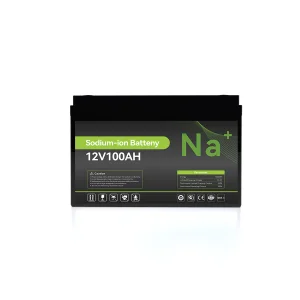
Browse our extended specialized offerings, including high-capacity sodium-ion alternative chemistry packs, marine batteries, heavy-duty golf cart packs, and matched intelligent chargers.







Frequently Asked Questions (FAQ) for Engineering & Procurement
Key insights and technical specifications for sourcing custom fosfato de hierro y litio solutions direct from our manufacturing facility.