
Featured Industrial Battery Packs & Custom Cells
High-capacity deep-cycle battery components engineered for golf carts, commercial utility vehicles, and energy storage.






Executive Technical Report: The Engineering Paradigm Shift in Golf Cart Electrification
An in-depth analysis of high-rate Lithium Iron Phosphate (LiFePO4) cell architecture, chemical stability, and custom pack design for modern low-speed electric vehicles (LSVs).
The global low-speed vehicle (LSV) and golf cart industry is undergoing an unprecedented technological shift. For decades, golf courses, gated communities, commercial resorts, and industrial facilities relied heavily on heavy 6V or 8V flooded lead-acid battery banks configured in 36V or 48V series strings. However, lead-acid technology exhibits inherent mechanical and electrochemical drawbacks: severe voltage sag under high discharge loads, degradation from acid stratification, thermal vulnerability, and high downtime caused by mandatory distilled water replenishment.
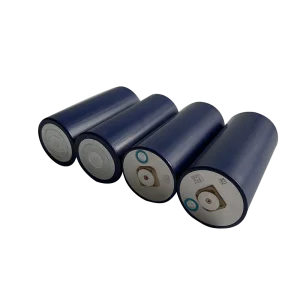
As a leading custom customizable golf cart battery cells manufacturer & factory based in Shenzhen, China, Foya Solar delivers high-energy-density, high-discharge-rate 3.2V LiFePO4 cells specifically designed to handle the rigorous dynamic power requirements of modern golf carts, commercial utility vehicles, and heavy-duty cargo shuttles. By tailoring cell physical formats, internal resistance (IR) matching, terminal welding configurations, and thermal management layers, our factory empowers B2B enterprise procurement directors and OEM brand managers to manufacture customized lithium power packs that fit precise physical battery trays while offering superior performance graphics.
Electrochemical Superiority: Why 3.2V LiFePO4 Prismatic Cells Outperform Alternative Chemistries
Choosing the ideal cell chemistry is the foundational step in engineering custom battery solutions. While Nickel Manganese Cobalt (NMC) offer slightly higher initial volumetric energy density, its lower thermal decomposition point (~210°C) introduces catastrophic thermal runaway risks in enclosed golf cart battery compartments. Conversely, Lithium Iron Phosphate (LiFePO4) exhibits structural chemical integrity up to 500°C due to its robust olivine crystal lattice with strong P-O covalent bonds.
| Electrochemical Metric | 3.2V LiFePO4 Prismatic (Foya Solar) | Conventional Lead-Acid (AGM/Flooded) | NMC Lithium-Ion (18650/21700) |
|---|---|---|---|
| Nominal Cell Voltage | 3.2 V | 2.0 V per cell | 3.6 V – 3.7 V |
| Cycle Life (80% Depth of Discharge) | 4,000 – 6,000 Cycles | 300 – 500 Cycles | 1,000 – 1,500 Cycles |
| Thermal Runaway Threshold | > 480°C (Extremely Safe) | Thermal gassing under overcharge | ~ 210°C (High Risk) |
| Continuous Discharge Capability | 3C Continuous / 5C Peak Pulse | 0.5C Continuous (High Sag) | 1C – 2C Continuous |
| Usable Capacity under High Load | 95% – 98% nominal capacity | 50% – 60% (Peukert Effect Loss) | 85% – 90% nominal capacity |
| Maintenance Requirement | Zero Maintenance | Regular watering / terminal cleaning | Zero Maintenance |
For custom golf cart applications, energy delivery under continuous uphill acceleration or torque-heavy off-road terrain demands low cell impedance. Foya Solar manufactures customizable 3.2V prismatic cells ranging from 15Ah to 680Ah. Utilizing automated laser welding, high-purity aluminum busbars, and precision electrolyte filling, our cells eliminate cell-to-cell thermal variance during high-discharge cycles.
China Manufacturing Advantage: End-to-End Customization & Advanced Factory Automation
Leveraging Shenzhen’s tech ecosystem to provide B2B clients with cost-efficient, scalable, and ultra-reliable customizable golf cart battery cells.
Global Industry Trends: Electrification Beyond 48V Systems
Exploring the technology trajectories shaping golf cart, resort vehicle, and commercial utility fleet power architectures worldwide.
Customization Capabilities: Designing Your Golf Cart Power Architecture
OEM golf cart manufacturers and aftermarket fleet refurbishers require versatile customization options to adapt to various frame sizes, payload weights, and speed profiles. Below are the engineering parameters customizable directly at our factory:
- Volumetric Form Factor: Modular stackable blocks, metal drop-in boxes matching standard GC2/GC8 battery footprint dimensions, or custom under-seat aluminum chassis.
- Continuous & Peak Discharge Rates: Custom cell foil thickness and tab cross-sections to support continuous currents of 100A to 300A, with pulse bursts up to 600A for lifted carts and steep inclines.
- Thermal Protection & Heating Pads: Integrated silicone heating jackets connected to the BMS enable automated cell heating during sub-zero charging in Northern European or North American winter climates.
- Communication Protocols: Pre-programmed CAN-bus (CANopen/J1939), RS485, or UART communication interfaces tailored to integrate with digital dashboard speedometers and controller displays.
Macro Industry Solutions & Enterprise TCO Framework
Financial breakdown and strategic framework for enterprise buyers, distributors, and golf course fleet directors.
Fleet Procurement Compliance & Certification Requirements
Exporting high-capacity lithium battery cells to Europe, North America, Australia, and East Asia mandates strict compliance with international safety, transport, and environmental regulations. Foya Solar’s engineering and quality assurance processes comply with global enterprise standards:
- UN38.3 & MSDS: Comprehensive transport safety testing including altitude simulation, thermal shock, vibration, impact, external short circuit, and forced discharge.
- UL 1973 & UL 2271: Rigorous safety standards covering batteries used in Light Electric Vehicles (LEV) and stationary storage systems.
- CE, RoHS, & IEC 62619: Mandatory industrial safety compliance for European commercial distribution.
Localized Application Scenarios
Frequently Asked Questions (Q&A) for B2B Sourcing
Technical and logistical insights answered directly by Foya Solar's senior engineering team.
Why should we choose customizable 3.2V prismatic cells instead of pre-assembled standard packs?
How does Foya Solar guarantee cell capacity and voltage matching across large orders?
Can your custom golf cart battery packs drop directly into existing lead-acid battery trays?
What is the typical production lead time for OEM custom cell and pack projects?
How does your BMS protect golf cart batteries during high-torque acceleration or steep hill climbs?
Complete Custom Cell & Pack Manufacturing Portfolio
Explore our full line of Grade A LiFePO4 cells, high-voltage battery modules, and residential/commercial energy storage systems.








Accelerate Your Golf Cart Electrification Projects
Partner directly with Shenzhen Foya Solar Technology Co., Ltd. for factory-direct Grade A LiFePO4 cells, engineering consultation, custom BMS designs, and OEM bulk supply contracts.
Request Custom Engineering Quotation