
Featured Lithium & Sodium Cells & System Modules
Select from our standard industrial cell grades and pre-engineered modules, available for direct custom packaging, OEM integration, and bulk distribution.


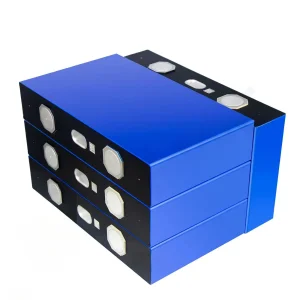





Executive Summary: The Strategic Evolution of 12V 30Ah Lithium Power Solutions
In modern industrial engineering, the 12V 30Ah (384Wh nominal energy) lithium battery pack represents a critical sweet spot in power-to-weight optimization. Serving as the primary energy storage module for medical carts, marine trolling motors, portable solar generators, telecommunications backup, and robotics (AGVs/AMRs), this capacity threshold demands strict cell consistency, high thermal tolerance, and sophisticated Battery Management System (BMS) integration.
As global procurement teams systematically transition away from legacy Sealed Lead-Acid (SLA) and Absorbed Glass Mat (AGM) chemistry, navigating the manufacturing landscape for custom batterie 12v 30ah lithium manufacturers & factories requires a rigorous technical evaluation. Sourcing managers must evaluate cell geometry (prismatic vs. cylindrical 32700 vs. pouch), internal resistance (IR) matching tolerances, structural ingress protection (IP65–IP67), and compliance with global transport safety standards.
Anatomy & Technical Architecture of Custom 12V 30Ah Packs
Customizing a 12V 30Ah lithium battery requires multi-disciplinary engineering covering chemical formulation, electrical routing, thermal management, and firmware protocol design.
Chemistry Selection: LiFePO4 vs. NMC
LiFePO4 (12.8V Nominal): Utilizes a 4S (4 series) configuration. Offers extreme chemical stability, zero thermal runaway under puncture tests, and 3,500 to 6,000 cycles. Ideal for deep-cycle solar, marine, and stationary applications.
NMC (11.1V / 14.8V Nominal): Configured as 3S or 4S. Delivers higher gravimetric energy density (Wh/kg) for weight-critical portable equipment, handheld medical tools, and aerospace robotics.
Smart BMS Firmware & Balancing
Custom 30Ah packs incorporate solid-state PCB/BMS units designed with low inner resistance MOSFETs. Advanced BMS functionality includes:
- Active balancing algorithms (> 1A balancing current) to maximize usable capacity.
- Over-charge, over-discharge, over-current, and short-circuit hardware protection.
- NTC thermistor multi-point temperature sensing (charging: 0°C to 45°C, discharging: -20°C to 65°C).
Mechanical Design & Ingress Protection
Industrial packaging demands vibration mitigation for marine and off-road environments. Tier-1 factories engineer custom injection-molded ABS+PC flame-retardant (UL94-V0) cases or laser-welded aluminum alloy enclosures.
Silicone gaskets and ultrasonic welding achieve IP67 ratings, ensuring complete dust protection and water immersion resistance up to 1 meter.
Technical Specification Comparison: 12V 30Ah Battery Configurations
Engineering matrix comparing cell assembly strategies for custom OEM production lines.
| Engineering Metric | LiFePO4 (4S Prismatic / 32700) | LiNiMnCoO2 (NMC 3S / 18650) | Sodium-Ion (4S / Na-ion) |
|---|---|---|---|
| Nominal Voltage | 12.8 V | 11.1 V | 12.0 V |
| Working Voltage Range | 10.0 V – 14.6 V | 9.0 V – 12.6 V | 8.0 V – 16.0 V |
| Energy Density (Wh/kg) | 130 – 160 Wh/kg | 200 – 240 Wh/kg | 100 – 130 Wh/kg |
| Cycle Life (100% DoD) | 3,500 – 6,000 Cycles | 1,000 – 2,000 Cycles | 3,000 – 4,500 Cycles |
| Operating Temp (Charge) | 0°C to 55°C | 0°C to 45°C | -20°C to 55°C |
| Thermal Runaway Temp | 270°C (Extremely Safe) | 210°C (Requires Advanced Monitoring) | 300°C+ (Ultra Safe) |
| Primary Application | Solar, Marine, RV, Medical Cart | Drone, Portable Medical, Robotics | Cold Storage, Low-Cost Backups |
Custom 12V 30Ah Lithium Deployment Across Global Sectors
How specialized custom factories tailor 12V 30Ah battery modules to meet sector-specific electrical and environmental requirements.
Off-Grid Solar & Telecom Infrastructure
In remote solar monitoring stations, IoT gateways, and telecom street cabinets, 12V 30Ah LiFePO4 batteries replace maintenance-heavy gel batteries. Integrated RS485 or CANbus telemetry allows micro-grid controllers to continuously track State of Charge (SoC), State of Health (SoH), and individual cell voltages.
Medical Workstations & Portable Devices
Hospitals require continuous, uninterrupted power for mobile computer carts and ventilator units. Custom 12V 30Ah packs are designed with hot-swappable mechanical interfaces, SMBus protocol integration for precise minute-by-minute battery life indicators, and IEC 62133 medical-grade certification.
Marine, Kayak & Trolling Motor Operations
Marine environments present salt spray and constant shock. Custom manufacturers employ potting compound insulation, stainless steel terminal threads (M6/M8), and IP68 waterproof housings to protect the internal 30Ah cell array during sustained high-amp draw from electric trolling motors.
Automated Guided Vehicles (AGVs) & Robotics
Logistics warehouses utilize 12V and 24V (2x 12V 30Ah modular series connection) battery systems for light AGVs and autonomous mobile robots. High C-rate discharge capability (up to 3C continuous, 5C pulse) ensures instant torque during heavy load acceleration.
Technology Roadmap & Future Outlook (2025–2030)
Key technological shifts changing the manufacturing landscape for 12V custom lithium platforms over the next five years.
Smart Cloud-Connected BMS
Integration of Bluetooth 5.0 and Narrowband IoT (NB-IoT) micro-chips directly onto the 12V 30Ah BMS board for cloud diagnostics and OTA firmware updates.
Commercial Sodium-Ion 12V Packs
Mass commercialization of 12V Sodium-ion 30Ah replacements, slashing raw material costs while offering sub-zero (-40°C) operation without internal heating elements.
Semi-Solid State Electrolytes
Transition to solid polymer and ceramic hybrid electrolytes, increasing 12V 30Ah pack volumetric energy density by 35% while eliminating liquid electrolyte leakage risk.
Closed-Loop Sustainable Recycling
Mandatory Digital Battery Passports (EU regulation compliance) embedded in custom factory microcontrollers tracking carbon footprint from raw lithium extraction to end-of-life recycling.
Global Sourcing, International Certification & Factory QA
Importing industrial lithium battery packs requires strict adherence to international safety standards, hazardous materials transport logistics, and quality audit processes.
UN 38.3 & MSDS Transport Certification
Mandatory testing protocols verifying pack stability under altitude simulation, thermal shock, vibration, external short circuit, impact, and forced discharge for Class 9 Dangerous Goods shipping.
UL 1973, UL 2580 & IEC 62133 Standards
Verification of safety compliance for batteries used in stationary energy storage, light electric vehicle traction, and portable industrial devices across North America and Europe.
End-to-End Factory Inspection & Cell Matching
Tier-1 factories enforce a strict 100% cell sorting process: capacity grouping within ±0.5%, voltage sorting within ±2mV, and internal resistance matching within ±0.5 mΩ prior to laser nickel welding.
B2B Sourcing Checklist for Battery Procurement
When vetting custom 12V 30Ah lithium battery factories, request the following audit deliverables:
- Grade-A Cell Manufacturer Batch Verification (e.g., EVE, CATL, BYD or proprietary Grade-A line).
- BMS Schematic & MOSFET Thermal Dissipation Calculations.
- Vibration & Drop Test Certificate (1.2m drop test compliance).
- Sample Lead Time (Standard: 7–14 Days; Mass Production: 21–30 Days).
- Warranty terms (Look for minimum 3–5 year replacement coverage).
Frequently Asked Questions for B2B Sourcing Managers
In-depth answers addressing design, engineering, safety, and supply chain logistics for custom 12V 30Ah lithium battery projects.
Explore Additional Industrial Cell Grades & Battery Systems
Review our full range of Grade-A lithium iron phosphate, deep-cycle cell series, and commercial energy storage systems available for global export.








Ready to Engineering Your Custom 12V 30Ah Lithium Power Solution?
Consult directly with our battery engineering team to receive mechanical CAD drawings, custom BMS schematics, sample pricing, and complete UN38.3 test documentation.