
Grade A Custom LiFePO4 & Sodium-Ion Battery Cells (Part I)
Factory-direct cell formulations, certified modules, and commercial energy storage units engineered for maximum power density and thermal stability.



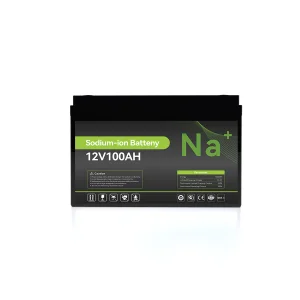




Global Commercial & Industrial Status of 54Ah Battery Cells
Understanding the strategic bridge between sub-50Ah mobility cells and ultra-large storage formats in modern power electronics.
The global battery energy market has undergone a structural shift toward standardized modularity. While ultra-large prismatic cells (280Ah, 306Ah, and 314Ah) dominate utility-scale stationary energy storage systems (BESS), the 54Ah battery cell—available primarily in prismatic metallic casing and laminated pouch formats—occupies a vital, highly resilient position in industrial equipment, light electric mobility, telecom backup networks, and residential micro-grids.
Historically, system integrators requiring 48V to 192V nominal voltages relied on either small cylindrical cells (18650, 21700, 32700) that demanded thousands of intricate wire-bonding points, or massive 100Ah–200Ah prismatic cells that created thermal hotspots and packaging inefficiencies in compact enclosures. The 3.2V 54Ah LiFePO4 (Lithium Iron Phosphate) cell emerged as the golden standard for structural flexibility. By offering an ideal single-cell energy capacity of approximately 172.8 Watt-hours (Wh), engineering teams can build modular 12V (4S), 24V (8S), 48V (16S), and high-voltage rack systems with minimal active balancing overhead.
Technical Insight for Sourcing Directors: Standardizing on a 54Ah cell architecture allows pack designers to achieve a volumetric energy density surpassing 320 Wh/L while maintaining natural heat dissipation channels between cells—eliminating the need for complex, failure-prone liquid cooling plates in sub-20kWh system architectures.
In global markets across Europe, North America, Southeast Asia, and Latin America, procurement demand for custom 54Ah cells is growing at a compound annual growth rate (CAGR) exceeding 18.4%. This demand is primarily driven by three core industrial requirements:
- Material Handling & Industrial Automation: Electric forklifts, automated guided vehicles (AGVs), and autonomous mobile robots (AMRs) require rapid opportunity charging (1C to 2C rate) and physical resistance to intense continuous mechanical vibration.
- Telecommunications & UPS Infrastructure: 5G base stations require 48V/51.2V 54Ah and 108Ah backup modules that drop seamlessly into standard 19-inch telecom racks without structural reinforcement.
- Custom Marine & Off-Grid Living: Deep-cycle 12V and 24V house battery systems for yachts, RVs, and remote solar cabins require light physical weight combined with absolute electrochemical stability against thermal runaway.
Technical Benchmarks & Electrochemical Formulations
A rigorous engineering evaluation comparing 54Ah LiFePO4, Sodium-Ion, and NMC cell chemistry performance under continuous industrial workloads.
| Performance Parameter | Prismatic 54Ah LiFePO4 (Grade A) | Pouch 54Ah NMC / Ternary | Prismatic 54Ah Sodium-Ion (Na+) |
|---|---|---|---|
| Nominal Voltage | 3.2 V | 3.6 V / 3.7 V | 3.0 V - 3.1 V |
| Operating Voltage Range | 2.5 V – 3.65 V | 2.8 V – 4.2 V | 1.5 V – 4.0 V |
| Gravimetric Energy Density | 165 - 175 Wh/kg | 240 - 260 Wh/kg | 130 - 145 Wh/kg |
| Cycle Life (80% DOD @ 25°C) | > 6,000 Cycles | 2,000 - 2,500 Cycles | > 4,000 Cycles |
| Max Continuous Discharge C-Rate | 3C (162 Amps) | 3C - 5C | 5C Continuous / 8C Pulse |
| Internal Impedance (1kHz AC) | ≤ 0.6 mΩ | ≤ 0.8 mΩ | ≤ 0.5 mΩ |
| Thermal Runaway Temperature | > 270°C (Exothermic Safe) | ~ 150°C (Requires Active Cooling) | > 260°C (Inherent Safety) |
| Low Temp Discharge (-20°C Retention) | 70% - 75% Capacity | 80% - 85% Capacity | > 88% Capacity |
Anode Nanotechnology & Electrolyte Chemistry
A superior custom 54Ah LiFePO4 cell owes its electrical longevity to precise crystal phase control during cathode synthesis. Premium Chinese manufacturers utilize nano-structured lithium iron phosphate carbon-coated particles ($LiFePO_4/C$) paired with synthetic graphite anodes featuring isotropic alignment. This nanostructure reduces lithium-ion diffusion distance, enabling continuous 1C charge and 3C discharge performance without dendrite formation or electrolyte depletion.
Furthermore, high-purity organic carbonate solvents containing functionalized additives (such as Vinylene Carbonate and Fluoroethylene Carbonate) form a thin, thermally resilient Solid Electrolyte Interphase (SEI) layer on the graphite anode. This prevents parasitic electrolyte decomposition even when operating continuously in tropical environments reaching 55°C ambient temperatures.
Low Internal Resistance
Laser-welded internal multi-tab collection systems keep internal AC impedance below 0.6mΩ, minimizing $I^2R$ thermal dissipation during heavy discharge cycles.
Explosion-Proof Safety Vent
Integrated directional mechanical pressure release valves activate precisely at 0.8–1.2 MPa to prevent cell swelling and structural rupture during severe overcharge abuse.
Aluminum Shell & Insulating Layer
Deep-drawn 3003 aluminum alloy outer casings deliver exceptional structural rigidity, wrapped in blue PET electrical insulation rated for up to 3000V DC breakdown voltage.
Why Direct Sourcing from Chinese 54Ah Cell Factories Matters
Leveraging Shenzhen and Guangdong energy ecosystems for unmatched scale, automated assembly, and strict grade sorting.
When B2B buyers purchase custom 54Ah lithium battery cells, manufacturing consistency is the defining variable between a pack that lasts 10 years and one that suffers premature module failure. Advanced Chinese manufacturing facilities, such as those concentrated in Shenzhen and Dongguan, leverage fully automated production lines with over 92% automation index.
This industrial dominance is built upon three non-negotiable operational pillars:
Sub-Millimeter Laser Welding
High-speed fiber laser welding machines join electrode tabs with zero spatter, eliminating micro-short circuits and ensuring ultra-low contact resistance across continuous vibration environments.
Automated Grading & Voltage Matching
Every 54Ah cell undergoes 14 days of high-temperature aging followed by automatic grading. Voltage variance is restricted to $\Delta V < 3\text{mV}$ and internal resistance variance to $\Delta R < 0.05\text{m}\Omega$.
Full Process MES Traceability
Manufacturing Execution Systems (MES) laser-engrave two-dimensional QR codes onto every cell casing, recording raw cathode batch numbers, slurry coating thickness, electrolyte fill weight, and formation test data.
Custom 54Ah Cell Integration Across Key Industries
From heavy material handling equipment to marine house batteries and telecom power racks.
1. 48V / 51.2V 54Ah Rack-Mounted Telecom Energy Storage
Configuration: 16 Series 1 Parallel (16S1P) Prismatic 54Ah LiFePO4
By connecting sixteen 54Ah cells in series within a 2U or 3U standard rack chassis, telecom operators achieve 2.76 kWh of reliable backup power. The 54Ah format fits precisely into standard 19-inch cabinet dimensions with embedded RS485/CANbus Smart BMS, replacing heavy 100Ah lead-acid batteries while providing a 70% reduction in weight and a 4x increase in cycle life.
2. Electric Forklifts & Autonomous Guided Vehicles (AGVs)
Configuration: 24S2P (80V Nominal / 108Ah Capacity)
Industrial warehousing environments require fast opportunity charging during worker breaks. Custom 54Ah cells engineered with high-rate tab connections allow 1C continuous charging (54A to 108A continuous current input), recharging from 20% to 80% State of Charge (SOC) in under 45 minutes without inducing cell swelling or overheating.
3. Marine Deep-Cycle & Trolling Motor Packs
Configuration: 4S2P (12.8V 108Ah) or 12S1P (38.4V 54Ah)
Marine environments demand robust casing against moisture and mechanical shock. Dual-parallel 54Ah custom cell configurations deliver flat voltage discharge curves under sustained trolling motor load, preserving electronics and ensuring maximum motor thrust throughout 10-hour fishing tournaments.
Global Procurement Demands & Quality Compliance
Essential compliance standard operating procedures for international battery importers and OEM brand owners.
Certification Audit
Ensure factory cells hold UN38.3, MSDS, IEC 62619, UL 1973, and CE certification reports for global air and ocean freight compliance.
02
Grade A Verification
Request factory capacity flash test reports. True Grade A cells must exhibit full nominal capacity (≥ 54Ah) at 0.5C discharge rate at 25°C.
BMS Protocol Match
Verify custom terminal thread options (M5/M6 internal or external studs) and terminal plating (nickel-plated copper) for high-amperage busbar attachment.
04
Dangerous Goods Packing
Confirm UN certified carton packaging with individual cell isolation compartments, edge guards, and shock-absorbing EPE foam matrices.
Development Trends in Custom 54Ah Battery Manufacturing
Key technological innovations shaping the next decade of lithium and alternative chemistry cell development.
As energy storage integration deepens across industrial grids, the 54Ah cell format is evolving rapidly to meet stringent efficiency and environmental guidelines:
- Cell-to-Pack (CTP) Structural Innovation: Advanced 54Ah prismatic cells are adopting side-rib structural stacking, allowing pack builders to eliminate intermediate module plastic shells and increase volumetric packing efficiency up to 15%.
- Sodium-Ion Commercialization: Drop-in 54Ah sodium-ion prismatic cells utilizing identical outer casing dimensions as LiFePO4 cells are entering pilot production. This allows pack manufacturers to swap chemistry depending on seasonal low-temperature requirements without altering mechanical assembly dies.
- Dry Electrode Coating Process: Leading Chinese factories are transitioning from solvent-based slurry coating (NMP) to dry electrode film pressing. This innovation reduces factory energy consumption by up to 30% while increasing electrode active material mass ratio.
B2B Procurement & Engineering FAQ
Detailed answers to technical and commercial inquiries from global battery buyers.
Grade A Custom LiFePO4 & Energy Storage Cells (Part II)
Expand your product offering with our extended industrial battery cells, roller systems, and commercial energy cabinets.






