
Featured Custom 3.2V Cells & Modular Energy Systems
Precision-engineered LFP prismatic cells, sodium-ion solutions, and scalable commercial storage cabinets direct from certified manufacturing lines.

ODM FOYASOLAR LiFePO4 25.6V 100Ah 2560kWh Solar Battery Pack Factory, Factories
Inspect Specifications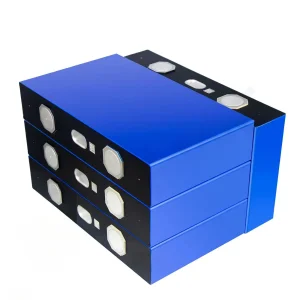


ODM Boat Rechargeable Lithium lon battery 51.2/48v 100ah Lifepo4 Supplier, Suppliers
Inspect Specifications



Wholesale Foyasolar Industrial and Commercial Energy Storage System Liquid-Cooled Lithium Battery Cabinet 100KW/215KWh Battery System Manufacturers, Supplier
Inspect Specifications1. Executive Summary: The Primacy of 3.2V LFP Chemistry in Global Infrastructure
In the rapidly expanding electrochemical energy storage landscape, global B2B procurement managers, EPC contractors, and OEM brand engineers face a shifting technological environment. Sourcing high-integrity Custom 3.2V Manufacturers & Suppliers is no longer merely a transaction of purchasing volumetric energy density; it is a complex risk-management matrix involving supply chain transparency, microstructural cathode optimization, Battery Management System (BMS) protocol integration, and long-term levelized cost of storage (LCOS) reduction.
At the physical core of the 3.2V cell is the olivine crystal structure of lithium iron phosphate ($LiFePO_4$). Unlike legacy nickel-manganese-cobalt (NMC) or nickel-cobalt-aluminum (NCA) chemistries, the phosphorus-oxygen covalent bonds ($P-O$) within the olivine lattice are exceptionally strong. This structural rigidity prevents oxygen release during severe overcharge or high-temperature operating conditions, eliminating the baseline mechanism of catastrophic thermal runaway. When sourced from tier-1 Chinese automated manufacturing lines—such as Shenzhen Foya Solar Technology Co., Ltd.—these 3.2V single cells achieve cycle counts exceeding 6,000 to 8,000 cycles at 80% Depth of Discharge (DOD), yielding operational lifespans past 15 to 20 years.
2. Technical Roadmap & Future Outlook of 3.2V Cell Chemistries
Analyzing the industrial transition from early 50Ah/100Ah cells to high-capacity 280Ah, 314Ah, and ultra-large 680Ah prismatic formats, alongside solid-state and sodium-ion advancements.
Form Factor Scaling & 680Ah Paradigm Shift
The energy storage industry has rapidly evolved past small cylindrical (18650, 32700) and low-capacity prismatic formats (50Ah, 80Ah, 100Ah). While 50Ah and 120Ah cells remain crucial for light e-mobility and compact equipment, utility-scale and industrial projects now demand 280Ah, 314Ah, and ultra-capacity 3.2V 680Ah cells.
- BOP Reduction: 680Ah cells cut mechanical busbar interconnections by up to 50%.
- Thermal Consistency: Reduced internal resistance ($R_i \le 0.18 m\Omega$) minimizes volumetric heat buildup.
- Integration Footprint: Enables higher volumetric energy density ($Wh/L$) inside standardized 20ft containerized systems.
LMFP & Manganese Doping Innovation
To overcome the energy density limitation of standard $LiFePO_4$ (~160–180 Wh/kg), advanced custom manufacturers are scaling Lithium Iron Manganese Phosphate (LMFP). By introducing Manganese ($Mn$) into the crystal structure, nominal voltage increases from 3.2V to 3.7V without compromising safety.
- Energy Density Boost: Up to 15-20% increase in specific energy density ($Wh/kg$).
- Drop-in Compatibility: Operates seamlessly within existing pack enclosure geometries.
- Cost-Effective Chemistry: Retains low raw material volatility compared to cobalt-based systems.
Sodium-Ion (Na+) Hybridization
While 3.2V LiFePO4 dominates mainstream ESS, Sodium-Ion ($Na^+$) battery packs (such as FOYASOLAR's 12V 200Ah Na-ion series) serve as a strategic dual-track technology for ultra-low temperature operating environments (-40°C to +60°C).
- Zero Lithium Exposure: Abundant sodium cathode raw materials insulate buyers from lithium carbonate price surges.
- Cold-Climate Resilience: Retains over 85% capacity at -20°C ambient temperatures.
- High Discharge C-Rates: Exceptional pulse discharge performance for industrial motive power.
| Battery Chemistry | Nominal Cell Voltage | Gravimetric Density (Wh/kg) | Cycle Life (80% DOD) | Thermal Runaway Temp (°C) | Primary Industrial Application |
|---|---|---|---|---|---|
| Standard LFP (LiFePO4) | 3.2V | 160 – 185 Wh/kg | 6,000 – 8,000 | ~270°C | Solar ESS, Marine, Telecom, Golf Carts |
| Advanced LMFP | 3.7V | 200 – 230 Wh/kg | 4,000 – 6,000 | ~250°C | Long-Range Commercial Vehicles, Compact C&I |
| Sodium-Ion (Na-Ion) | 3.0V – 3.1V | 120 – 150 Wh/kg | 3,000 – 5,000 | ~300°C (Highly Stable) | Sub-Zero ESS, Cold-Chain AGVs, Base Stations |
| Semi-Solid LFP | 3.2V | 220 – 260 Wh/kg | 10,000+ | >350°C | Mission-Critical Utility ESS & Defense |
3. China Factory 4.0: Supply Chain Resilience & Manufacturing Precision
Selecting a custom 3.2V manufacturer in China requires evaluating the physical floor-level automation, quality assurance protocols, and vertical supply chain integration of the facility. Shenzhen Foya Solar Technology Co., Ltd. operates a modern 20,000 m² manufacturing plant equipped with full MES tracking, achieving over 2GWh in annual production capacity.
Automated Cell Grading & Capacity Sorting
No two chemical cells are born identical. High-performance OEM custom battery packs demand exact voltage, capacity, and internal resistance matching. Foya Solar utilizes 100% automated sorting systems to group 3.2V prismatic cells within ultra-tight tolerances ($\Delta V \le 2mV$, $\Delta R_i \le 0.05m\Omega$), ensuring zero cell-imbalance bottlenecks over the pack lifecycle.
Laser Tab Welding & Structural Integrity
Busbar connection points represent a critical failure surface under dynamic vibrations in marine, RV, and heavy equipment applications. Our automatic fiber-laser welding systems perform real-time molten pool monitoring, eliminating cold welds and guaranteeing structural resistance against high G-force industrial shocks.
Upstream Raw Material Traceability
From high-purity lithium carbonate ($Li_2CO_3$) sourcing to synthetic graphite anode processing, our supply chain maintains end-to-end digital lot tracking. This raw material security ensures consistent chemical purity, mitigating internal micro-short circuits caused by metallic trace contamination.
4. Macro Industry Solutions: Tailored 3.2V Cell Integration
Connecting raw 3.2V chemical potential with application-specific electrical architectures across solar, motive, commercial, and off-grid verticals.
A. Commercial & Industrial (C&I) Energy Storage
Utilizing high-capacity 3.2V cells configured in series strings up to 768V nominal, C&I cabinets—such as FOYASOLAR's 100kW/215kWh Liquid-Cooled System—deliver peak shaving, load shifting, and PV self-consumption for factories and microgrids.
Technical Highlights: Liquid thermal management ensures cell temperature differentials ($\Delta T \le 3^\circ C$), maximizing pack life and eliminating hot-spot acceleration.
B. Residential Solar Energy Storage Systems
Configured as 16S arrays of 3.2V cells to produce standard 51.2V nominal home battery banks (280Ah / 314Ah options). Available in server-rack, wall-mounted, or mobile rolling wheel form-factors equipped with CAN/RS485 communication protocols.
Technical Highlights: Seamless plug-and-play interoperability with world-leading hybrid inverters (Victron, SMA, Deye, Growatt, Luxpower).
C. Marine, Trolling Motor & Deep-Cycle RV Power
Replacing heavy, toxic 12V lead-acid batteries requires 4S configurations of 3.2V cells (12.8V nominal, 100Ah–400Ah). Designed to handle marine vibration, moisture exposure, and continuous high-current discharge.
Technical Highlights: IP65/IP67 ruggedized enclosures equipped with integrated thermal heating pads for cold-weather shore power charging.
D. Industrial Motive Power (Forklifts, AGVs & Golf Carts)
Material handling equipment demands high pulse-discharge rates (2C–3C continuous) and fast opportunity charging during operator shift changes. Custom 24V (8S), 36V (12S), and 48V (16S) 3.2V LFP modules provide zero-maintenance operations.
Technical Highlights: Eliminates acid-spill safety hazards and battery watering costs associated with legacy fleet motive power.
5. Global Enterprise Procurement: BMS Protocol & TCO Evaluation
For procurement officers and technical directors drafting RFPs for custom 3.2V battery packs, unit cost per amp-hour ($/Ah) is only one variable in the selection process. Evaluating long-term reliability requires auditing the integrated Battery Management System (BMS) intelligence, warranty frameworks, and total cost of ownership (TCO).
Smart BMS Topology & Balancing Architecture
A high-performance custom pack is only as reliable as its BMS. Enterprise specifications must define:
- Active vs. Passive Balancing: Active balancing (>1A to 5A balancing current) is essential for high-capacity prismatic cells (184Ah, 280Ah, 680Ah) to prevent cumulative capacity drift.
- Multi-Layer Communication: Support for CAN 2.0B, RS485, UART, and Modbus RTU to stream real-time State of Charge (SOC), State of Health (SOH), cell voltages, and thermal telemetry.
- Multi-Tier Hardware Protection: Independent hardware trip circuits for over-voltage, under-voltage, over-current, charge low-temperature cut-off, and thermal runaway warning.
Total Cost of Ownership (TCO) Calculation
When comparing 3.2V LFP solutions against traditional battery technologies, LCOS analysis reveals substantial financial superiority over project lifetimes:
Due to 6,000+ cycle stability, zero maintenance routines, and high round-trip energy efficiency (>95%), 3.2V LFP systems achieve a levelized storage cost up to 70% lower than lead-acid and 30% lower than NMC over a 10-year period.
6. Regulatory Compliance, Safety Standards & EU Battery Passports
Navigating complex international customs validation, hazardous goods transport compliance, and environmental lifecycle regulations for international import.
UL 1973 & UL 9540A
North American safety compliance for stationary energy storage batteries and thermal runaway fire propagation testing.
IEC 62619 & CE
European industrial secondary lithium cell safety requirements covering mechanical, electrical, and thermal abuse safety.
UN 38.3 & MSDS
United Nations transport testing protocols ensuring safe air/sea containerized freight handling under Class 9 hazardous goods.
EU Battery Reg 2023/1542
Readiness for Digital Battery Passports, recycled material quotas, and full supply chain carbon footprint declarations.
High-Capacity 3.2V Prismatic Cells & ESS Cabinets
Explore our expanded OEM/ODM line of deep-cycle prismatic cells, home ESS systems, and high-capacity battery packs ready for global dispatch.

ODM 48V/51.2V Rolling Wheel Home Energy Storage System Manufacturer, Manufacturers
Inspect Specifications
Wholesale FOYASOLAR LiFePO4 12.8V 400Ah 5120kWh Solar Battery Packs Suppliers, Factories
Inspect Specifications

Custom FOYASOLAR 48V/51.2V-280Ah ON/Off-grid hybrid solar energy storage system Supplier, Factories
Inspect Specifications
Wholesale FOYASOLAR LiFePO4 3.2V 184Ah Rechargeable Deep Cycle Battery Cell Manufacturer, Manufacturers
Inspect Specifications


7. Enterprise Q&A: Technical & Procurement Solutions
Direct engineering answers to technical queries encountered by buyers, system integrators, and product managers.