
Empowering Energy Storage with Next-Generation 320Ah LiFePO4 Prismatic Cells
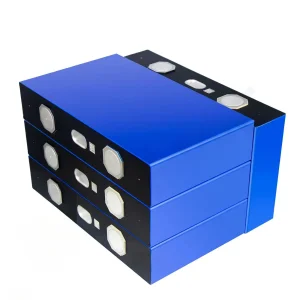
As global energy transitions accelerate, the demand for high-capacity, thermally stable, and long-cycle lithium iron phosphate (LiFePO4) chemistry has reached an all-time high. The 3.2V 320Ah cell format represents the golden standard for commercial, industrial, and utility-scale Battery Energy Storage Systems (BESS).
Optimized Footprint & Density
By transitioning from legacy 280Ah cells to 320Ah prismatic units using the standard 7117320 form factor, systems gain a +14.2% energy density boost without altering container layout or rack dimensions. This dramatically lowers structural BOP (Balance of Plant) costs.
Ultra-Safe LFP Chemistry
Incorporating chemical-grade lithium iron phosphate cathodes and specialized ceramic-coated separators, our 320Ah cells guarantee thermal stability during extreme continuous discharge and eliminate risks of thermal runaway propagation.
Precision BMS Integration
Equipped with Smart BMS compatibility supporting RS485, CANbus 2.0B, and Modbus RTU telemetry, enabling cell-level voltage monitoring (±2mV accuracy), SOC/SOH estimation, and active laser-welded busbar balancing.
Standard Technical Specifications: 3.2V 320Ah LiFePO4 Cell
| Parameter | Engineering Value | Testing Condition / Remarks |
|---|---|---|
| Nominal Voltage / Capacity | 3.2V / 320Ah | Standard 0.5C discharge rate at 25°C ± 2°C |
| Minimum Capacity | 322Ah - 325Ah | 100% Factory Graded (Grade A Guarantee) |
| Gravimetric Energy Density | ~180.2 Wh/kg | Cell level net weight approx. 5.68 kg |
| Volumetric Energy Density | ~405 Wh/L | Dimensions: 71.5mm (W) x 173.9mm (L) x 207.2mm (H) |
| Operating Voltage Range | 2.5V to 3.65V | Cut-off voltage parameters dynamically set by BMS |
| Standard Charge/Discharge Rate | 0.5C / 0.5C (160A) | Continuous load operation |
| Max Continuous Discharge Rate | 1.0C (320A) | Recommended thermal management active |
| Cycle Life (80% EOL) | ≥ 8,000 Cycles | 0.5C/0.5C @ 25°C, 80% Depth of Discharge (DoD) |
| Internal AC Impedance (1kHz) | ≤ 0.18 mΩ | Shipment SOC 30%-50%, matched impedance delta < 0.05mΩ |
High-Performance Lithium & Energy Storage Solutions
Explore our primary engineering portfolio, spanning custom 3.2V prismatic cells, deep-cycle industrial packs, and scalable solar ESS modules.







320Ah LiFePO4 Technology Roadmap & Future Outlook
The evolutionary trajectory of lithium iron phosphate batteries is migrating rapidly toward higher energy density per cell, longer cycle endurance, and intelligent thermal design.
Evolution from 280Ah to 320Ah/314Ah
The battery storage industry is rapidly shifting away from legacy 280Ah cells. The 320Ah and 314Ah prismatic formats deliver significant structural volumetric benefits. By packing more active material into identical shell dimensions (7117320), engineers reduce total inter-cell busbar connections by up to 12.5%, minimizing internal heating and point-of-failure vulnerabilities in high-voltage DC racks.
Pre-Lithiation & Nanotech Coating
Our R&D roadmap integrates advanced pre-lithiation cathode technology combined with nanometer-scale carbon coating on the synthetic graphite anode. This innovation mitigates first-cycle irreversible lithium loss, extending baseline deep-cycle lifetime from 6,000 cycles to over 8,000–10,000 cycles at 80% Depth of Discharge (DoD).
AI-Driven Edge BMS Telemetry
Future-ready 320Ah module assemblies incorporate micro-sensors for real-time internal pressure measurement and cell-level temperature tracking. Machine learning algorithms analyze electrochemical impedance spectroscopy (EIS) data to predict thermal runaway risks hours before anomalies occur.
Macro Industry Solutions & Multi-Scenario Application
From utility grid stabilization to heavy industrial motive power, custom 320Ah LiFePO4 building blocks deliver unmatched scalability and operation resilience.
Utility-Scale & C&I Energy Storage Systems (BESS)
In megawatt-hour grid support deployments, 320Ah cells form the cornerstone of 20ft and 40ft liquid-cooled containerized BESS units (e.g., 3.72MWh or 5MWh per container). They perform critical functions including peak shaving, frequency regulation, solar self-consumption optimization, and diesel generator displacement in off-grid microgrids. High cycle efficiency (≥95% round-trip efficiency) directly maximizes project Internal Rate of Return (IRR).
Heavy Industrial Electrification & Marine Propulsion
Beyond stationary storage, our heavy-duty customized 320Ah battery packs power zero-emission electric tugboats, commercial harbor vessels, mining haul trucks, and automated guided vehicles (AGVs). The high pulse discharge capacity (up to 2C/640A) ensures robust performance during heavy acceleration and high-torque lifting operations.
Telecom Datacenter & Critical UPS Backup
For 5G telecom base stations and hyper-scale data centers, 320Ah LiFePO4 configurations replace cumbersome lead-acid banks. Offering 4x higher power density, zero maintenance, and rapid charging capability, these systems protect against sudden grid dropouts and brownouts with seamless millisecond transition times.
High-Capacity Residential & Off-Grid Hybrid Systems
By grouping 16 units of 320Ah cells in series (16S1P), system integrators construct compact 51.2V 16.38kWh home energy storage banks. This allows single-family estates and remote off-grid ranches to run heavy inductive loads—such as central air conditioning, heat pumps, and EV chargers—without needing multiple parallel packs.
China Industry 4.0: Supply Chain Resilience & Efficiency
Leveraging Shenzhen’s high-tech manufacturing ecosystem to deliver unmatched cell consistency, scale economics, and rapid OEM/ODM delivery schedules.
Automated MES Cell Sorting
Our manufacturing lines utilize Manufacturing Execution Systems (MES) with AI-powered optical inspection. Every single 320Ah cell undergoes rigorous 100% sorting to enforce tight tolerance standards: Voltage delta ≤ 2mV and Internal Resistance delta ≤ 0.05mΩ.
Laser Welding & Automated Stacking
High-precision laser welding equipment guarantees air-tight aluminum housing seal integrity and low-impedance tab connections. High-speed double-layer laser cutting and Z-folding stacking technology eliminate internal tab stress, preventing micro-short circuits over extensive cycling.
Upstream Material Integration
By securing strategic direct partnerships with top-tier raw material suppliers for lithium carbonate, iron phosphate precursor, and synthetic graphite anodes, we insulate global buyers from raw material market volatility and guarantee continuous volume output exceeding 2GWh annually.
Global Enterprise Sourcing: Tier-1 Procurement Criteria
Navigating industrial-scale battery sourcing requires rigorous risk management, total cost of ownership (TCO) evaluation, and customized OEM flexibility.
1. Total Cost of Ownership (TCO) & LCOS Optimization
Sophisticated energy buyers look beyond initial price-per-kilowatt-hour ($/kWh). Purchasing high-grade 320Ah cells with 8,000-cycle performance reduces the Levelized Cost of Storage (LCOS) to below $0.03/kWh per cycle. This enables commercial battery operators to achieve rapid project payback within 3 to 5 years.
2. Full OEM/ODM Customization Capabilities
We provide complete OEM tailored services including tailored terminal placement (M6/M8 laser threads), custom busbars (nickel-plated copper), tailored acrylic/steel enclosure sheet metal designs, private labeling, and embedded firmware configurations matching your brand’s custom inverter protocols.
3. Traceability & Serialized Quality Assurance
Every single cell manufactured in our facility features a unique 2D laser-etched QR code. Procurement teams receive full digital batch traceability reports detailing factory formation data, initial internal impedance, grading capacity, and automated voltage retention curves before shipment clearance.
4. UN38.3 Dangerous Goods Packaging & Shipping
Lithium battery ocean logistics demand strict compliance. We deliver fully certified UN-rated heavy-duty wooden box packaging, shock-proof EVA foam padding, UN38.3 transport safety reports, MSDS documentation, and sea freight Class 9 hazard handling support across global ports.
Localization Support & International Safety Certifications
Streamlining customs clearance and ensuring smooth market entry across North America, Europe, Australia, and emerging markets.
UL & IEC Safety Compliance
Our 320Ah cells and system modules are tested and compliant with international benchmarks including UL1973 (stationary batteries), UL9540A (thermal runaway propagation), IEC 62619, and CE-EMC standards, facilitating effortless local permitting.
Global Warehousing & Support
To minimize lead times for regional integrators, we support local bonded buffer inventory setups, quick-turn replacement policies (RMA guarantee), and 24/7 dedicated multi-lingual technical engineering support across EU, NA, and LATAM time zones.
Inverter Protocol Compatibility
Engineered for universal compatibility, our custom 320Ah BMS firmware natively communicates out-of-the-box with leading hybrid inverters including Victron Energy, SMA, Deye, Growatt, Solis, Luxpower, and Sungrow.
Explore Additional Custom LiFePO4 & Charger Solutions
Complete your power assembly with matching smart battery chargers, deep-cycle motive power packs, and specialized cell capacities.








Frequently Asked Questions: Custom 320Ah LiFePO4 Sourcing
Expert answers to standard procurement, technical engineering, and operational questions regarding 320Ah lithium iron phosphate cells.
1. What are the key dimensional and capacity advantages of 320Ah LiFePO4 cells over legacy 280Ah cells?
2. How does Foya Solar guarantee cell capacity and Grade A authenticity?
3. What is the expected cycle life of a 3.2V 320Ah cell under daily solar charge cycles?
4. What custom BMS communication protocols do your battery packs support?
5. What custom engineering options are available for wholesale OEM/ODM buyers?
- Cell Level: Custom M6 or M8 laser-welded copper/aluminum terminal studs.
- Module Level: Custom flexible copper busbars, silicone heating pads, and heavy-duty cell spacers.
- Pack & System Level: Sheet metal enclosure dimensions, IP rating (IP54 to IP67), custom powder coating colors, logo branding, and tailored wire harnesses.