
Top Solar Battery Manufacturers in China for Global Buyers
Global buyers evaluating Chinese solar battery manufacturers need more than a long supplier list. A Solar Battery may look similar across product pages, yet its chemistry, usable capacity, cycle-life testing, and control system can differ significantly. Those differences affect how a system performs in a home, factory, or remote site. Small details matter: terminal layout, enclosure finish, and the clarity of a wiring diagram can shape installation work.
This guide introduces manufacturers serving international markets and the capabilities buyers may want to compare. It considers product range, production experience, quality documentation, customization, and after-sales support. A factory’s stated capacity is useful, but it does not prove that every shipment will meet a project’s requirements. Ask for current test reports, warranty terms, and references for comparable installations. Then check that the proposed battery works with the intended inverter and operating conditions.
No shortlist is perfect. Company information changes, and public claims can be difficult to verify from a distance. Treat this overview as a starting point, not a final supplier approval. Request samples or technical files when appropriate, and clarify who handles commissioning questions and replacement parts. A few careful checks now can prevent delays later. Buyers should also compare total system value, rather than choosing on unit price alone. The best fit depends on the project—and sometimes the evidence remains incomplete.
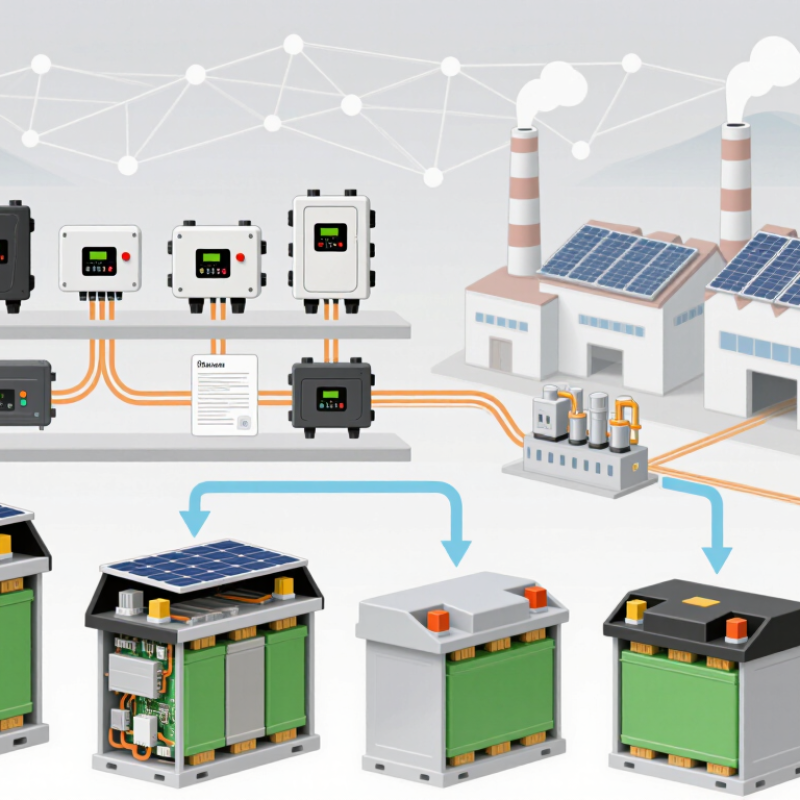
China’s Solar Battery Industry and Its Role in Global Markets
China’s solar battery industry sits at the intersection of rapid photovoltaic growth and large-scale energy storage. The IEA PVPS Trends in Photovoltaic Applications 2024 report estimates that China added about 217 GW of solar capacity in 2023, nearly half of global additions. More variable solar generation increases the value of batteries that can shift electricity into evening hours and support grid flexibility.
The supply chain is a major advantage. The IEA’s Global Supply Chains of EV Batteries report says China held roughly 85% of global battery cell manufacturing capacity in 2023. Although the report covers batteries broadly, its data helps explain China’s influence on solar storage costs, component availability, and production scale. Scale matters. Buyers still need to assess cycle life, usable capacity, temperature performance, and after-sales support; factory output alone cannot show how a system will perform in a hot, dusty installation.
This position also brings responsibilities. The IEA’s Batteries and Secure Energy Transitions report highlights the need for stronger recycling and more diversified supply chains as battery demand grows. For global buyers, Chinese manufacturing can offer a wide choice of system configurations, but shipping distance, local service, and project conditions affect real value. A spreadsheet rarely captures all of that. Even careful procurement can underestimate long-term maintenance needs.
Top Solar Battery Manufacturers in China for Global Buyers – China’s Solar Battery Industry and Its Role in Global Markets
| Dimension | Industry information | Relevance to global buyers | Data basis / buyer check |
|---|---|---|---|
| Solar supply-chain scale | China holds more than 80% of global manufacturing capacity across the main stages of the solar PV supply chain, according to the IEA’s 2022 assessment. | A large domestic solar industry supports a broad ecosystem of component suppliers, engineering expertise and export logistics. | IEA, Special Report on Solar PV Global Supply Chains (2022). PV manufacturing capacity is not the same measure as battery production. |
| Battery-cell manufacturing scale | China accounted for about 85% of global battery-cell manufacturing capacity in 2023, based on the IEA’s global battery supply-chain analysis. | The scale can support a wide range of storage products, but capacity share alone does not establish product quality, availability or suitability for a project. | IEA, Batteries and Secure Energy Transitions (2024), reporting 2023 capacity. This figure covers battery cells broadly, not only solar-storage cells. |
| Common stationary-storage chemistry | Lithium iron phosphate (LFP) is widely used in stationary battery storage. Other chemistries and system designs are also available. | Compare usable energy, power rating, operating-temperature limits, warranty terms and safety documentation; chemistry alone is not a complete product comparison. | Check the specific model’s technical datasheet and independently verifiable test documentation. Cycle life and warranty conditions vary by product and test conditions. |
| System configuration | Solar storage systems may use DC-coupled or AC-coupled architectures. The appropriate configuration depends on the PV system, inverter arrangement and project design. | Confirm inverter compatibility, operating voltage, communication protocol, grid requirements and whether the system is intended for retrofit or new installation. | Request a system-level compatibility statement; battery-only specifications do not confirm compatibility with a particular inverter or site. |
| Product safety and transport | IEC 62619 covers safety requirements and tests for industrial secondary lithium cells and batteries. UN 38.3 addresses tests for lithium batteries transported by air, sea, road or rail. | Ask for reports and certificates applicable to the exact battery model and destination market; transport testing and installation approval are different requirements. | IEC 62619 and the UN Manual of Tests and Criteria, subsection 38.3. Local electrical, fire and grid rules may also apply. |
| Export and market access | A product’s required approvals depend on its destination, application and system configuration. Battery, inverter and complete-system requirements may differ. | Confirm applicable national or regional standards, grid-interconnection rules, labeling, documentation, importer responsibilities and after-sales arrangements before ordering. | Verify requirements with the relevant regulator, certification body or qualified local installer for the project location. |
| Procurement due diligence | Manufacturing scale and country of origin do not by themselves verify a supplier’s financial standing, factory capability, product consistency or warranty performance. | Assess factory quality controls, traceability, sample-test results, production capacity, lead times, spare-parts support and the practical process for warranty claims. | Use model-specific documents, independent inspections and written commercial terms. Check that quoted performance and warranty exclusions are clearly defined. |
Sources: International Energy Agency (IEA), Special Report on Solar PV Global Supply Chains (2022) and Batteries and Secure Energy Transitions (2024); International Electrotechnical Commission (IEC) 62619; United Nations Manual of Tests and Criteria, subsection 38.3. Market shares refer to the stated years and measure manufacturing capacity, not the quality or market share of any individual supplier.
FAQS
Lithium iron phosphate is common because it offers stable cycling and strong thermal characteristics. Other chemistries may suit different energy-density needs.
Check usable capacity, continuous power, operating temperature, and cycle-life test conditions. Rated capacity and usable capacity are not always the same.
Ask whether testing used full-depth cycles or gentler cycling. A large cycle count means little without its test conditions.
Request the exact model’s datasheet, sample test reports, and traceability records. Product-family documents may omit important model details.
Confirm the communication protocol and recommended charge limits. Test the battery with the actual inverter and firmware versions before commissioning.
It monitors cell voltage, temperature, and current to help protect the pack. Correct installation and compatible settings still matter.
Clarify coverage periods, throughput limits, exclusions, response times, and local service arrangements. Vague terms can leave practical questions unanswered.
Check the enclosure rating and permitted temperature range. Also confirm packaging, shipping schedules, spare parts, and local service support. Small details can disrupt a project.
No. Review quality-control steps and arrange an independent inspection if possible. A polished visit helps, but it is not proof.
Ask for references from similar climates and applications, then verify them independently. Documents may be accurate yet incomplete. Performance still depends on installation and operating habits.
Conclusion
China has become an important force in the global Solar Battery industry, supported by a broad manufacturing base and growing experience serving international markets. Chinese producers offer products for different applications, including residential energy storage, commercial systems, and off-grid use. Their technologies and product ranges may vary in battery chemistry, capacity, system design, and integration options, giving buyers a range of solutions to consider.
Global buyers can compare suppliers by assessing product specifications, manufacturing consistency, quality-control processes, communication, and the suitability of each system for its intended use. It is also important to confirm relevant certifications for the destination market, clarify export arrangements, and understand warranty coverage, technical support, replacement procedures, and after-sales service. Careful evaluation of these factors can help buyers identify a dependable supplier and build a more informed, long-term purchasing relationship.
