
Choosing the best 12-volt lithium iron phosphate battery starts with your equipment, not the largest capacity on a product page. A Lifepo4 Battery 12v can serve an RV, boat, cabin, or backup system, but each setup draws power differently. List the devices you expect to run, their wattage, and how many hours they will operate. A refrigerator cycling overnight has different needs from a few lights used for an evening. Small details matter. Allow for startup surges, inverter losses, and days with less solar charging. These are easy to overlook when comparing batteries by amp-hours alone.
Next, check the battery’s continuous and peak discharge ratings, built-in battery management system, dimensions, weight, and terminal layout. Confirm that your charger and inverter support the battery manufacturer’s recommended settings; similar voltage labels do not guarantee compatible charging. If the battery will sit in an unheated compartment, review its low-temperature charging limits and any built-in protection. Cold conditions can change what charging is safe. Compare warranty terms, listed certifications, and the manufacturer’s technical documentation, not just promotional claims. Cycle-life figures deserve caution, too, because test conditions and discharge depth can differ. I would not treat one impressive number as a promise of identical service in every installation. There is no perfect match for every user. This guide will help you weigh capacity, safety features, fit, charging compatibility, and support, then narrow your options using the needs of your own system. When a specification is unclear, ask the manufacturer before purchase rather than guessing.
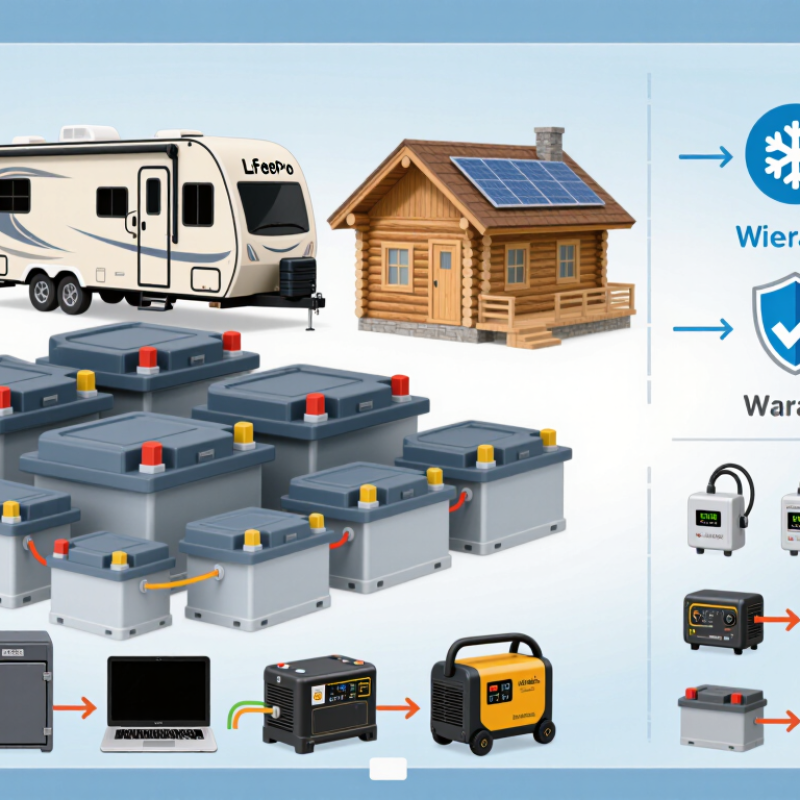
Start with the load. List every device you plan to run, its wattage, and how many hours it operates each day. A small fridge that cycles on and off uses less energy than its full running wattage suggests, while a kettle draws high power briefly. Measure actual use when possible. Estimates can be wrong.
For a rough check, multiply watts by hours to find watt-hours, then add the daily figures together. A 12.8-volt, 100-amp-hour battery stores about 1,280 watt-hours nominally. The usable amount may be lower after inverter losses, battery limits, and a sensible reserve. Check both continuous and peak power needs; a motor may briefly demand much more when starting. Match those figures to the battery’s specifications and battery management system, not just its capacity label.
Think about where the battery will work. An RV may need steady energy for lights, a water pump, and refrigeration, while a backup setup may sit unused until an outage. For a boat or remote cabin, consider charging access, storage space, and cold conditions. Many LiFePO4 batteries should not be charged below freezing unless their design allows it. A tidy calculation helps, but real routines are messy; note what you actually use for a few days before choosing capacity.
How to Choose the Best 12V LiFePO4 Battery
Capacity, voltage, and continuous discharge ratings answer different questions. Capacity, shown in amp-hours (Ah), estimates how long a battery can run a load; usable runtime also depends on temperature, age, and the battery’s discharge limits. Battery University’s BU-205 technical guide lists LiFePO4 cells at about 3.2 volts nominal and 3.65 volts at full charge. Four cells in series make a nominal 12.8-volt pack. Check your equipment’s permitted voltage range, not just its “12V” label.
Continuous discharge is the current the battery can supply steadily. It matters with inverters, pumps, and other high-draw equipment. For example, a 1,000-watt load on a 12.8-volt battery may draw about 87 amps at 90% inverter efficiency. A 100Ah capacity does not mean the battery can safely deliver 100 amps continuously. Compare the continuous rating with your calculated load, and treat short-duration peak ratings separately. IEC 62619:2022 addresses industrial lithium-battery safety, but it does not set one universal discharge rating; check the battery’s technical datasheet.
Tips: Write down the device’s watts, startup surge, and daily operating hours. Allow a margin; real loads rarely behave perfectly. Avoid choosing by Ah alone. Check the charger’s LiFePO4 profile and confirm its voltage suits the pack.
Before choosing a 12V LiFePO4 battery, check the voltage limits of every device connected to it. The battery’s nominal voltage is typically 12.8V, but its operating and charging ranges differ from lead-acid batteries. Compare the battery specifications with your inverter, lights, and other loads. A mismatch can trigger shutdowns or shorten equipment life.
Check the charger’s chemistry setting and voltage profile. Many LiFePO4 batteries require a different charging profile from lead-acid types. Disable equalization or desulfation modes unless the battery maker explicitly permits them. For a solar setup, confirm the charge controller supports lithium settings. With an alternator, a compatible DC-to-DC charger may help control charging current. Small details matter.
Also compare current limits, not just capacity. A 100Ah battery may not supply enough current for an inverter that draws heavily at startup. Check the battery’s continuous discharge rating and its built-in battery management system limits. Then consider temperature: some batteries stop charging near freezing, while others include low-temperature protection. Read the manuals side by side. It feels tedious, but guessing from “12V” alone can be costly. If specifications conflict or seem unclear, ask the equipment manufacturer before connecting the system.
| Compatibility Check | What to Verify | Practical Guidance |
|---|---|---|
| Battery voltage | Confirm that the battery’s nominal voltage matches the equipment’s DC input requirements. | A typical “12V” LiFePO4 battery uses four cells in series and has a nominal voltage of 12.8V. Check the equipment’s permitted voltage range, not just its nameplate voltage. |
| Charger profile | Check the charger’s chemistry setting and its bulk/absorption voltage against the battery manufacturer’s specifications. | Many 12V LiFePO4 batteries specify a charging voltage in the 14.2–14.6V range, but the correct setpoint varies. Use the battery’s stated value; do not assume every battery accepts the top of this range. |
| Equalization and desulfation | Make sure the charger will not apply lead-acid equalization, desulfation, or other high-voltage pulses. | These modes are generally not suitable for LiFePO4 batteries unless the battery manufacturer explicitly approves them. Disable them or use a charger with a suitable lithium profile. |
| Float charging | Check whether the charger maintains a float voltage and whether continuous float charging is permitted by the battery maker. | Some LiFePO4 batteries allow a specified float setting; others recommend no continuous float. Follow the battery instructions rather than copying a lead-acid setting. |
| Charger current | Compare the charger’s maximum output current with the battery’s permitted charge current and the BMS charge-current limit. | Do not exceed the lowest applicable limit. For example, a 100Ah battery rated for a maximum 50A charge current should not be charged above 50A, even if the charger can supply more. |
| Cold-temperature charging | Verify the battery’s minimum charging temperature and whether its BMS includes low-temperature charge protection. | Many LiFePO4 batteries prohibit charging below 0°C (32°F), while permitted limits vary by model. Use the specified temperature range; do not assume that a BMS will provide protection unless documented. |
| Inverter or load current | Check the battery’s continuous discharge rating and BMS limit against the load’s maximum DC current. | For an inverter, estimate DC current as: AC load power ÷ (battery voltage × inverter efficiency). At 1,000W, 12V, and 90% efficiency, the estimate is about 93A; account for low battery voltage and startup surges. |
| Surge capability | Compare the BMS’s surge-current rating and permitted duration with motor, compressor, or inverter startup demands. | A high continuous-current rating does not guarantee adequate surge capacity. Check both the peak current and how long the battery can support it. |
| Capacity and runtime | Match the battery’s usable energy to the expected load and required operating time. | Approximate nominal energy as voltage × amp-hours. A 12.8V, 100Ah battery is about 1,280Wh nominal; actual usable energy depends on the battery’s limits, load, temperature, and system losses. |
| Series or parallel connection | Confirm that the battery manufacturer permits the planned series or parallel configuration. | Do not assume every model supports either arrangement. Follow the specified battery count, wiring, protection, and matching requirements; batteries connected together should be compatible and at similar states of charge. |
| Wiring and protection | Size cables, fuses, and disconnects for the expected current and the installation conditions. | Use the applicable electrical code and equipment instructions. Place appropriately rated overcurrent protection close to the battery’s positive terminal, and account for cable length, temperature, and voltage drop. |
| Final compatibility check | Compare the battery, charger, inverter, and system manuals before purchase or installation. | The figures above are general selection guidance, not a substitute for product-specific limits. The battery and equipment manufacturers’ specifications take precedence. |
A strong 12V LiFePO4 battery should have a battery management system that protects against overcharging, excessive discharge, short circuits, and overheating. Check whether it also blocks charging below the cells’ stated minimum temperature; cold-weather charging can cause lasting damage. Good protection matters. Read the manual, not just the product summary. Confirm that the system supports your charger’s voltage and your inverter’s continuous and startup currents. A battery’s advertised capacity alone tells you little about safe performance.
Build quality shows up in details: firmly secured terminals, a rigid case, clear labeling, and cables suited to the expected current. If possible, inspect the terminal hardware and enclosure before installation. Loose connections can heat up under load. For a camper or boat, consider vibration, moisture exposure, and how the battery will be restrained. Check whether series or parallel connections are permitted; some designs restrict them. That detail is easy to miss.
Operating limits should fit the real setting, not an idealized one. Compare the specified charging and discharging temperature ranges with where the battery will sit, including a hot compartment or an unheated garage. Check the continuous-current rating against your equipment, and leave room for brief startup surges. I would not assume two batteries with matching voltage behave identically. Specifications can be incomplete, and that deserves a closer look.
A low purchase price can hide a costly replacement. When comparing 12V LiFePO4 batteries, read the warranty’s exact terms, not just its length. Check whether coverage includes capacity loss, and note required registration, usage limits, and proof of purchase. A warranty may offer little help if its conditions do not match your setup. Keep the receipt and installation details. Small paperwork, big difference.
Service life depends on more than a cycle rating. Ask what discharge depth and temperature were used for that rating; real use may differ. A battery in a cool, ventilated compartment may age differently from one exposed to heat. The battery management system and compatible charger matter, too. For ownership cost, compare purchase price, expected usable energy, warranty support, and likely replacement timing. A simple estimate is price divided by expected years of service, though it cannot predict every failure. It is tempting to treat that number as certainty. It isn’t. A slightly higher upfront cost may be worthwhile if the warranty is clear and the capacity suits your daily loads. Don’t pay for capacity you will rarely use.
Its nominal voltage is usually 12.8V. Check the operating limits of your inverter, lights, and other connected devices. A voltage mismatch can cause shutdowns or shorten equipment life.
Not without checking its charging profile. Confirm the charger supports the battery’s chemistry and voltage requirements. Disable equalization or desulfation modes unless the battery instructions allow them. Small settings matter.
Confirm that the solar charge controller has suitable lithium settings. For an alternator, a compatible DC-to-DC charger may help control charging current. Check the manuals before connecting anything.
No. Check its continuous discharge rating and battery management system limits. An inverter may draw a high current when starting, even if its usual load seems modest. Easy to overlook.
Yes. Some batteries stop charging near freezing, while others include low-temperature protection. Check the battery’s stated limits and consider where it will sit, such as a cold compartment.
Read the exact coverage, including capacity loss, registration rules, usage limits, and proof-of-purchase requirements. Keep the receipt and installation details. Paperwork can matter later.
Not by itself. Ask what discharge depth and temperature were used for the rating. Real conditions may differ; a hot compartment can change the picture.
Compare purchase price, expected usable energy, warranty support, and likely replacement timing. Dividing price by expected service years gives a rough estimate. It is not a promise.
Only if your daily loads need it. A higher upfront price may make sense when the capacity and warranty suit your setup. I still find these estimates imperfect.
Choosing the best 12V LiFePO4 battery starts with understanding how much power your devices use and how long they need to run. Consider the battery’s capacity, voltage, and continuous discharge rating to ensure it can support both your regular energy needs and peak loads. A Lifepo4 Battery 12v should also be compatible with your system and charger, so check the required charging settings and electrical connections before making a choice.
Safety features, sturdy construction, and suitable operating limits can help a battery perform reliably in its intended environment. Finally, compare warranty coverage, expected service life, and the total cost of ownership rather than focusing only on the initial price. Looking at these factors together makes it easier to select a battery that fits your application, provides dependable power, and offers lasting value.
